
Group curators

Anna Vallery
- @annavallery
- | she/her

Viktor Domazetoski
- @ViktorDo
- | he/him
Josh Seltzer
- @jyseltz
- | He/him
With new technologies revolutionizing data collection, wildlife researchers are becoming increasingly able to collect data at much higher volumes than ever before. Now we are facing the challenges of putting this information to use, bringing the science of big data into the conservation arena. With the help of machine learning tools, this area holds immense potential for conservation practices. The applications range from online trafficking alerts to species-specific early warning systems to efficient movement and biodiversity monitoring and beyond.
However, the process of building effective machine learning tools depends upon large amounts of standardized training data, and conservationists currently lack an established system for standardization. How to best develop such a system and incentivize data sharing are questions at the forefront of this work. There are currently multiple AI-based conservation initiatives, including Wildlife Insights and WildBook, that are pioneering applications on this front.
This group is the perfect place to ask all your AI-related questions, no matter your skill level or previous familiarity! You'll find resources, meet other members with similar questions and experts who can answer them, and engage in exciting collaborative opportunities together. The AI for Conservation group provides a dedicated space to:
- Bridge disciplines: Create a space where ecologists, conservationists and environmental scientists can connect with computer scientists, artificial intelligence researchers and practitioners to address shared challenges.
- Advance knowledge: Share and discuss research, case studies and best practices at the intersection of artificial intelligence and conservation.
- Education: Provide educational resources that help ecologists understand AI methods and their use cases and inspire AI experts to learn about ecological applications.
- Facilitate collaboration: Offer resources and networking opportunities that enable AI researchers and conservation practitioners to co-develop solutions with real-world conservation impact.
Just getting started with AI in conservation? Check out our introduction tutorial, How Do I Train My First Machine Learning Model? with Daniel Situnayake, and our Virtual Meetup on Big Data. If you're coming from the more technical side of AI/ML, Sara Beery runs an AI for Conservation slack channel that might be of interest. Message her for an invite.
Header Image: Dr Claire Burke / @CBurkeSci

Explore the Basics: AI
Understanding the possibilities for incorporating new technology into your work can feel overwhelming. With so many tools available, so many resources to keep up with, and so many innovative projects happening around the world and in our community, it's easy to lose sight of how and why these new technologies matter, and how they can be practically applied to your projects.
Machine learning has huge potential in conservation tech, and its applications are growing every day! But the tradeoff of that potential is a big learning curve - or so it seems to those starting out with this powerful tool!
To help you explore the potential of AI (and prepare for some of our upcoming AI-themed events!), we've compiled simple, key resources, conversations, and videos to highlight the possibilities:
Three Resources for Beginners:
- Everything I know about Machine Learning and Camera Traps, Dan Morris | Resource library, camera traps, machine learning
- Using Computer Vision to Protect Endangered Species, Kasim Rafiq | Machine learning, data analysis, big cats
- Resource: WildID | WildID
Three Forum Threads for Beginners:
- I made an open-source tool to help you sort camera trap images | Petar Gyurov, Camera Traps
- Looking for help with camera trapping for Jaguars: Software for species ID and database building | Carmina Gutierrez, AI for Conservation
Three Tutorials for Beginners:
- How do I get started using machine learning for my camera traps? | Sara Beery, Tech Tutors
- How do I train my first machine learning model? | Daniel Situnayake, Tech Tutors
- Big Data in Conservation | Dave Thau, Dan Morris, Sarah Davidson, Virtual Meetups
Want to know more about AI, or have your specific machine learning questions answered by experts in the WILDLABS community? Make sure you join the conversation in our AI for Conservation group!
Group curators
- @annavallery
- | she/her
Seabird biologist experienced in research and applied conservation. Dedicated to conducting and using innovative research to inform conservation decisions.


- 6 Resources
- 9 Discussions
- 8 Groups
- @ViktorDo
- | he/him
PhD student at University of Exeter & University of Queensland. Interested in researching AI and its responsible application to Ecology, Environmental Monitoring and Nature Conservation.
- 0 Resources
- 2 Discussions
- 6 Groups
- @jyseltz
- | He/him
Independent researcher working in open-source AI, based in BC & Panamá.


- 1 Resources
- 3 Discussions
- 9 Groups
No showcases have been added to this group yet.

I'm a Doctoral Candidate working with the Smithsonian National Zoo. I use animal movement to build contact network models between wildlife, domestic animals, and people.

- 0 Resources
- 17 Discussions
- 12 Groups

- @jsulloa
- | He/Him
Instituto Humboldt & Red Ecoacústica Colombiana
Scientist and engineer developing smart tools for ecology and biodiversity conservation.


- 4 Resources
- 22 Discussions
- 7 Groups

- @mbliss
- | she/her
Environmental Planner | Nature-Based Solutions & Design | Long-Range Planning
- 0 Resources
- 6 Discussions
- 4 Groups

- @sruizguz
- | He / Him / His
University of Pittsburgh
PhD student at the Kitzes lab - University of Pittsburgh. My research focuses on acoustic monitoring for ecology and conservation in tropical ecosystems.
- 0 Resources
- 0 Discussions
- 5 Groups
- @ReillyHammond
- | She/her
Graduate student at Arizona State University studying viral cancer in sea turtles and community science and conservation engagement through conservation and technology.
- 0 Resources
- 1 Discussions
- 11 Groups

I'm a software developer that has pivotted to starting a company, Wildlife Security Innovations, to help people and wildlife live together safely.


- 0 Resources
- 518 Discussions
- 8 Groups
Toronto Zoo
Postdoctoral Fellow|Welfare Science|My interest as a scientist is to develop machine learning-aided technologies that advance monitoring efforts for supporting conservation initiatives.
- 1 Resources
- 5 Discussions
- 2 Groups
- @MandyEyrich
- | She/Her
University of Florida (UF)
Wildlife Conservation meets Experience Strategy -- 15+ years of cross-sector expertise specializing in user-centric technology and product strategy (UX research, UX/UI design), process optimization, and end-to-end agile product development, moving from ideation to iteration
- 0 Resources
- 12 Discussions
- 26 Groups

- @HenriBe
- | He
Engineer/applied mathematician passionnate about sustainability
- 0 Resources
- 12 Discussions
- 6 Groups

WILDLABS & Wildlife Conservation Society (WCS)
I'm the Bioacoustics Research Analyst at WILDLABS. I'm a marine biologist with particular interest in the acoustics behavior of cetaceans. I'm also a backend web developer, hoping to use technology to improve wildlife conservation efforts.




- 54 Resources
- 42 Discussions
- 34 Groups
Fauna & Flora
Remote Sensing Scientist, Conservation Technology & Nature Markets

- 66 Resources
- 66 Discussions
- 12 Groups

Re:wild
Passionate conservationist based in Italy, I lead the Exploration and Lost Species programs at Re:Wild and am interested in locally led expeditions combining traditional knowledge and technology
- 0 Resources
- 6 Discussions
- 4 Groups
Funding
Help us protect jaguars and restore the Cerrado

Letícia Benavalli
We have just one week left to reach our US$7,000 goal. Thanks to Ma Earth's matching campaign, every donation is multiplied 4:1, helping us protect jaguars and restore the Brazilian Cerrado.
13 July 2026
Careers
Machine Learning Engineer / Data Scientist

Riley Knoedler
Western EcoSystems Technology (US-Based)
13 July 2026
Article
Deep Voice - A Free Online Platform for AI-Based Marine Mammal Sound Detection and Classification

Michael Moshe Michelashvili
Passive acoustic monitoring floods marine researchers with data that can take months to annotate by hand, and the AI models that could help have long required Python setup, GitHub repos, and complex config files. Funded...
5 July 2026
Funding
RFauna Rover Fundraiser

Viyan Patel
Students building a autonomous rover to track signals that interfere with animals.
3 July 2026
Careers
The People and Nature Lab at UCL East is recruiting a Lecturer / Associate Professor in AI for Biodiversity Science.
24 June 2026
Careers
Job Opportunity: Amazon.ia Program Manager
Carla Mere
Amazon.ia: Inteligencia Ambiental, the working name for a multi-partner initiative to produce timely, actionable intelligence on biodiversity that drives effective conservation and restoration across the Amazon, is...
22 June 2026
Careers
Consider applying if you have a passion for conservation, low-powered hardware, edge-AI, and embedded systems.
18 June 2026
Careers
Full Stack Developer - Conservation X Labs
Dante Wasmuht
Conservation X Labs is looking for an awesome Full-Stack Developer!
18 June 2026
Global map of the dominant driver of tree cover loss at 0.01° resolution (~1km) for the period 2001-2025. This is the latest update for this dataset.
13 June 2026
Link
Shippy
Elsa
First free and transparent AI agent for real-time maritime domain awareness. Now inviting early adopters to shape its future.
10 June 2026
Careers
Biodiversity Monitoring Scientist

Tom August
This role would suit someone with a background in ecology or environmental science who enjoys combining fieldwork, data analysis, and applied research to support real-world environmental outcomes.
8 June 2026
Article

Monitoring amphibians across the temperate forests of Patagonia presents significant logistical and technical challenges. Remote locations, harsh environmental conditions, and the large volumes of data generated by...
4 June 2026
July 2026

August 2026

September 2026
June 2026
event
Rebekka Stutz
May 2026
event

Shir Bar
88 Products
Recently updated products
18 Products
Recently updated products
| Description | Activity | Replies | Groups | Updated |
|---|---|---|---|---|
| Kim, this is great - thank you for sharing it. And to answer directly: yes, footage like this is genuinely useful for behavioral work, precisely because a continuous clip... |
|
AI for Conservation, Animal Movement, Camera Traps, Data Management & Mobilisation, Geospatial, Protected Area Management Tools, Sensors, Software Development | 4 hours 9 minutes ago | |
| Would love to talk. We build the AI model MiewID (currently v4.1) and Wildbook, which has been deployed for jaguars on Whiskerbook.org. Happy to share ideas. Data cleaning and... |
|
AI for Conservation, Camera Traps, Data Management & Mobilisation | 2 days 12 hours ago | |
| Yes, there are quite a few SBCs that use SoCs with integrated NN acceleration. Except I think you are massively downplaying the advantages of the Raspberry Pi"plenty of... |
+23
|
AI for Conservation, Autonomous Camera Traps for Insects, Camera Traps, Edge Computing | 4 days 4 hours ago | |
| Super to hear your numbers. Thanks! |
+9
|
AI for Conservation | 1 week ago | |
| Thank you for sharing. |
|
AI for Conservation, Camera Traps | 1 week 1 day ago | |
| 🌍 ¡La Summer School Climate Change AI está de vuelta (19 de julio – 22 de agosto de 2026) y las inscripciones ya están abiertas!... |
|
AI for Conservation, Climate Change, Conservation Tech Training and Education, Latin America Community | 1 week 6 days ago | |
| Thank you so much Luke! |
+20
|
AI for Conservation, Camera Traps, Edge Computing | 1 week 6 days ago | |
| Hello,This is an incredible initiative, and exactly the kind of practical AI application that can make a huge impact in the conservation space!As an AI Solutions Architect based... |
+9
|
AI for Conservation, Community Base | 4 weeks ago | |
| That is so cool! Love the video! |
|
Acoustics, AI for Conservation, Latin America Community, Open Source Solutions | 1 month ago | |
| Spectrolipi is a tool for visualizing sound, annotating spectrograms, and exporting ML‑ready acoustic datasets.Spectrolipi V2.0.0... |
|
Acoustics, AI for Conservation, Software Development | 1 month ago | |
| Hi! As Open Science Conservation Fund are happy to contribute with Trapper, scalable, open-source and AI-driven camera trap data infrastructure. https://os-conservation.org/... |
+1
|
AI for Conservation | 1 month 2 weeks ago | |
| Hello Sam, please check if this is what you are looking for in this link:https://youtu.be/f8Q2oDPwwIw Regards, Tim [email protected]... |
|
AI for Conservation | 1 month 4 weeks ago |

























Getting behavioral data out of datasets that weren't built for it
16 June 2026 3:49pm
10 July 2026 12:55pm
I have tens of thousands of camera trap bycatch African mammal videos that are available for analysis to anyone who can turn them into published papers, data that is actually useful for conservation, or publicity for wildlife and conservation.
They are already manually sorted into carnivores / herbivores and the carnivores are sorted and/or tagged to species. I do not have the resources to do anything further with them.
14 July 2026 1:18am
Peter, this is a generous offer - thank you. A dataset that's already sorted carnivore/herbivore with carnivores tagged to species is a real head start, and the fact that it's bycatch from another purpose is exactly the kind of "data built for one question, useful for another" material I've been thinking about.
A few questions to figure out fit: what capture mode are the videos - continuous clips, triggered bursts, fixed intervals? And roughly how long are the clips? I'm interested in whether there's enough temporal continuity to read behavior (time budgets, activity sequences), not just presence/absence. Also curious which species are best represented, and what any reuse would look like on your end in terms of credit and terms.
I'd genuinely like to explore turning some of this into something publishable and conservation-useful. Would you be open to a direct conversation off-thread?
Warmly,
Maggie
14 July 2026 1:27am
Kim, this is great - thank you for sharing it. And to answer directly: yes, footage like this is genuinely useful for behavioral work, precisely because a continuous clip establishes a whole ecological scene rather than a single detection.
What's nice here is the range of behavior visible at once. The mother is engaged in what looks like foraging, while the juveniles are showing enrichment behaviors - exploratory, playful, curious, moving freely and not staying tethered to her. Posture and pose carry a lot of the signal too: tail position, body orientation, how attention is directed. That's the kind of thing you can only read when you have temporal continuity and enough frame to see the whole animal.
One question it raises - and this is exactly the interpretive challenge I find interesting - is whether the mother is actually foraging or "reading" the landscape through scent, which looks similar on camera but means something quite different behaviorally. Disambiguating those is where the real work is.
I'd love to hear more about your setup and how much footage like this you're generating. Continuous thermal at this quality, running for months, is a valuable stream.
Maggie
Help us protect jaguars and restore the Cerrado
13 July 2026 7:34pm
Machine Learning Engineer / Data Scientist
13 July 2026 4:24pm
PantheraID: individual jaguar identification with computer vision, built from 14 years of camera trap data.
9 July 2026 5:39pm
11 July 2026 5:04pm
Would love to talk. We build the AI model MiewID (currently v4.1) and Wildbook, which has been deployed for jaguars on Whiskerbook.org. Happy to share ideas. Data cleaning and multispecies approaches to increase data volume and promote generalization are really the levers that have worked for us.
Mini AI Wildlife Monitor
25 June 2025 12:27pm
5 July 2026 5:19pm
Wow, what a great project.
8 July 2026 8:36pm
This is a great project! Some comments:
RaspberryPI though accessible is not the best fit for video pipelines and AI workloads or off grid deployments:
- it lacks onboard ISP which means either software implemented ISP, distorted data or on camera non energy optimized ISP.
- it lacks any power management techniques, low power modes, etc.
- it runs from SDCard using the same one for OS, swap and data, any corruption can lead to full loss.
- it runs any AI/ML workload on CPU which is extremely non efficient and any addon accelerators such as Hailo8 add a lot to power consumption and heat dissipation representing more challenges.
The advantages are of course plenty of documentation, community and all kind of makers addons, hats, etc.
For something more realistic, real life suitable I would suggest using something based on SoC with integrated NPU such as Hailo 15, Renesas RZ/V, Synaptics SL1680, MediaTek Genio or even the I.MX8M Plus for very light AI/ML workload. All of these have variety of SBCs, kits or even standalone smart camera oriented designs available from different vendors.
10 July 2026 1:32am
Yes, there are quite a few SBCs that use SoCs with integrated NN acceleration.
Except I think you are massively downplaying the advantages of the Raspberry Pi
"plenty of documentation, community and all kind of makers addons, hats, etc."
That is quite literally everything that makes the Raspberry Pi.
I've played with plenty of SBCs that are cheaper and have better specs than the Raspi, but they are almost useless because of the lack of "documentation, community and all kind of makers addons, hats, etc."
For a purpose built product by a team of engineers (with a lot of time and money behind them) then these SoCs with inbuilt NN are likely the future of this for of edge Ai deployment. But unless someone develops a well supported and well documented, general purpose device that uses one of these SoCs, then the default will still be the RasPi.
Anyone using Microsoft Sparrow?
18 June 2026 12:39am
22 June 2026 3:52pm
@rahul.dodhia wow I would love to work on that! It sounds like Sparrow Studio is not open source yet? But, in the meantime, I think if this was going to be a successful fork or plugin anyways I would need to be more familiar with the codebase and it's best practices.
If you think of a smaller task that could help me learn how best to work with the community and software I would be excited to to contribute!
6 July 2026 9:48am
looking forward to this discussions too. Exploring the use of sparrow and in case our use case succeeds, we'll share feedback too.
6 July 2026 10:24am
Super to hear your numbers. Thanks!
Building the perfect camera trap (Guide)
17 February 2025 8:06am
23 February 2025 8:11am
Hey Bob, thanks for the kind words! Your articles on Winterberry Wildlife have really been a big inspiration for me! There are extremely limited numbers of articles on trial cameras, and you have some nice in-depth hardware level which I have been reading 😊
You are completely right about the battery life and trigger speed tradeoff. If I remember right, there are a few cameras which offered “real time” images but in return the battery was drained in a few days and people started to complain on forums. In early stages of development there is also much about limiting the services at boot, as you mention putting the camera function as early in the boot sequence as possible, creating your own camera configs and so on.
29 June 2026 9:01pm
Great guide — this is exactly the kind of resource the community needs. A few additions from a hardware embedded perspective that might be worth including:
On PIR sensors — the standard Fresnel lens + PIR combination has a fundamental limitation in hot environments: when ambient temperature approaches body temperature (~35°C in African savannah), the thermal contrast between the animal and the background drops dramatically and trigger reliability degrades. This is worth calling out explicitly for tropical and arid deployments, where the standard PIR may miss animals during the hottest part of the day. Some teams have moved to passive radar (Doppler microwave) as an alternative trigger for hot environments — less species-selective but more temperature-independent.
On power architecture — one thing I'd add to the component deep-dive is the power switching circuit. Most commercial cameras use a simple battery holder with no protection. For DIY builds, a proper battery management IC with overcurrent protection, low-voltage cutoff, and reverse polarity protection adds almost no cost but prevents a lot of field failures, especially when using lithium primaries in extreme temperatures.
On IR illumination — the choice between 850nm (faint red glow, better image quality) and 940nm (truly invisible, lower image quality, shorter range) is well covered in most guides, but what's often missed is thermal management of the IR LEDs themselves. High-power IR LEDs run hot and can significantly raise the enclosure temperature in a sealed housing — worth mentioning as a factor in enclosure thermal design, particularly for cameras that run night-long video.
On the shift away from hardware — curious what drove that decision. Was it the enclosure/thermal challenges, the PIR reliability issue, or something else entirely?
5 July 2026 5:17pm
Thank you for sharing.
Deep Voice - A Free Online Platform for AI-Based Marine Mammal Sound Detection and Classification
5 July 2026 4:03pm
RFauna Rover Fundraiser
3 July 2026 7:38pm
Climate Change AI Virtual Summer School 2026
1 July 2026 3:15pm
Escuela de verano "The Climate Change AI Virtual Summer School 2026"
30 June 2026 6:35pm
AI Edge Compute Based Wildlife Detection
23 February 2025 5:24am
30 June 2026 2:06am
I find the performance of micro-nano sized models that run on MCUs impractical for many applications. This is due to the low FPS, tiny Image resolution processed and very low model capacity.
I think people underestimate the huge jump in complexity from something working on the benchtop detecting a person from a meter away to trying to detect a cat-size object several meters away in a noisy environment.
30 June 2026 6:59am
Well stated Luca. Totally with you on this.
30 June 2026 2:04pm
Thank you so much Luke!
July Vibe Coding Party
29 June 2026 2:59pm
29 June 2026 3:07pm
@JonathanYardley If you're still interested! :)
12 July 2026 10:34am
I have interest in it!
Lecturer / Associate Professor in AI for Biodiversity Science
24 June 2026 2:23am
Job Opportunity: Amazon.ia Program Manager
22 June 2026 2:42pm
Senior Hardware Product Development Engineer - Conservation X Labs
18 June 2026 4:42pm
Full Stack Developer - Conservation X Labs
18 June 2026 3:37pm
Imageomics Institute: FloraPalooza, August 2026
17 June 2026 4:49pm
What questions would you ask an AI agent for conservation tech?
8 July 2025 5:49pm
6 June 2026 11:31pm
Elionai - your point about lessons from past deployments and "what tends to fail first" really resonates. I think that gap between ideal-condition performance and what actually holds up in the field is one of the most underrated questions in this whole space.
I'm building something that integrates environmental monitoring, so I'd love to pick your brain on the edge/deployment side. Messaging you to connect!
7 June 2026 6:48pm
I would probably ask: “If your code basically does not allow you to take harmful actions, what should you do if you are provided with irrefutable proof that your existence, supported by components built and developed with “rare minerals” extracted from conflict areas is actually harming and destroying indigenous communities and biodiversity?”
15 June 2026 10:08pm
Hello,
This is an incredible initiative, and exactly the kind of practical AI application that can make a huge impact in the conservation space!
As an AI Solutions Architect based in the US with 20 years of tech experience, I have built several RAG (Retrieval-Augmented Generation) and Agentic solutions. I would love to contribute directly to the implementation or consulting side of this project if required.
Whether you need help with structuring the retrieval pipelines for the forum data, designing the agentic workflows, or handling the backend and cloud deployment, I would be happy to jump in and support the build.
Please let me know how I can best get involved, or if you'd like to chat about the technical architecture and how to bring this to life!
Global drivers of forest loss at 1 km resolution - Version 1.3
13 June 2026 11:42am
Global drivers of forest loss at 1 km resolution - Version 1.3 - Datasets - WRI Data Explorer
Global map of the dominant driver of tree cover loss at 0.01° resolution (~1km) for the period 2001-2025. This is the latest update for this dataset.
🐸 WILDLABS Awards 2025: Open-Source Solutions for Amphibian Monitoring: Adapting Autonomous Recording Devices (ARDs) and AI-Based Detection in Patagonia
27 May 2025 8:39pm
12 November 2025 7:36pm
🌿 Project Update — November 2025
Sharing our experience at the Symposium on Physics Applied to Ecology and Conservation (Foz do Iguaçu, Brazil).
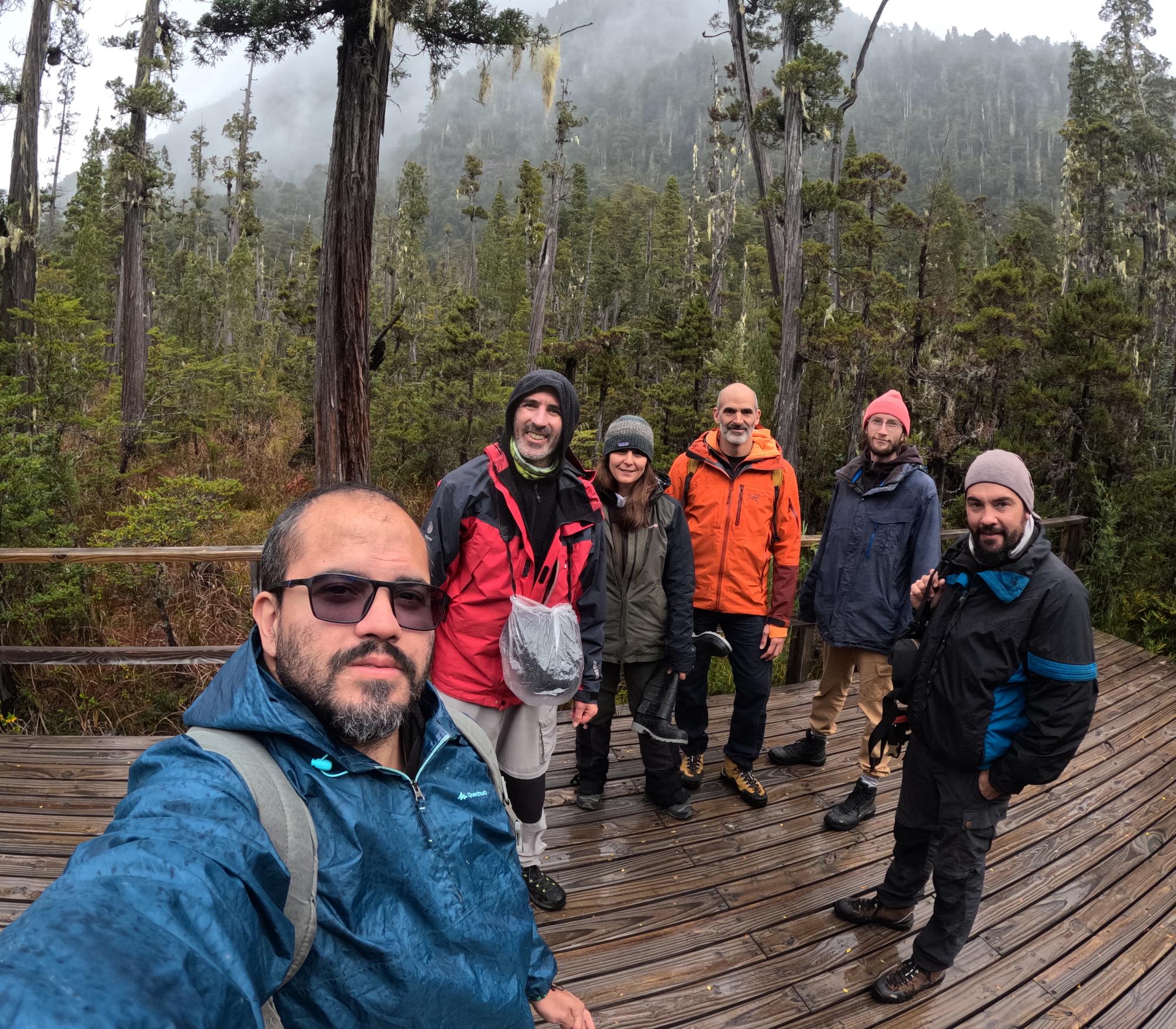
We’d like to thank Carlos Araujo for kindly inviting us to take part in the Symposium on Physics Applied to Ecology and Conservation, held on November 6–7, 2025, at the PTI Campus – Universidade Federal da Integração Latino-Americana (UNILA) in Foz do Iguaçu, Brazil.
The event aimed to build bridges between researchers from different disciplines and countries, exploring how physics can support acoustic monitoring, ecological data collection, and biodiversity conservation.
🎙️ We joined Roundtable 3 — Hardware, Sensors, and Audio Recording, where we discussed:
Open-source autonomous recorders for biodiversity monitoring.
Energy-efficient design and sensor integration.
Alternative battery types and power solutions (particularly relevant to our developments)
🎥 Watch the roundtable recording here.
It was also a great opportunity to share our experience and highlight the WildLabs community, connecting with colleagues working at the intersection of physics, ecology, and technology.
9 June 2026 3:36pm
Hi everyone!
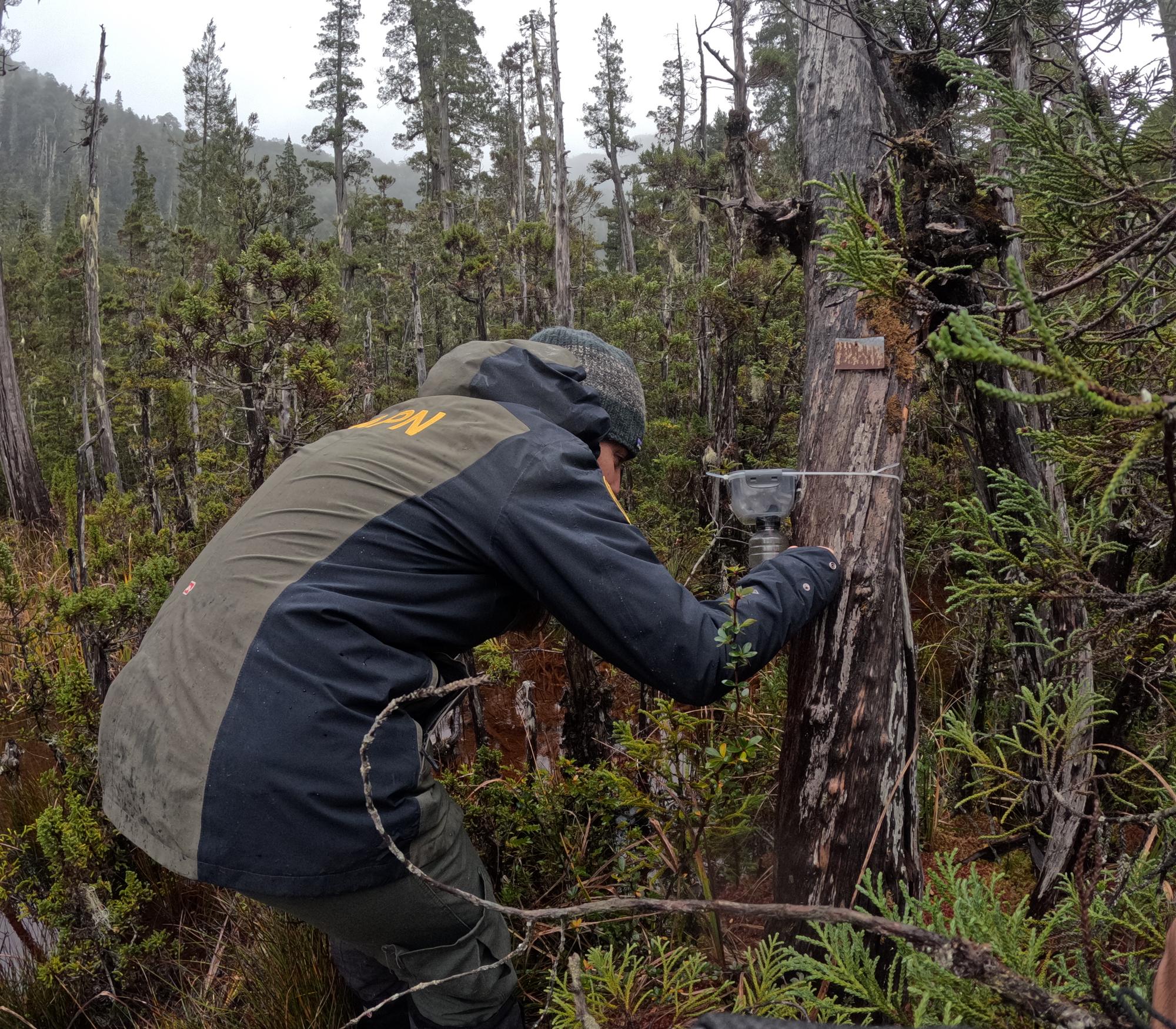
Following up on our project development, we have just published the full report on our work integrating environmental monitoring into AudioMoth devices and the resulting BirdNET workflows for Patagonian amphibians. You can find the complete documentation and results here.
Beyond the technical implementation, we’ve documented the custom firmware, the AI training pipeline for our species, and the practical challenges we faced during field deployments:
Project Video: YouTube Video Link
Firmware: AudioMoth I2C Firmware Repository (GitLab)
AI Workflow: BirdNET-based Workflow for Amphibians (GitHub)
Edge Models: TinyFrog Repository (GitHub)
PyTorch reimplementation: BirdNET-Analyzer (GitHub)
If you are working on similar setups or have questions about the hardware or the workflow, feel free to reach out. I hope this documentation proves useful for your own research.
Thanks for the support and the exchange of ideas during these months!
10 June 2026 1:58pm
That is so cool! Love the video!
Shippy
10 June 2026 8:46am
Meet Shippy: Agent Built for Ocean Intelligence
Meet Shippy: Agent Built for Ocean Intelligence
Biodiversity Monitoring Scientist
8 June 2026 5:22pm
Spectrolipi v2.0.1
8 June 2026 10:34am
Open-Source Solutions for Amphibian Passive Acoustic Monitoring: Lessons from Patagonia
4 June 2026 4:57pm
What Happens When Conservation Technology Leaves the Lab? Lessons from Training Rural Communities in the Brazilian Cerrado
3 June 2026 1:20am
Ecologist (Postdoctoral Research Fellow), IS-0408-09
1 June 2026 4:02pm
AI for Impact Series at WWF: Looking for experts/speakers
21 May 2026 12:25pm
29 May 2026 5:06pm
hi! I would be happy to contribute my experience in edge AI and smart sensors for real-time wildlife monitoring.
30 May 2026 7:33am
I'd be happy to contribute as well, I lead various conservation AI projects in Hong Kong and Japan, camera trapping, acoustic monitoring, and some drone/LiDAR image processing.
30 May 2026 10:17am
Hi! As Open Science Conservation Fund are happy to contribute with Trapper, scalable, open-source and AI-driven camera trap data infrastructure. https://os-conservation.org/trapper/
Vibe Coding Party
25 May 2026 3:03pm
11 June 2026 4:17pm
25 June 2026 4:29pm
@JonathanYardley Apologies I missed your message. We are organizing another event in late July - I'll make another post soon with the sign up link!!
30 June 2026 12:36pm
Thank you :)