


Maggie Bliss
- @mbliss
- | she/her


Burning question:
There's so much monitoring data already- camera trap archives, acoustic recordings, GPS tracks - but almost all of it was collected to answer presence/absence or population questions. What I'm after is the layer above that: behavior. Not "is the species there," but "what are they doing, and for how long."
I'm working toward behavioral time-budget analysis as an early signal of ecosystem stress, and I keep hitting the same wall: how do you actually pull structured behavioral data out of collections that were never designed to capture it?
What I'm trying to figure out:
- What's genuinely been automated here, vs. still manual annotation?
- Is anyone extracting behavior (not just detection) from camera trap or bioacoustic archives at any kind of scale?
- Are there datasets already behaviorally coded, or is everyone building that layer from scratch?
Pointers to people, papers, tools - all welcome. Curious what's worked and what's been a dead end.
Thanks!
Maggie
17 June 2026 6:53am
There’s also a step before the behavioral analysis. And that’s capturing the behavior in the first place.
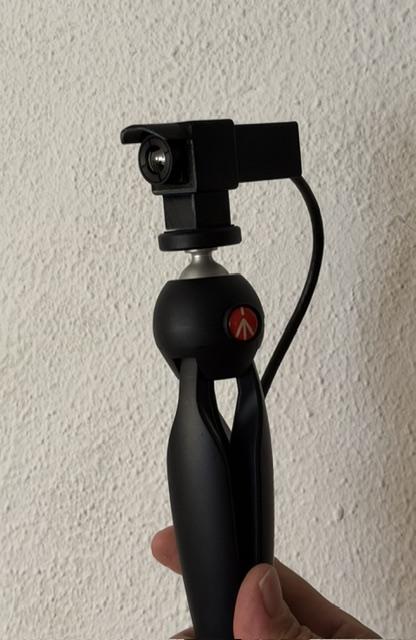
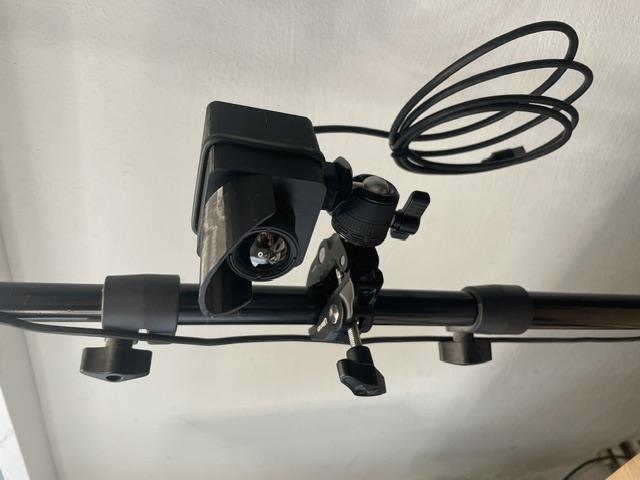
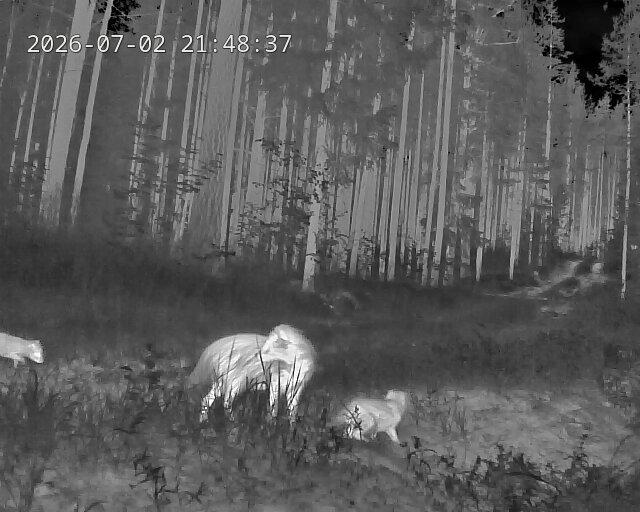
I agree the behavior side is very interesting. Our thermal module based camera traps see in both day and night over great distances. They also record in both thermal and visible light continuously, allowing one to remotely retrieve a video section, wind it backwards and see what the animal was doing before and where did it come from. Thermal enabled camera traps add huge value for behavior analysis.

19 June 2026 5:09pm
The real headache with pulling behavioural data from camera traps is that animal behaviour is just so complicated. You can't just look at a physical movement and assume it means the same thing every time, because different animals do the exact same things for completely different reasons. That’s why ethograms aren't one-size-fits-all. The meaning of a behaviour can completely shift from one report to another depending on what the researcher is looking for. Take a crocodile sitting totally still with its mouth wide open: to anyone watching, it looks like they’re being aggressive. But in reality, they might just be thermoregulating to cool down, or honestly, they could just be resting. Without that specific context, we can't be sure, and it's super easy to completely misinterpret what the animal is actually doing.
I think that is what makes animals so unique and interesting because they are so nuanced; it's never a one-size-fits-all.
Currently, the only technology I have used for animal recording is the camera traps and it's great because it filters all the data that doesn't have any movement, making it easier for behavioural studies to collect data. And even then, detecting behaviour in an area is difficult, as camera batteries cannot last long enough in these ecosystems for animals to be comfortable around them.



22 June 2026 9:33am
HI
This what I am trying currently todo
I have already some algorithms and some monitoring set up in development
feel free to reach me maybe we could join forces
28 June 2026 10:12pm
This thread is exactly the conversation I was hoping to start - thank you all.
Janelle, your point about context is the crux of it. A crocodile with its mouth open could be thermoregulating, resting, or hunting, and the still frame alone won't tell you which - it's the surrounding signals (eyes, posture, what else is in the scene) that disambiguate. That's the whole problem in miniature: behavior isn't legible without context, and most datasets strip the context out. I love your reframe of observer bias as signal, too - the order in which individuals approach and explore a new camera is behavioral data, not just noise to wait out. And it points at exactly where I think this goes: no single stream is enough. Thermal, acoustic, eDNA, movement - layered together, you start to reconstruct a scene rather than just catalog detections.
Kim, the continuous thermal deployment you're describing is the kind of capture I'd love to understand better - sustained, passive, weatherproof is where the rare and off-frame behaviors actually live. Would be curious how much behavioral signal you're seeing in that data vs. presence/absence.
Henri, your bee work is striking - we're clearly circling the same core idea from different systems. I'd be glad to compare notes; I'll follow up directly.
More soon - this is the good stuff.
Maggie

Kim Hendrikse