

Groups joined
Discussions started
Discussion Comments
Resources added

Claude Miaud added a new Article - "Population genetics with eDNA" to eDNA & Genomics
Groups
Group
- Group Stats
-







- 990
- 537
The WILDLABS Community Base is the ideal place to get oriented with the all that our community platform offers, hear about news and opportunities, and to meet new friends and collaborators.
- Latest Resource
- /
- Announcing the WILDLABS Awards 2026 Grantees
Learn about the 16 selected projects that are working to innovate, scale, and adopt conservation technology for this year’s WILDLABS Awards.
Group
- Group Stats
-





- 267
- 102
- Latest Discussion
- Engineer Searching for Biologists
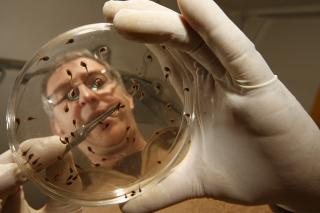
The eDNA & Genomics Group focuses on advancing biodiversity monitoring, species detection, and ecological research using environmental DNA (eDNA) and genomics technologies. Our members are engaged in the collection, sequencing, and analysis of DNA from environmental samples—such as soil, water, and feces—to detect species presence, assess genetic diversity, and study population structure without the need for direct observation or capture.
- Latest Resource
- /
- Assessing Critical Habitats Using Environmental DNA to Conserve the World’s Rarest Heron- White-bellied Heron Ardea insignis
The White-bellied Heron (Ardea insignis) is the world's rarest heron, with only about 60 individuals remaining globally. Bhutan holds nearly half of the remaining population, making conservation efforts within the country crucial to the species' survival. As part of my PhD research at Texas State University, I have been working to better understand the ecology, habitat suitability, and conservation needs of this critically endangered species. I employ an interdisciplinary approach that integrates field ecology, environmental DNA (eDNA) and portable genomics technologies to improve biodiversity monitoring and conservation planning for White-bellied Heron in Bhutan. Unlike traditional monitoring approaches that rely solely on direct observations, eDNA allows researchers to detect biodiversity from traces of genetic material left behind in the environment. The WILDLABS Award provided an exciting opportunity not only to advance research but also to demonstrate how emerging conservation technologies can be applied in remote landscapes while building local capacity for conservation genetics. Through this project, we sought to explore how portable molecular tools can support conservation decision-making while making advanced genetic technologies more accessible to researchers and practitioners in Bhutan.
Group
- Group Stats
-



- 753
- 285
The Animal Movement Group is a collaborative community dedicated to advancing the study, monitoring, and conservation of animal movement. It provides a space for researchers, practitioners, and innovators to exchange knowledge, explore bio-logging approaches and data, and address conservation challenges linked to species mobility.
- Latest Resource
- /
- Wild Moves and Wild Album: New GBIF Data Portals for Animal Tracking and Camera Trap Data
New data portals are making it easier to discover and explore wildlife tracking and camera trap datasets from around the world.
Group
- Group Stats
-





- 947
- 404
- Latest Discussion
- Loaning Bioacoustics Recorders
Acoustic is one of our biggest and most active groups, with members collecting, analysing, and interpreting acoustic data from across species, ecosystems, and applications, from animal vocalizations to sounds from our natural and built environment.
- Latest Resource
- /
- Open-Source Solutions for Amphibian Passive Acoustic Monitoring: Lessons from Patagonia
Monitoring amphibians across the temperate forests of Patagonia presents significant logistical and technical challenges. Remote locations, harsh environmental conditions, and the large volumes of data generated by Passive Acoustic Monitoring (PAM) can make long-term biodiversity surveys difficult to implement and maintain. In addition, environmental data often relies on multiple independent devices, increasing costs, complexity, and logistical demands in remote field conditions. Through the WILDLABS Awards 2025, our team explored practical ways to address these challenges by combining open-source hardware, environmental sensing, and AI-assisted acoustic analysis.
Group
- Group Stats
-




- 156
- 20
- Latest Discussion
- Looking To Utilize My Skillsets To Help
Conservation dogs are making a difference in conservation through their noninvasive ability to detect elusive species in the wild, flag illegal wildlife trade products, and help poachers fight wildlife crime. Whether you work with conservation dogs, you're interested in incorporating them into your work, or you just want to learn about how dogs can support and enhance conservation technology's effectiveness, you're in the right place!
🌍 Conservation technology is transforming how we protect wildlife, but are we thinking carefully enough about the risks? Drones, camera traps, GPS trackers, acoustic sensors, AI, and remote sensing have become essential tools for conservation practitioners around the world. They help us monitor species, detect threats, and respond faster than ever before. But these same technologies can also introduce unintended risks, and in some cases, can be exploited by those seeking to harm the very wildlife we're trying to protect. 🦏 Input now and/or join the discussions/research.
Bookmarks
Keep track of the resources that matter to you! Collections let you save, organise, and share content from all over the WILDLABS community. Create your first collection by clicking on the bookmark icon wherever you see it.
My Courses
These are your in-progress and completed courses. Explore more courses through our catalogue.
To find courses you have created, see your "My Draft Content" or "My Content" tabs.
Settings
Claude Miaud's Content
Article
Population genetics with eDNA
Claude Miaud
Using SNP markers with an Amphibian species, we were able to identify a total of 17,617 nuclear single nuclear polymorphisms shared across individual, pond eDNA (4 populations) and tank eDNA samples (where tadpoles of...
30 May 2025
Discussion
Pit-tag automatic detector for very small animals
Claude Miaud
Dear all very small animals (eg < 1g) cannot be equipped with VHF or GPS system to track their movements. One way is the use of passive transmitter (PIT-Tag) as emettor (...
31 October 2016
Claude Miaud's Comments