

WILDLABS



The newly launched Wild Moves and Wild Album provide a centralized resource for researchers, practitioners, and decision-makers to find and utilize standardized wildlife monitoring data collected by animal-borne and in-situ sensors. The portals were developed through a collaboration between WILDLABS, the International Bio-logging Society, Move BON, the Research Institute for Nature and Forest (INBO), and the Global Biodiversity Information Facility (GBIF). This initiative emerged from ideas discussed within the Data Standardization Working Group of the International Bio-Logging Society and Move BON preparatory meetings.
Why these portals matter
Technologies such as GPS trackers, bio-loggers, and camera traps are increasingly used to monitor wildlife. However, the data generated from these tools often remain siloed within individual research projects or integrated within a variety of specialized community repositories. This results in a fragmented information landscape, which makes it difficult for those outside the field to discover and access these datasets to inform broader conservation research, policy, and management.
By highlighting datasets already published through GBIF, Wild Moves and Wild Album help make these data easier to discover, explore, and reuse with attribution. This can support efforts such as:
- Spatial planning and connectivity mapping
- Developing movement-based biodiversity indicators
- Synthesizing data across disciplines and data types
- Filling gaps in species occurrence records in GBIF
How to contribute data
Wild Moves and Wild Album surface data published through GBIF, an international infrastructure for sharing biodiversity observations. Building on GBIF allows the portals to leverage established data standards, publication workflows, community practices, and citation tracking.
Many researchers already share wildlife tracking data through major repositories such as Movebank, OTN, ETN, Agouti, ATN, IMOS, and others—these systems offer services designed for wildlife monitoring and will continue to serve as primary platforms for data management, analysis, and community-specific services. Another goal of the portals is to support these repositories in developing aligned workflows to translate and publish datasets to GBIF, where they can be discovered together with biodiversity data from museum specimens, eDNA, citizen science projects and more. Datasets that owners have made publicly available can be published in a standardized way through these workflows, significantly reducing barriers to publishing data on GBIF. Datasets published to GBIF do not contain the complete high-resolution, multi-sensor data streams or many other details housed in their source repositories—for those interested in these complete datasets, GBIF datasets can link back to their original source.
If a researcher’s datasets are not already being contributed to GBIF, they can contact their repository (Movebank, etc.) or national GBIF representative for support. GBIF supports dataset citation by either keeping an existing DOI or by assigning one if needed, ensuring each dataset has a stable and traceable identifier. This maintained provenance boosts discoverability and ensures proper attribution, increasing the research visibility and impact.
As more animal tracking and camera trap datasets are published to GBIF, the portals will continue to grow accordingly. The goal is to encourage more data owners to publish their monitoring data, while making it easier for conservation practitioners, governments, and researchers across disciplines to find and use what already exists.
Exploring wildlife monitoring data
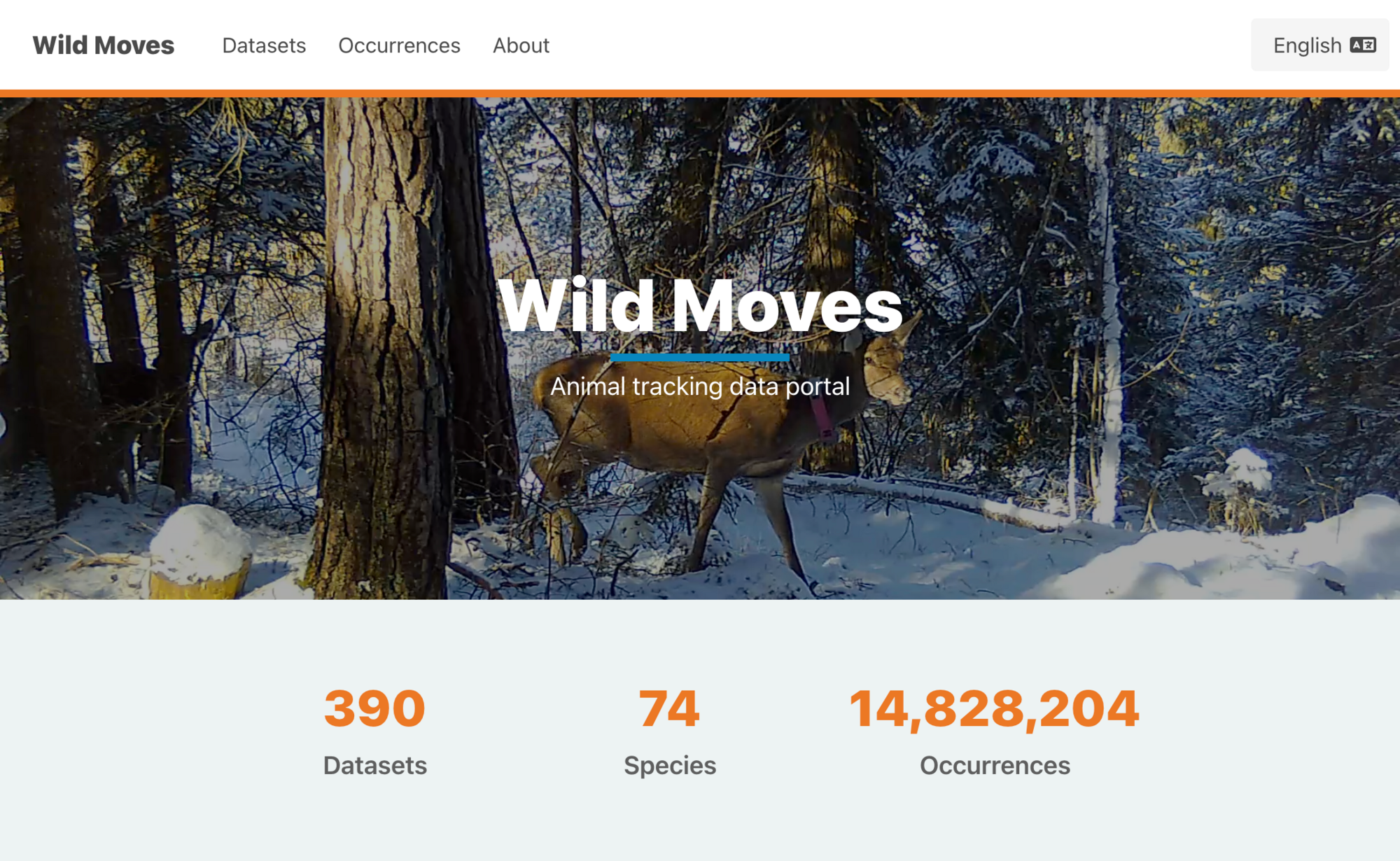
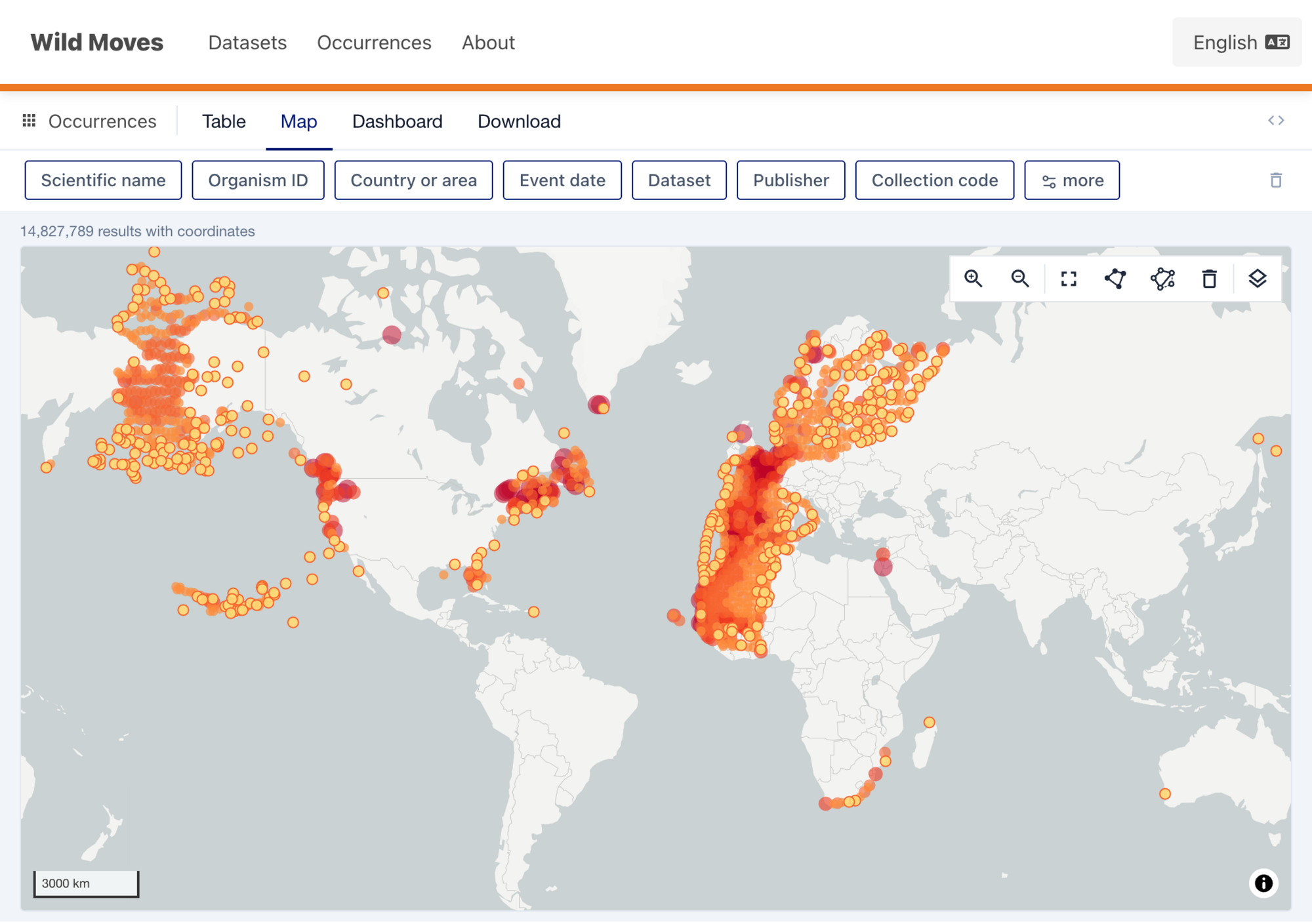
The inaugural version of the portal brings together some of the first animal tracking datasets to be published in GBIF, including contributions from INBO, the Ocean Tracking Network (OTN), Ghent University, and the United States Integrated Ocean Observing System (IOOS). These initial datasets represent a wide range of tracking technologies and ecosystems, including acoustic and satellite telemetry. The data represent 74 avian, terrestrial, and marine species, some of which are also mobilized through the Ocean Biodiversity Information System (OBIS).
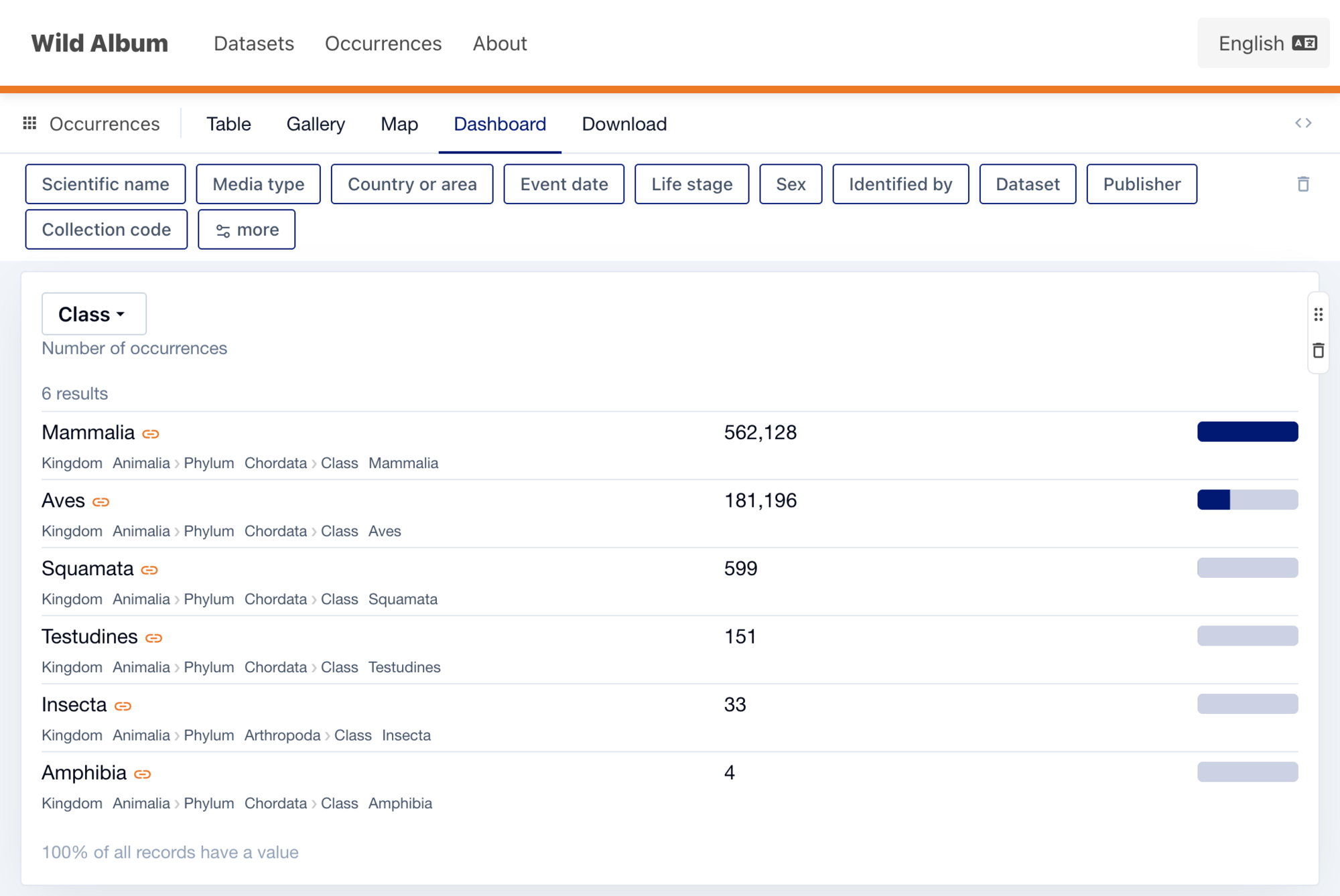
The companion portal, Wild Album, is dedicated to camera trap data, allowing users to explore images and species observations generated from camera trap deployments around the world.
Across both portals, users can discover Darwin Core standardized datasets and visualize spatial patterns across projects. For example, users can explore camera trap images of juvenile wild boars or map detections of Atlantic cod between 2010 and 2015.
Explore the portals!
Explore Wild Moves and Wild Album to discover wildlife tracking and camera trap datasets already available through GBIF.
Link your data
Want others to discover your data and use it for research and conservation? For Wild Moves, upload your animal tracking dataset to a repository that will facilitate the publication to GBIF or contact a national GBIF representative. For Wild Album, publish your camera trap dataset in the Camtrap DP format using the GBIF IPT.
Add the first post in this thread.