
Group curators
Tessa Rhinehart
- @tessa_rhinehart
- | she/her
University of Pittsburgh

Arky
Acoustic sensors enable efficient and non-invasive monitoring of a wide range of species, including many that are difficult to monitor in other ways. Although they were initially limited in application scope largely due to cost and hardware constraints, the development of low-cost, open-source models like the Audiomoth in recent years has increased access immensely and opened up new avenues of research. For example, some teams are using them to identify illicit human activities through the detection of associated sounds, like gunshots, vehicles, or chainsaws (e.g. OpenEars).
With this relatively novel dimension of wildlife monitoring rapidly advancing in both marine and terrestrial systems, it is crucial that we identify and share information about the utility and constraints of these sensors to inform efforts. A recent study identified advancements in hardware and machine learning applications, as well as early development of acoustic biodiversity indicators, as factors facilitating progress in the field. In terms of limitations, the authors highlight insufficient reference sound libraries, a lack of open-source audio processing tools, and a need for standardization of survey and analysis protocols. They also stress the importance of collaboration in moving forward, which is precisely what this group will aim to facilitate.
If you're new to acoustic monitoring and want to get up to speed on the basics, check out these beginner's resources and conversations from across the WILDLABS platform:
Three Resources for Beginners:
- Listening to Nature: The Emerging Field of Bioacoustics, Adam Welz
- Ecoacoustics and Biodiversity Monitoring, RSEC Journal
- Monitoring Ecosystems through Sound: The Present and Future of Passive Acoustics, Ella Browning and Rory Gibb
Three Forum Threads for Beginners:
- AudioMoth user guide | Tessa Rhinehart
- Audiomoth and Natterjack Monitoring (UK) | Stuart Newson
- Help with analysing bat recordings from Audiomoth | Carlos Abrahams
Three Tutorials for Beginners:
- "How do I perform automated recordings of bird assemblages?" | Carlos Abrahams, Tech Tutors
- "How do I scale up acoustic surveys with Audiomoths and automated processing?" | Tessa Rhinehart, Tech Tutors
- Acoustic Monitoring | David Watson, Ruby Lee, Andy Hill, and Dimitri Ponirakis, Virtual Meetups
Want to know more about acoustic monitoring and learn from experts in the WILDLABS community? Jump into the discussion in our Acoustics group!
Header image: Carly Batist
Group curators
- @tessa_rhinehart
- | she/her
University of Pittsburgh
Studying macroecology and conservation using bioacoustics



- 2 Resources
- 21 Discussions
- 3 Groups
Technologist and Visual storyteller focusing on social, conservations issues.


- 1 Resources
- 64 Discussions
- 17 Groups
No showcases have been added to this group yet.
Birding. Sound recording. Software tools for Bioacoustics. ML related to these subjects.

- 0 Resources
- 7 Discussions
- 2 Groups

Committed to using technology, data and innovation to create efficient, safe and impactful solutions.

- 0 Resources
- 0 Discussions
- 16 Groups

- @TaliaSpeaker
- | She/her
WILDLABS & World Wide Fund for Nature/ World Wildlife Fund (WWF)
I'm the Executive Manager of WILDLABS at WWF



- 28 Resources
- 64 Discussions
- 33 Groups

R & D Tech | Industrial Designer | Wildlife Management Technology


- 0 Resources
- 94 Discussions
- 6 Groups

Exploring open and distributed wildlife monitoring architectures.

- 0 Resources
- 6 Discussions
- 10 Groups
- @sbombaci
- | she/her/hers
I study acoustic ecology, human-wildlife coexistence, and social justice in conservation
- 2 Resources
- 3 Discussions
- 3 Groups

KORA
I am a wildlife biologist with a broad interest in ecology, conservation and management of large carnivores occurring in multi-use landscapes.
- 0 Resources
- 1 Discussions
- 10 Groups

I'm a software developer that has pivotted to starting a company, Wildlife Security Innovations, to help people and wildlife live together safely.


- 0 Resources
- 521 Discussions
- 8 Groups
- @jyseltz
- | He/him
Independent researcher working in open-source AI, based in BC & Panamá.
- 2 Resources
- 3 Discussions
- 9 Groups

- @chrisgnicholas
- | he/him/it
Society for Conservation GIS
IT 'Forest Gump' veteran in remote sensing/location services/XR/IoT ML/Agentic AI

- 0 Resources
- 50 Discussions
- 8 Groups

- @dianekim
- | she/her
Earth Species Project
Research Advocate at Earth Species Project
- 0 Resources
- 3 Discussions
- 5 Groups

- @adramirez
- | she, her
San Diego Zoo Wildlife Alliance
Senior Talent Business Partner at San Diego Zoo Wildlife Alliance, connecting passionate professionals with meaningful careers in conservation, wildlife health, and research.
- 5 Resources
- 1 Discussions
- 3 Groups
Funding
Wildlife Acoustics Scientific Grant Program

Wildlife Acoustics
Wildlife Acoustics is proud to offer a quarterly grant program that supports the advancement of wildlife research, habitat monitoring, and environmental conservation worldwide. Scientists may apply for a product grant...
23 July 2026
Funding
Rewilding the Web: $1,000 grants to pilot AudioMoth bioacoustics

Nurfatin Hamzah
$1,000 grants to pilot AudioMoth bioacoustics on Bumicerts, GainForest's platform for nature stewards
22 July 2026
Careers
San Diego Zoo Wildlife Alliance is an international, nonprofit conservation organization with two front doors: the San Diego Zoo and the San Diego Zoo Safari Park. We integrate wildlife health and care, science, and...
21 July 2026
Careers
San Diego Zoo Wildlife Alliance is an international, nonprofit conservation organization with two front doors: the San Diego Zoo and the San Diego Zoo Safari Park. We integrate wildlife health and care, science, and...
8 July 2026
Careers
San Diego Zoo Wildlife Alliance is an international, nonprofit conservation organization with two front doors: the San Diego Zoo and the San Diego Zoo Safari Park. We integrate wildlife health and care, science, and...
8 July 2026
Link

New paper from our biodiversity team at Microsoft AI for Good! We developed an adaptive AI framework that combines deep learning, CLAP, and active learning to improve acoustic monitoring of endangered Cook Inlet belugas...
17 June 2026

Looking to 3D print custom accessories such as mounting hardware or security housings for your Wildlife Acoustics recorders? We've published the 3D models for our latest Song Meters, EMT, and Power Kit at our Knowledge...
11 June 2026
Careers
Biodiversity Monitoring Scientist

Tom August
This role would suit someone with a background in ecology or environmental science who enjoys combining fieldwork, data analysis, and applied research to support real-world environmental outcomes.
8 June 2026
Article

Monitoring amphibians across the temperate forests of Patagonia presents significant logistical and technical challenges. Remote locations, harsh environmental conditions, and the large volumes of data generated by...
4 June 2026
Article

🌍 Conservation technology is transforming how we protect wildlife, but are we thinking carefully enough about the risks? Drones, camera traps, GPS trackers, acoustic sensors, AI, and remote sensing have become...
22 May 2026
Article
Invitation to submit articles for a Special Issue of the journal "Sensors"
28 April 2026
Careers

I'm looking for a new team member at the Australian Museum to advance machine learning techniques in species identification from bioacoustic data! 🐸 🎵
2 April 2026








July 2026
September 2026
event

Vanesa Reyes

October 2026
event

Donovan Tye
November 2026
event

Sara Petrita Bombaci
event
Vanesa Reyes
December 2026
February 2027

June 2026
event
Wildlife Acoustics
event

Jaqueline Garcia-Yi
event
Wildlife Acoustics
May 2026
event
Jaqueline Garcia-Yi
67 Products
Recently updated products
| Description | Activity | Replies | Groups | Updated |
|---|---|---|---|---|
| Hi everyone,I have a major update: Global Birdsong Radio is officially Open Source! 🎉A couple of months ago, I replied to @brian.maiyo mentioning that I wasn't quiteready to share... |
|
Acoustics | 2 days 3 hours ago | |
| Hi Diane, thanks for sharing this valuable resource. It'd be great if you could add it to The Inventory, a wiki-style database for conservation technology tools, R&D projects... |
|
Acoustics, AI for Conservation, Data Management & Mobilisation, Software Development | 2 days 14 hours ago | |
| We're excited to be co-organizing a special session at the upcoming Acoustical Society of America meeting, together with colleagues from... |
|
Acoustics, AI for Conservation | 1 week 3 days ago | |
| This is a great resource! |
+8
|
Acoustics | 1 week 6 days ago | |
| Hi all!I'm part of a study which will be looking at seabird bioacoustics in Svalbard this August, trying to track colony activity patterns... |
|
Acoustics | 3 weeks ago | |
| That is a great dataset! |
|
Acoustics | 3 weeks ago | |
| Hi Akiba,Thanks for this - that's very helpful! We're looking to borrow quite a few of our AudioMoths, so they wouldn't be modified or modifiable by us in any way. I will... |
|
Acoustics | 3 weeks 2 days ago | |
| Hi — I came across this thread and wanted to chime in on the microphone selection question, as it touches on some tricky hardware trade-offs.For bird monitoring in the 50-20kHz... |
+3
|
Acoustics | 3 weeks 6 days ago | |
| Love this advice down to the chip level 😀 |
+1
|
Acoustics | 4 weeks ago | |
| Thanks for this! I've shared this post with the WildTrax (https://wildtrax.ca/) team and CanAvian (https://canavian.ca/) to investigate. We're exploring data standards as... |
|
Acoustics, Autonomous Camera Traps for Insects, Camera Traps, Data Management & Mobilisation, Open Source Solutions, Software Development | 1 month 1 week ago | |
| That is so cool! Love the video! |
|
Acoustics, AI for Conservation, Latin America Community, Open Source Solutions | 1 month 2 weeks ago | |
| Spectrolipi is a tool for visualizing sound, annotating spectrograms, and exporting ML‑ready acoustic datasets.Spectrolipi V2.0.0... |
|
Acoustics, AI for Conservation, Software Development | 1 month 2 weeks ago |























Project Showcase: "Global Birdsong Radio" - A distributed edge-to-cloud acoustic sensor network using live streams
27 February 2026 1:00am
18 May 2026 4:48pm
This is really impressive Avi! Would you mind sharing what kind of hardware the local ingestion + detection is running on?
It's a fun experiment to think if this could be expanded to any live stream happening on any platform (Instagram, TikTok)
21 May 2026 12:10am
Hi Luke,
The local hardware is just a laptop and a few SIM routers.
I guess the heart of it is the user experience, where the users can navigate their own choice of nature real time stream mosaic.
25 July 2026 2:28am
Hi everyone,
I have a major update: Global Birdsong Radio is officially Open Source! 🎉
A couple of months ago, I replied to @brian.maiyo mentioning that I wasn't quite
ready to share the code due to maintenance concerns and the sheer organic
messiness of the project. However, after thinking about the feedback from this
community, I decided doing a "scorched earth" cleanup, stripping out my personal
credentials, and packaging the system into a publishable state.
You can now view, fork, and dissect the entire v41.0 codebase here:
🔗https://github.com/Avi-wilddetect/global-birdsong-radio
Since my last post, the system has evolved significantly. Here is some
information on how it works under the hood and what is included in the
repository:
1. Hardware & Architecture Specs (To fully answer @luke.browne):
- The Edge Node (Local): Runs on a high-performance Windows PC/Laptop. This is
the workhorse. It runs the Python scripts, FFmpeg, yt-dlp, BirdNET, and
Google Gemini. It manages the "Hydra Network," dynamically routing listener
processes through multiple attached 4G/5G SIM dongles to evade YouTube API
bans, using a PID algorithm to monitor "Network Heat" (data usage) so I
don't blow through my monthly cellular caps.
- The Cloud Node (Web): A lightweight DigitalOcean VPS running Docker. It
hosts Nginx, a Flask API, and a PostgreSQL database. The Edge node simply
beams up tiny payloads of metadata and audio/image proofs.
2. Multimodal AI & "The Predator Reflex" The system is no longer just audio. It
now runs Google Gemini 2.5 Flash alongside BirdNET.
- It uses local pixel-variance motion detection to save API quotas, then
passes frames to Gemini to identify wildlife with strict 2D/3D size and
depth constraints.
- The Predator Reflex: If the Audio Engine hears a high-confidence acoustic
target (e.g., an Elephant rumble or a Lion's roar), it instantly bypasses
the Vision Engine's dormancy state, forcing an immediate visual scan of the
camera. If both confirm, it merges into a highly accurate "Multimodal"
detection.
3. The GUI Ecosystem To manage the "firehose" of data across ~400 curated
streams, the Edge Node includes a massive desktop application suite built in
PyQt6. The repo includes the code for the real-time Dashboard, the Intelligence
Hub (for AI prompting and taxonomy management), the Discovery Radar (which
auto-heals dead YouTube links), and a Curation Studio (where I manually audit
mistakes and export them into an ML dataset for future neural network
retraining).
A Quick Note on Transparency & Disclaimers: To be fully transparent with this
community: while the architectural vision, logic, and system design are mine, I
am not a software engineer by trade. 100% of the underlying Python, SQL, and
HTML/JS code in this repository was written by advanced LLMs acting under my
direction.
Additionally, because this project uses a custom "4-Tier Stream Resolver" to
bypass YouTube bot protections (falling back all the way to Headless Chrome
network sniffing if yt-dlp fails), I have to include a disclaimer: This is
published strictly as an educational research tool. Using automated scrapers can
violate platform Terms of Service, so if you fork it and deploy it, you do so at
your own risk!
Thank you all again for the encouragement. I'd love to hear your thoughts on the
codebase, the adaptive SNR math, or the multimodal logic!
And of course, for those who just want to experience the end result without digging
into the code, the live interactive map is always running at 🔗wilddetection.net.
Feel free to drop by and see (and hear!) what the global network is picking up right now.
Listening to Biodiversity: The Theory and Practice of Passive Acoustic Monitoring
24 July 2026 6:30pm
alp-data: unified access to 35+ bioacoustic datasets
22 July 2026 6:39pm
24 July 2026 2:35pm
Hi Diane, thanks for sharing this valuable resource. It'd be great if you could add it to The Inventory, a wiki-style database for conservation technology tools, R&D projects, and organizations. The Inventory is a place for individuals to explore what technology is available for their work, how it is being used by others around the world, and what the conservation tech community would recommend. Thanks in advance!
WILDLABS Group Leads Panel Discussion
24 July 2026 12:00am
Wildlife Acoustics Scientific Grant Program
23 July 2026 7:43pm
ECHOSYSTEM 2027 – An International Symposium on Acoustic Ecology
22 July 2026 1:40pm
Rewilding the Web: $1,000 grants to pilot AudioMoth bioacoustics
22 July 2026 7:53am
Ecosystems Digital Twin Researcher II - Seasonal - San Diego Zoo Wildlife Alliance
21 July 2026 10:33pm
Call for contributions: From Detections to Ecological Insights at ASA Baltimore 2026
16 July 2026 12:50pm
191st Meeting of the Acoustical Society of America
15 July 2026 4:26pm
List of bioacoustics software
1 July 2020 3:23pm
13 June 2026 4:56pm
Hi Tessa, thanks so much for the update!!! I love that there is an interactive website now. This is such a valuable website, I'm happy to see the updates ;) - Liz
15 June 2026 9:00am
Actually, on the subject of acoustics, the Raspberry Pi based sound localization system I developed has been running continuously since 2023 writing to a 256GB SD card :-)
https://github.com/hcfman/sbts-aru
I submitted it for addition to that list a few years ago. Should be there also I guess.
I have three of these running around my house. Off power though because I can. Actually I use one of them as a time server for all my computer equipment because it maintains microsecond time accuracy continuously.
13 July 2026 11:12pm
This is a great resource!
Conservation Genetics Post Doctoral Associate - San Diego Zoo Wildlife Alliance
8 July 2026 5:28pm
Post Doctoral Associate, Elephant Communication - San Diego Zoo Wildlife Alliance
8 July 2026 5:23pm
Loaning Bioacoustics Recorders
6 July 2026 2:16am
NBM update: 13359 annotated birds calls now accessible
1 July 2026 12:54pm
5 July 2026 4:47pm
That is a great dataset!
AudioMoths in Arctic conditions?
2 July 2026 12:17am
3 July 2026 4:50am
Hi Barbara.
If you are able to power the Audiomoth externally from a lithium-ion source, the lithium-ion batteries can be used down to -20 deg C. They can't be charged below 0 deg C though so if you were thinking of a solar charging setup as well, then you'd need to look at the temperature range you're planning to use them in.
In regards to the battery life for continuous recording, I found this information from here:
Even derating the battery life by a factor of 2 due to cold temperature conditions would seem to get you over the finish line. One experiment you can try is to record continuously in a refrigerator and look at the recording duration. Typical refrigerators are around 2 deg C which could approximate conditions you mentioned.
If you will be using stock Audiomoths with no modification for rechargeable batteries, then I'd recommend using Energizer Lithium AA batteries which have some of the highest battery capacities for disposable batteries. Those are airplane safe if they go in your carry-on luggage.
Hope that helps.
Akiba
3 July 2026 3:53pm
Hi Maxi, thanks so much for this! That's really helpful to know. We were planning on using just a basic plastic windshield. Do you have any advice for what has worked for you against wind? Could I ask also, how long did your AudioMoths last on just regular alkaline batteries?
3 July 2026 3:56pm
Hi Akiba,
Thanks for this - that's very helpful! We're looking to borrow quite a few of our AudioMoths, so they wouldn't be modified or modifiable by us in any way. I will definitely try your idea to record in a fridge! Probably will have to be lithium AAs - thanks for the Energizer recommendation.
Charting the Future of Ocean Passive Acoustics: From observations to science and management
1 July 2026 4:52pm
Applied Bioacoustics for Conservation in Theory and Practice
1 July 2026 8:42am
Microphone for bird monitoring on Raspberry Pi
21 August 2019 5:45pm
9 May 2022 4:04pm
apologies - ignore this reply (or if someone can delete it please do!) I have forum blindness and thought this thread was also about using Birdnet but I realise it isn't.... I suspect this is a setting on Birdnet-Pi so will post on their forums...
Hi Paul, have been trying to get a i2c mic working with Birdnet but am having challenges in getting it working. I can install the adafruit mems you mention above and getting it working directly but when I try to use it through Birdnet I am failing. Have done some rebooting, testing, search forums but am drawing a blank - did yours work "out the box"?
27 May 2022 3:42pm
Hi Julien,
I use this mic for my raspberry pi setup and it works well picking up bird species singing in our garden while the mic and raspberry sit under our roof tiles.
Greetings,
Robin
29 June 2026 8:37pm
Hi — I came across this thread and wanted to chime in on the microphone selection question, as it touches on some tricky hardware trade-offs.
For bird monitoring in the 50-20kHz range, the MEMS route is actually more accessible than it might seem. The ICS-43432 from InvenSense is a solid choice — it's an I2S MEMS microphone, so it connects directly to the Raspberry Pi's I2S interface without needing a sound card at all, and it has good sensitivity and low self-noise in the relevant frequency range. No plugin power needed, no USB complexity. A simple breakout board (SparkFun or Adafruit have them) and a few lines of configuration and you're up.
If you want to avoid I2S configuration entirely and still keep costs reasonable, the ICS-40720 you mentioned is also excellent and can be used with a simple circuit — a basic op-amp buffer stage is straightforward to build and eliminates the need for a sound card entirely. I can sketch out a basic circuit if that would help.
The Audiomoth uses the SPM0408LE5H-TB partly because of its very low noise floor, but for a Pi-based system the ICS-43432 gets you most of the way there with much simpler integration.
What's your target deployment environment — indoor, outdoor fixed, or field portable? That affects the enclosure and weatherproofing approach more than the microphone choice itself.
HELP! USB device code, not recognised by Android
7 November 2024 8:02pm
24 June 2026 8:28am
I used your uf2 file to flash up a Pico (one I built, not the commercial one) and shoved a signal genny on GP28. It shows up in BatGizmo and correctly identifies and heterodynes the signal I put into it.
Does that help? If not, let me know, I do USB all the time. I'm developing a bat mic for a STM32 (just because I can).
Pengy
28 June 2026 3:19pm
Hi — I came across this thread just joining the community. I'm an electronics and embedded systems engineer with 30 years of firmware and hardware design experience, mostly on STM32 and similar ARM Cortex-M targets.
The UAC2/Android issue is a known pain point. Android's UAC2 support has been inconsistent across vendors and API levels — it was only partially addressed in Android 5.0 and many OEMs never fully implemented it. Phil is right that if TinyUSB only exposes UAC2 descriptors, most Android devices will simply ignore the device.
A possible path forward without abandoning TinyUSB: some versions of TinyUSB do allow building a composite device or overriding the audio class descriptor manually. If you can post the relevant section of your usb_descriptors.c (specifically the audio function descriptor and the bcdADC field), I can take a look and see if there's a way to force UAC1 compatibility at the descriptor level without breaking the existing hosts.
Alternatively — and this might be the simpler path — have you considered a small STM32F0 or STM32G0 as the USB bridge? They have mature HAL USB audio support with UAC1 out of the box, cost under £1 in volume, and would leave your Pico firmware untouched.
Happy to help either way.
28 June 2026 4:02pm
Love this advice down to the chip level 😀
Adaptive Acoustic Monitoring for Endangered Cook Inlet Beluga Whales in Complex Soundscapes
17 June 2026 6:03pm
Safe and Sound project report: Is Camtrap DP a suitable standard for (bio)acoustic data?
18 March 2026 4:17pm
12 April 2026 6:19pm
Your report on extending Camtrap DP to bioacoustics resonated with something we are just beginning to explore in Mindoro Island, Philippines.
We have ongoing camera trap deployments in interior forest habitats and are beginning to examine the acoustic layer embedded in those recordings, particularly for nocturnal species such as the Mindoro Boobook. The discussion around terminology and how datasets are structured feels especially relevant, though I am still trying to understand how frameworks like Camtrap DP would apply in practice to this kind of data.
It is encouraging to see this direction being shaped at the community level. I will be following this closely as we continue to learn and figure out how our own datasets might eventually align.
15 June 2026 11:54pm
Thanks for this! I've shared this post with the WildTrax (https://wildtrax.ca/) team and CanAvian (https://canavian.ca/) to investigate. We're exploring data standards as part of a recent initiative so this will be very helpful! @jeffcullis
XX CongresoArgentino de Acústica y V Listening for Aquatic Mammals in Latin America Workshop
12 June 2026 4:49pm
3D CAD models for custom Song Meter/EMT Accessories
11 June 2026 9:44pm
WAI Knowledge Base
🐸 WILDLABS Awards 2025: Open-Source Solutions for Amphibian Monitoring: Adapting Autonomous Recording Devices (ARDs) and AI-Based Detection in Patagonia
27 May 2025 8:39pm
12 November 2025 7:36pm
🌿 Project Update — November 2025
Sharing our experience at the Symposium on Physics Applied to Ecology and Conservation (Foz do Iguaçu, Brazil).
We’d like to thank Carlos Araujo for kindly inviting us to take part in the Symposium on Physics Applied to Ecology and Conservation, held on November 6–7, 2025, at the PTI Campus – Universidade Federal da Integração Latino-Americana (UNILA) in Foz do Iguaçu, Brazil.
The event aimed to build bridges between researchers from different disciplines and countries, exploring how physics can support acoustic monitoring, ecological data collection, and biodiversity conservation.
🎙️ We joined Roundtable 3 — Hardware, Sensors, and Audio Recording, where we discussed:
Open-source autonomous recorders for biodiversity monitoring.
Energy-efficient design and sensor integration.
Alternative battery types and power solutions (particularly relevant to our developments)
🎥 Watch the roundtable recording here.
It was also a great opportunity to share our experience and highlight the WildLabs community, connecting with colleagues working at the intersection of physics, ecology, and technology.
9 June 2026 3:36pm
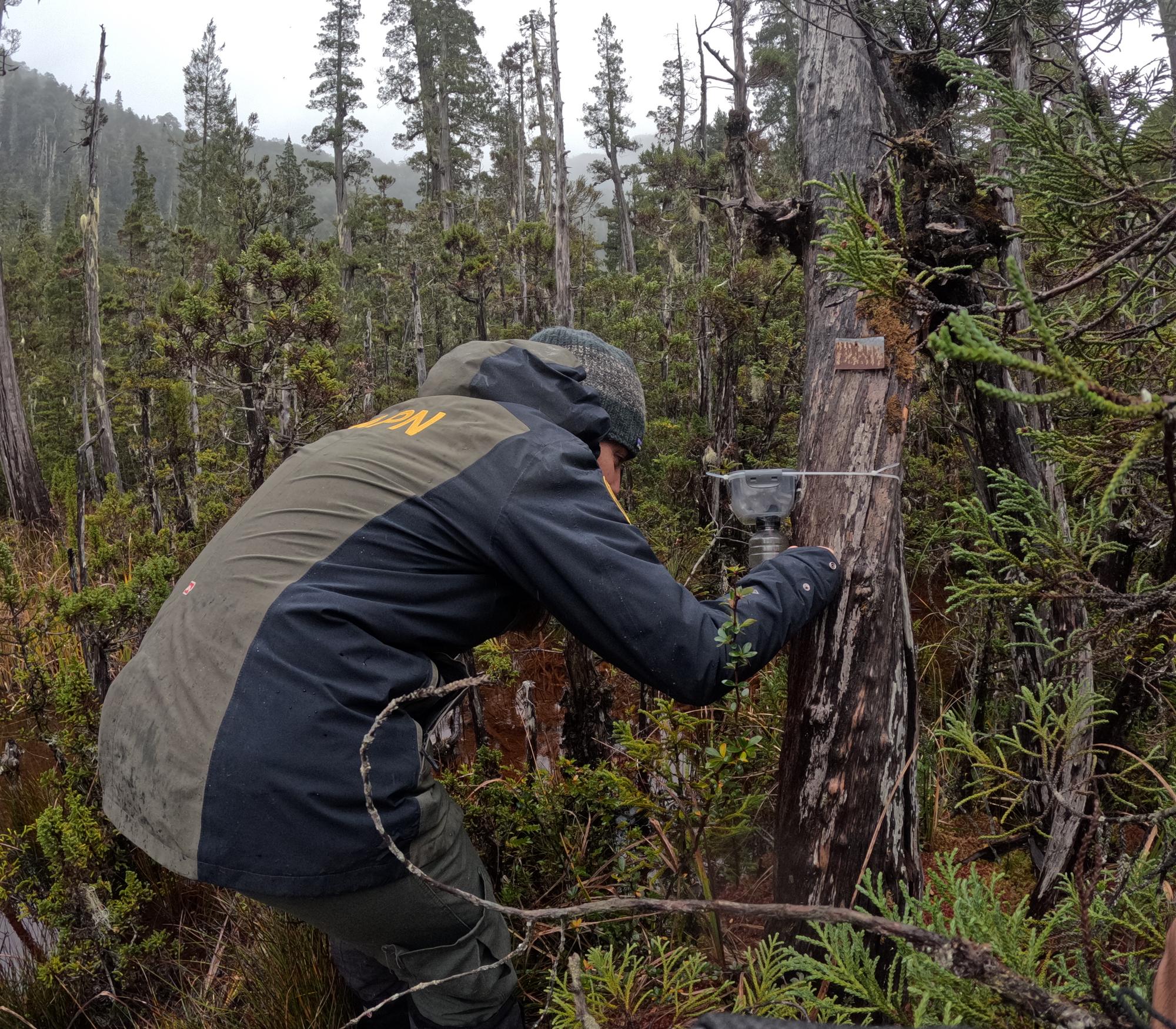
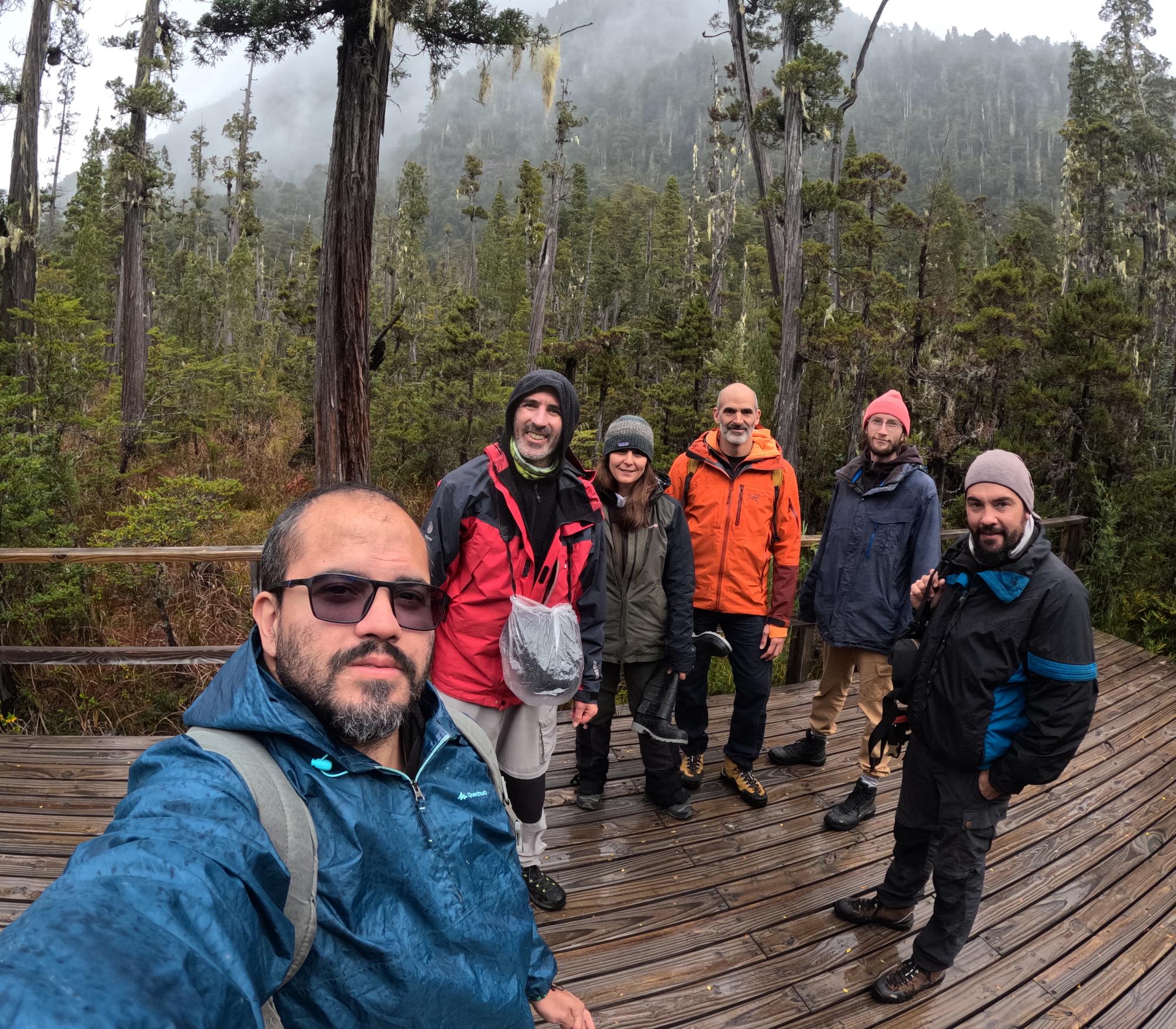
Hi everyone!
Following up on our project development, we have just published the full report on our work integrating environmental monitoring into AudioMoth devices and the resulting BirdNET workflows for Patagonian amphibians. You can find the complete documentation and results here.
Beyond the technical implementation, we’ve documented the custom firmware, the AI training pipeline for our species, and the practical challenges we faced during field deployments:
Project Video: YouTube Video Link
Firmware: AudioMoth I2C Firmware Repository (GitLab)
AI Workflow: BirdNET-based Workflow for Amphibians (GitHub)
Edge Models: TinyFrog Repository (GitHub)
PyTorch reimplementation: BirdNET-Analyzer (GitHub)
If you are working on similar setups or have questions about the hardware or the workflow, feel free to reach out. I hope this documentation proves useful for your own research.
Thanks for the support and the exchange of ideas during these months!
10 June 2026 1:58pm
That is so cool! Love the video!
Biodiversity Monitoring Scientist
8 June 2026 5:22pm
Spectrolipi v2.0.1
8 June 2026 10:34am
Course on Fundamentals of Underwater Acoustics
5 June 2026 3:17pm
Open-Source Solutions for Amphibian Passive Acoustic Monitoring: Lessons from Patagonia
4 June 2026 4:57pm