


Barbara Francik
- @BarbaraFrancik
- | she/her

Related Inventory Content

Hi all,
3 July 2026 2:10am
Hi! i´m Maxi from Argentina. That's interesting. Perhaps it's similar to the battery problems we have in Patagonia. We're using "regular" batteries because rechargeable ones suffer from self-discharge. Lithium rechargeable batteries might be better. But some alkaline batteries should work fine, especially since they won't be used for long periods. The main problem I foresee is the wind noise. Often, those frequencies drown out all the sound, so you'd have to think about something to mask it and point the microphone towards the sound source, constantly monitoring the wind direction. I hope this helps!
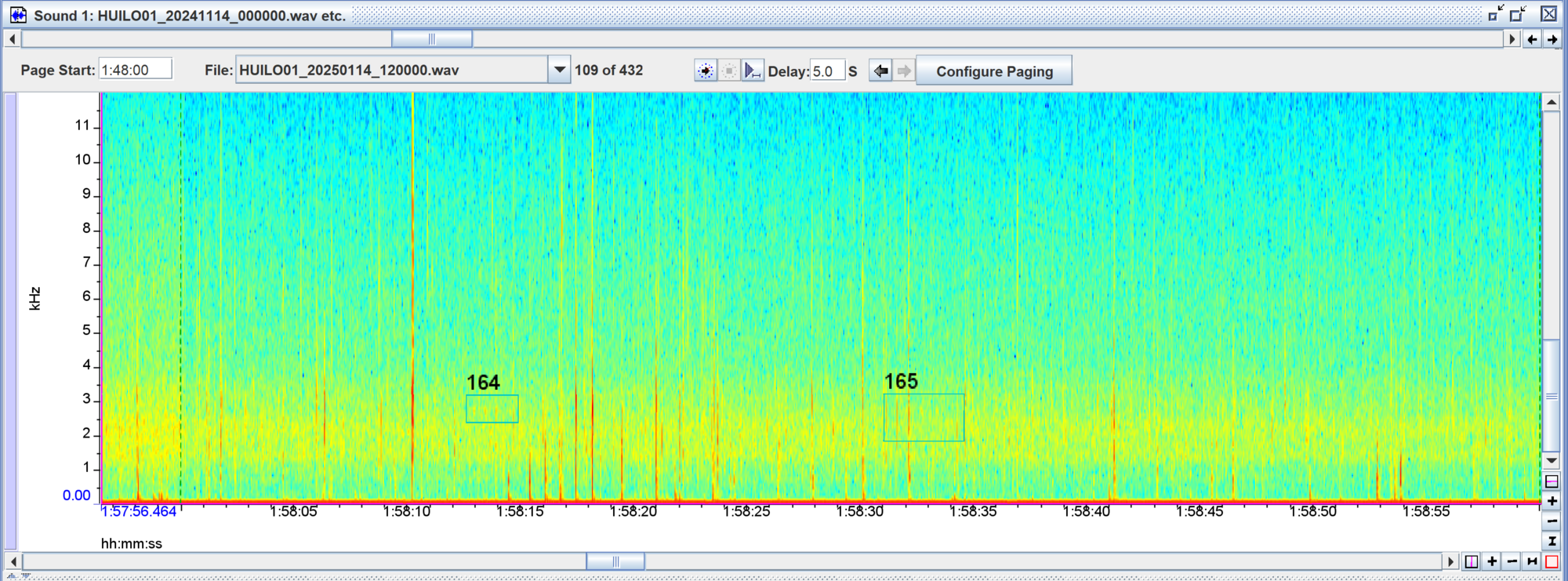
I'll show you the noise that sometimes "contaminates" the recordings.


Akiba
Freaklabs



3 July 2026 4:50am
Hi Barbara.
If you are able to power the Audiomoth externally from a lithium-ion source, the lithium-ion batteries can be used down to -20 deg C. They can't be charged below 0 deg C though so if you were thinking of a solar charging setup as well, then you'd need to look at the temperature range you're planning to use them in.
In regards to the battery life for continuous recording, I found this information from here:
The recording lifespan of the AudioMoth on one set of batteries has previously been measured only for a subset of the possible configuration settings. Hill et al. reported the battery life of the AudioMoth using 3000 mAh lithium batteries for some common configurations [15], reporting that an AudioMoth could record for 115 days recording at 8 kHz, the lowest sample rate, for 30 s every 5 min. The developers also reported the AudioMoth lasted 9 days recording nonstop at a 48 kHz sample rate. While the AudioMoth configuration app provides estimates of battery life for any chosen configuration settings, these estimates have not to our knowledge been validated empirically.
Even derating the battery life by a factor of 2 due to cold temperature conditions would seem to get you over the finish line. One experiment you can try is to record continuously in a refrigerator and look at the recording duration. Typical refrigerators are around 2 deg C which could approximate conditions you mentioned.
If you will be using stock Audiomoths with no modification for rechargeable batteries, then I'd recommend using Energizer Lithium AA batteries which have some of the highest battery capacities for disposable batteries. Those are airplane safe if they go in your carry-on luggage.
Hope that helps.
Akiba
Victorio Maximiliano Rocchi