

Groups joined
Groups
Group
- Group Stats
-







- 284
- 66
- Latest Discussion
- Looking To Utilize My Skillsets To Help
Welcome to the official group for our virtual course, Earth Observation 101. This is your space to engage with course instructor Dr Cristian Rossi, find help and resources for each module, collaborate and chat with your fellow course participants!
Group
- Group Stats
-






- 436
- 169
- Latest Discussion
- Engineer Searching for Biologists
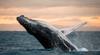
Bringing together many of our community's tech types like bioacoustics, biologging, drones, remote sensing, machine learning, and more, the Marine Conservation group is a meeting point to begin innovative collaborations and answer difficult questions.
🌍 Conservation technology is transforming how we protect wildlife, but are we thinking carefully enough about the risks? Drones, camera traps, GPS trackers, acoustic sensors, AI, and remote sensing have become essential tools for conservation practitioners around the world. They help us monitor species, detect threats, and respond faster than ever before. But these same technologies can also introduce unintended risks, and in some cases, can be exploited by those seeking to harm the very wildlife we're trying to protect. 🦏 Input now and/or join the discussions/research.
Group
- Group Stats
-



- 728
- 393
- Latest Discussion
- Geospatial Group Reflections 2025-2026
Geospatial data and analysis are critical for conservation, from planning to implementation and measuring success. The Geospatial group focuses on all aspects of this field, from field surveys to remote sensing and data development/analysis to GIS systems. The ability to visualize and analyze spatial data underpins many areas of conservation, this group may serve as a landing point and gateway for those new to conservation technology.
🌍 Conservation technology is transforming how we protect wildlife, but are we thinking carefully enough about the risks? Drones, camera traps, GPS trackers, acoustic sensors, AI, and remote sensing have become essential tools for conservation practitioners around the world. They help us monitor species, detect threats, and respond faster than ever before. But these same technologies can also introduce unintended risks, and in some cases, can be exploited by those seeking to harm the very wildlife we're trying to protect. 🦏 Input now and/or join the discussions/research.
Group
- Group Stats
-




- 558
- 193
- Latest Discussion
- New "Human Dimensions" group on Wildlabs?
The Human–Wildlife Coexistence (HWC) group is a collaborative hub for conservationists, technologists, field researchers, entrepreneurs, and innovators exploring solutions to HWC globally. The group provides a space to share practical tools, pilot novel interventions, connect global communities, and amplify projects that help communities and wildlife coexist. The group emphasizes community voices, socio-economic challenges, and equitable resource sharing, ensuring human perspectives are understood alongside wildlife needs.
- Latest Resource
- /
- Synthesis of Insights / Learning session 14: Rights of Nature by Tribal and First Nations
Synthesis of insights of our 14th online learning session, using dialogue to explore the workings, developments, (im)possibilities, and emerging insights of diverse approaches and praxes for Co-creation with the More-than-Human world
Group
- Group Stats
-



- 507
- 198
- Latest Discussion
- US-approved drones for conservation?
Used to pick up signals from tracking gear on the ground, collect images of wildlife and habitats from the air, gather acoustic data with specialized hydrophones, or even collect snot samples from whales' blowholes, drones are capable of collecting high-resolution data quickly, noninvasively, and at relatively low cost.
🌍 Conservation technology is transforming how we protect wildlife, but are we thinking carefully enough about the risks? Drones, camera traps, GPS trackers, acoustic sensors, AI, and remote sensing have become essential tools for conservation practitioners around the world. They help us monitor species, detect threats, and respond faster than ever before. But these same technologies can also introduce unintended risks, and in some cases, can be exploited by those seeking to harm the very wildlife we're trying to protect. 🦏 Input now and/or join the discussions/research.
Group
- Group Stats
-





- 1412
- 621
Artificial intelligence is increasingly being used in the field to analyse information collected by wildlife conservationists, from camera traps and satellite images to audio recordings. AI can learn how to identify which photos out of thousands contain rare species; or pinpoint an animal call out of hours of field recordings - hugely reducing the manual labour required to collect vital conservation data. The AI For Conservation group is intended to unite and inspire all WILDLABS community members—whether already involved in AI for conservation, or not—to understand how to use and/or directly contribute to open-source research and development efforts.
- Latest Resource
- /
- Deep Voice - A Free Online Platform for AI-Based Marine Mammal Sound Detection and Classification
Passive acoustic monitoring floods marine researchers with data that can take months to annotate by hand, and the AI models that could help have long required Python setup, GitHub repos, and complex config files. Funded by the WILDLABS Awards 2025, Deep Voice removes that barrier with a free, public web app that turns marine mammal sound detection into a simple drag-and-drop task.
Group
- Group Stats
-





- 235
- 125
- Latest Discussion
- Getting behavioral data out of datasets that weren't built for it
Protected area management systems empower essential frontline conservationists to monitor wildlife and ecosystems in real-time. With tools like SMART, EarthRanger, and Esri's Conservation Land Management toolkit, users can collect, integrate, and display data from across landscapes to ensure that key information from the field gets to decision-makers in time to make a difference. This group is the place for new and experienced users of these tools alike to ask questions, share experiences, and work together to improve their effectiveness in critical conservation landscapes around the world.
🌍 Conservation technology is transforming how we protect wildlife, but are we thinking carefully enough about the risks? Drones, camera traps, GPS trackers, acoustic sensors, AI, and remote sensing have become essential tools for conservation practitioners around the world. They help us monitor species, detect threats, and respond faster than ever before. But these same technologies can also introduce unintended risks, and in some cases, can be exploited by those seeking to harm the very wildlife we're trying to protect. 🦏 Input now and/or join the discussions/research.
Bookmarks
Keep track of the resources that matter to you! Collections let you save, organise, and share content from all over the WILDLABS community. Create your first collection by clicking on the bookmark icon wherever you see it.
My Courses
These are your in-progress and completed courses. Explore more courses through our catalogue.
To find courses you have created, see your "My Draft Content" or "My Content" tabs.
Hayley Whyte's Comments
Be part of the conversation! Once you've joined a discussion in the community, your comments will show up here.