

Badges
Editing badges. Drag to reorder.

Groups joined
Discussion Comments
Groups
Group
- Group Stats
-







- 995
- 538
The WILDLABS Community Base is the ideal place to get oriented with the all that our community platform offers, hear about news and opportunities, and to meet new friends and collaborators.
- Latest Resource
- /
- WILDLABS en français !
Après l'espagnol, nous sommes ravis d'annoncer que la plateforme est maintenant disponible en français!
Group
- Group Stats
-






- 1412
- 621
Artificial intelligence is increasingly being used in the field to analyse information collected by wildlife conservationists, from camera traps and satellite images to audio recordings. AI can learn how to identify which photos out of thousands contain rare species; or pinpoint an animal call out of hours of field recordings - hugely reducing the manual labour required to collect vital conservation data. The AI For Conservation group is intended to unite and inspire all WILDLABS community members—whether already involved in AI for conservation, or not—to understand how to use and/or directly contribute to open-source research and development efforts.
- Latest Resource
- /
- Deep Voice - A Free Online Platform for AI-Based Marine Mammal Sound Detection and Classification
Passive acoustic monitoring floods marine researchers with data that can take months to annotate by hand, and the AI models that could help have long required Python setup, GitHub repos, and complex config files. Funded by the WILDLABS Awards 2025, Deep Voice removes that barrier with a free, public web app that turns marine mammal sound detection into a simple drag-and-drop task.
Group
- Group Stats
-







- 754
- 286
The Animal Movement Group is a collaborative community dedicated to advancing the study, monitoring, and conservation of animal movement. It provides a space for researchers, practitioners, and innovators to exchange knowledge, explore bio-logging approaches and data, and address conservation challenges linked to species mobility.
- Latest Resource
- /
- Wild Moves and Wild Album: New GBIF Data Portals for Animal Tracking and Camera Trap Data
New data portals are making it easier to discover and explore wildlife tracking and camera trap datasets from around the world.
Group
- Group Stats
-







- 224
- 70
- Latest Resource
- /
- Boring Fund Report for Creating Global Open-Access Ground-Truth Datasets for Insect Monitoring
Improving the computer vision detection model for the Mothbox, an automatic insect monitoring tool from Dinalab
Group
- Group Stats
-





- 299
- 209
- Latest Discussion
- The Climate Change AI Virtual Summer School 2026!
The conservation tech community has the power to help us understand and overcome the enormous challenges posed by climate change. Join our Climate Change group to meet others who are passionate about using their expertise to innovate new solutions and find reasons to be optimistic about tech's potential in the fight against climate disasters.
- Latest Resource
- /
- Synthesis of Insights / Learning session 14: Rights of Nature by Tribal and First Nations
Synthesis of insights of our 14th online learning session, using dialogue to explore the workings, developments, (im)possibilities, and emerging insights of diverse approaches and praxes for Co-creation with the More-than-Human world
Group
- Group Stats
-





- 156
- 20
- Latest Discussion
- Looking To Utilize My Skillsets To Help
Conservation dogs are making a difference in conservation through their noninvasive ability to detect elusive species in the wild, flag illegal wildlife trade products, and help poachers fight wildlife crime. Whether you work with conservation dogs, you're interested in incorporating them into your work, or you just want to learn about how dogs can support and enhance conservation technology's effectiveness, you're in the right place!
🌍 Conservation technology is transforming how we protect wildlife, but are we thinking carefully enough about the risks? Drones, camera traps, GPS trackers, acoustic sensors, AI, and remote sensing have become essential tools for conservation practitioners around the world. They help us monitor species, detect threats, and respond faster than ever before. But these same technologies can also introduce unintended risks, and in some cases, can be exploited by those seeking to harm the very wildlife we're trying to protect. 🦏 Input now and/or join the discussions/research.
Group
- Group Stats
-





- 396
- 178
- Latest Discussion
- The Climate Change AI Virtual Summer School 2026!
There are educators everywhere working to teach and train the next generation of sustainability minded students. Whether in formal settings (K-12, undergraduate, graduate) settings or informally as science communication now it is more important than ever to work towards advancing Conservation Tech education. By working on interdisciplinary teams we can help develop teaching and training tools to help expand the field of Conservation Technology creation.
- Latest Resource
- /
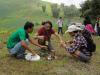
- What Happens When Conservation Technology Leaves the Lab? Lessons from Training Rural Communities in the Brazilian Cerrado
Thanks to support from the WILDLABS Awards through the Boring Fund, funded by Arm, we were able to deliver a conservation technology training programme designed to make wildlife monitoring tools more accessible to rural communities.
Group
- Group Stats
-






- 506
- 199
Used to pick up signals from tracking gear on the ground, collect images of wildlife and habitats from the air, gather acoustic data with specialized hydrophones, or even collect snot samples from whales' blowholes, drones are capable of collecting high-resolution data quickly, noninvasively, and at relatively low cost.
🌍 Conservation technology is transforming how we protect wildlife, but are we thinking carefully enough about the risks? Drones, camera traps, GPS trackers, acoustic sensors, AI, and remote sensing have become essential tools for conservation practitioners around the world. They help us monitor species, detect threats, and respond faster than ever before. But these same technologies can also introduce unintended risks, and in some cases, can be exploited by those seeking to harm the very wildlife we're trying to protect. 🦏 Input now and/or join the discussions/research.
Bookmarks
Keep track of the resources that matter to you! Collections let you save, organise, and share content from all over the WILDLABS community. Create your first collection by clicking on the bookmark icon wherever you see it.
My Courses
These are your in-progress and completed courses. Explore more courses through our catalogue.
To find courses you have created, see your "My Draft Content" or "My Content" tabs.
Settings
Wild Tech Alliance's Content
Wild Tech Alliance's Comments
| Comment | Post | Date |
|---|---|---|
| Hi everyone,I'm thrilled to… | Welcome to WILDLABS! |
Wild Tech Alliance commented on "Welcome to WILDLABS! "