
Dado que las soluciones de conectividad son vitales para gran parte de nuestro trabajo con tecnología de conservación, nuestro grupo de Conectividad reúne a usuarios que trabajan con diversas herramientas tecnológicas. Nuestra comunidad ha señalado con frecuencia la importancia de la conectividad para el éxito de su trabajo, pero las soluciones de moda como IoT y LoRa pueden resultar intimidantes para los conservacionistas que se inician en el tema. Este es el espacio para debatir sobre la amplia gama de redes de comunicación que se están volviendo cada vez más esenciales para la recuperación de datos en los sistemas modernos de tecnología de conservación. ¡Invitamos a principiantes, expertos y a todos los demás a participar!
Al conectar a principiantes y expertos para debatir y aclarar dudas sobre la conectividad en la tecnología de conservación, este grupo sirve como un lugar para aprender y explorar, con espacios para hablar sobre los avances recientes y los desarrollos futuros, compartir recursos para ayudar a otros a comprender los problemas clave de conectividad y su relevancia para su trabajo, hacer preguntas y resolver problemas, y mucho más.
A continuación, encontrarás uno de nuestros episodios de Tutores Tecnológicos que introduce el tema de la conectividad a través de un tutorial sobre LoRa:
Sean Sturley: ¿Cómo empezar con LoRa? Conectividad en la conservación.
Y aquí encontrarás un episodio sobre el uso de IoT satelital:
Por último, aquí tenéis un magnífico ejemplo de una red multisensor que conecta dispositivos en un paisaje de Nueva Zelanda, cortesía de Andrew Digby (ver la publicación original aquí).

Imagen de encabezado: Njoroge Nyamu (ver publicación original aquí)
Aún no se han agregado destacados a este grupo.

- @StephODonnell
- | She / Her
Tech, Sustainable Finance at World Bank & CFA (prev. Founder WILDLABS)



- 197 Recursos
- 670 Discusiones
- 31 Grupos
Building perimeter monitoring technology for protected areas with Safora
- 0 Recursos
- 1 Discusiones
- 10 Grupos

- @TaliaSpeaker
- | She/her
WILDLABS & World Wide Fund for Nature/ World Wildlife Fund (WWF)
I'm the Executive Manager of WILDLABS at WWF



- 28 Recursos
- 64 Discusiones
- 33 Grupos

Fauna & Flora
GIS & Remote sensing technical specialist at Fauna & Flora



- 0 Recursos
- 17 Discusiones
- 6 Grupos
Committed to using technology, data and innovation to create efficient, safe and impactful solutions.

- 0 Recursos
- 0 Discusiones
- 16 Grupos

As a software engineer I've made a career building large scale financial products. I'm looking to apply my skills to support non-profits and help solve funding problems.
- 0 Recursos
- 5 Discusiones
- 11 Grupos

Building conservation tech

- 0 Recursos
- 8 Discusiones
- 5 Grupos

Care for Wild Rhino Sanctuary
Technology Manager at Care for Wild Rhino Sanctuary

- 0 Recursos
- 1 Discusiones
- 7 Grupos

WILDLABS & Wildlife Conservation Society (WCS)
I'm the Bioacoustics Research Analyst at WILDLABS. I'm a marine biologist with particular interest in the acoustics behavior of cetaceans. I'm also a backend web developer, hoping to use technology to improve wildlife conservation efforts.



- 53 Recursos
- 42 Discusiones
- 34 Grupos

- @mwanikimm
- | Mr
Ol Pejeta Conservancy
Technology and Innovations Manager
- 0 Recursos
- 1 Discusiones
- 7 Grupos

I am willdife biologist who uses GPS telemetry on regular basis. I have over 20 years of experiences working in East Asia.
- 0 Recursos
- 2 Discusiones
- 10 Grupos

- @Freaklabs
- | He/Him
Freaklabs
I'm an engineer and product designer working in conservation technology. I specialize in technology for landscape restoration and wildlife behavioral ecology.

- 1 Recursos
- 327 Discusiones
- 20 Grupos
Artículo
Synthesis of insights of our 14th online learning session, using dialogue to explore the workings, developments, (im)possibilities, and emerging insights of diverse approaches and praxes for Co-creation with the More-...
1 July 2026
Carreras
Consider applying if you have a passion for conservation, low-powered hardware, edge-AI, and embedded systems.
18 Junio 2026
Carreras
Full Stack Developer - Conservation X Labs

Dante Wasmuht
Conservation X Labs is looking for an awesome Full-Stack Developer!
18 Junio 2026
Carreras
Ecologist (Postdoctoral Research Fellow), IS-0408-09

Lacey Hughey
The Smithsonian’s National Zoo & Conservation Biology Institute (in collaboration with Duke Farms, a center of the Doris Duke Foundation) is seeking a postdoctoral researcher to lead the development of next-gen...
1 Junio 2026
Artículo

🌍 Conservation technology is transforming how we protect wildlife, but are we thinking carefully enough about the risks? Drones, camera traps, GPS trackers, acoustic sensors, AI, and remote sensing have become...
22 Mayo 2026
Artículo
Invitation to submit articles for a Special Issue of the journal "Sensors"
28 April 2026
Carreras
Ecological Data Scientist
Lacey Hughey
The Smithsonian Institution is the world’s largest museum, education, and research complex, with 21 museums and the National Zoo. This position is located in the Smithsonian's National Zoo and Conservation Biology...
21 April 2026
Carreras
Interim Co-Chair Position with Move BON
Lacey Hughey
Move BON is seeking a new Interim Co-Chair to help shape the future of biodiversity observation and movement ecology.
6 Enero 2026
Artículo

The University of Hawai‘i - Ocean & Resources Engineering program is seeking project ideas from community groups, marine/ocean scientists, government agencies, companies, and non-governmental organizations for their...
16 November 2025
Artículo
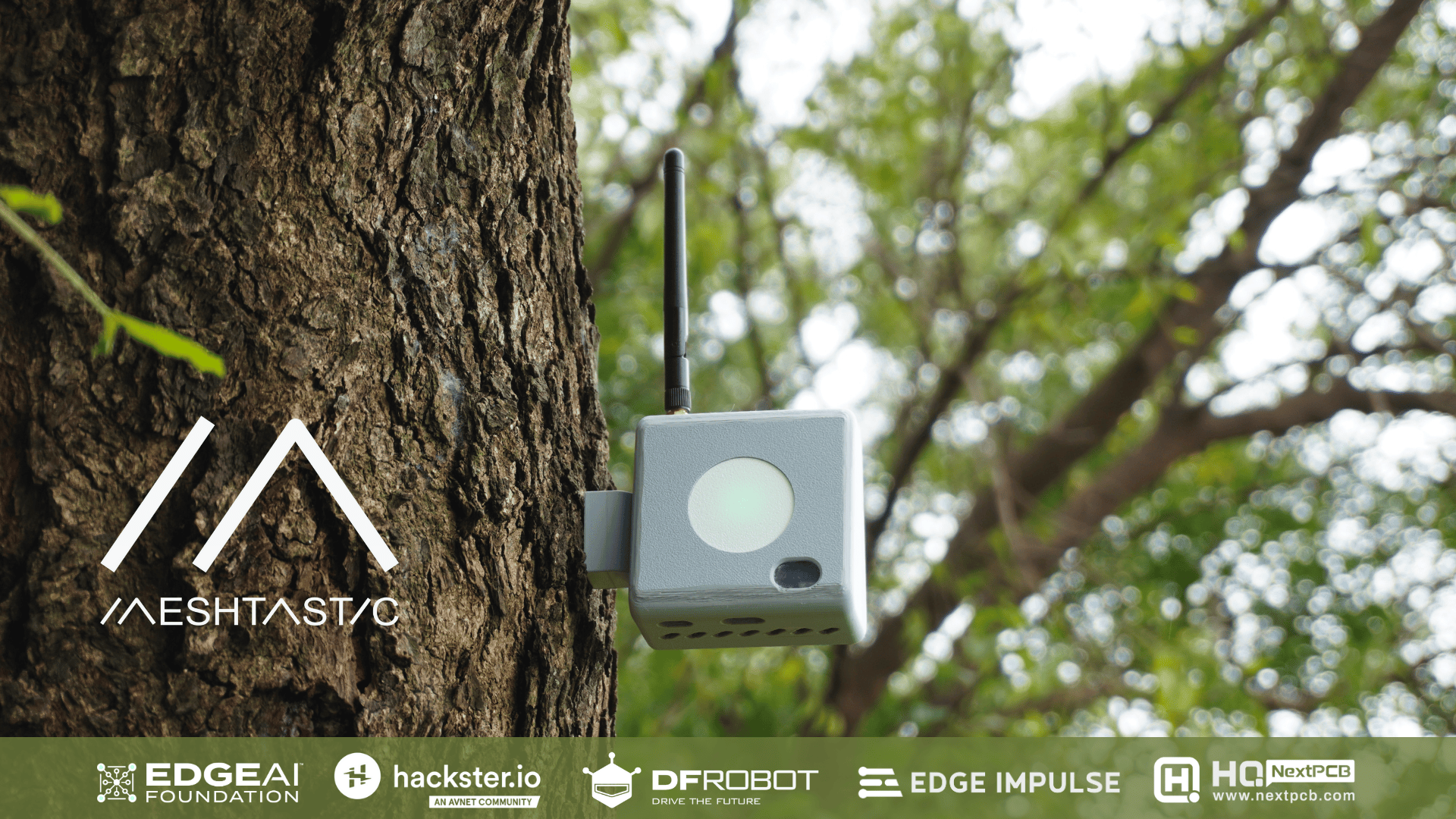
Forest Guard

Mukesh Sankhla
A Decentralized Edge-AI LoRa Mesh Network for Forest Surveillance
29 Septiembre 2025
Enlace
NATURE EMBASSY ORGANIZATION

Samuells keshine
Are looking to advance your research on the vast rangeland of kenya, at NATURE EMBASSY We are open to accept projects on community, wildlifes, rangeland, conservation education, wildlifes monitoring, remote emerging...
27 August 2025
Carreras

If you're a Post-Doctoral Fellow, a PhD student, or a member of the research staff interested in applying your computational skills to support active research publications, please read on to learn about the Cross-...
5 August 2025
Protected Area Technician (PAT) Training


Protected Area Technician (PAT) Training
Protected Area Technician (PAT) Training


Fantastic Fields: Field Data Collection the Smart Way


Fantastic Fields: Field Data Collection the Smart Way
Fantastic Fields: Field Data Collection the Smart Way
Julio 2026
evento

Renilde
Mayo 2026
evento

Ginevra Bellini
evento
Renilde


















Synthesis of Insights / Learning session 14: Rights of Nature by Tribal and First Nations
1 July 2026 4:24pm
July15: “Wildlife Tracking for Connection” online learning session
1 July 2026 4:20pm
Senior Hardware Product Development Engineer - Conservation X Labs
18 Junio 2026 4:42pm
Full Stack Developer - Conservation X Labs
18 Junio 2026 3:37pm
Ecologist (Postdoctoral Research Fellow), IS-0408-09
1 Junio 2026 4:02pm
Help shape best-practice guidance on conservation technology - input to survey
22 Mayo 2026 10:20am
May 19: Catalysing Nature-Centrism Learning Session (Co-creation with the More-than-Human sandbox)
2 Mayo 2026 3:51pm

Looking for internships, fellowships, and scholarships in conservation technology
2 Mayo 2026 9:03am
Citizen science tool for microplastic mapping in underserved regions
18 April 2026 3:48am
"Sensor Systems for Biodiversity and Ecosystem Monitoring" - Special Issue Invitation
28 April 2026 12:10pm
Ecological Data Scientist
21 April 2026 9:22pm
The Hidden World of Sensitive Species Data
10 April 2026 4:03pm
Looking To Utilize My Skillsets To Help
19 Marzo 2026 10:26pm
Camera Trap Integration Webinar with Sensing Clues: Connecting Your Camera Traps with All Your Conservation Data
19 Marzo 2026 10:07am
From Whiskers to Datasets: How We Study Small Mammals
11 Marzo 2026 10:03am

When should managers actively breach a temporarily closed estuary?
20 February 2026 10:16am
Women in Conservation Forum: 3 Weeks Today!!
9 February 2026 1:31am
11 February 2026 2:16am
Hi Macayle! My assumption is that this is an in-person only event...yes? If there is an option to join remotely or listen in, please do follow up and share with our Community! I would personally love to attend, and I am sure many others would as well! And if there may be any content that is publicized post the event, please do share that as well. :) Sounds like a fantastic initiative -- thank you for sharing! Cheers!
Women in Conservation Forum (WiCF) 2nd March in Nairobi: GoFundMe platform
30 Enero 2026 5:14am
30 January 2026 10:52am
Hello Macayle
It is of great pleasure that there is this opportunity coming to East Africa. I would like to attend this. Do you have any recommendation for funding a student to attend such a forum? I will share this opportunity with our East Africa WhatsApp group too.
2 February 2026 2:33am
Hi Susan,
Thank you for your message.
I apologise, but as we are a non-profit and mostly volunteer-run, we are presently unable to provide funding support to people to travel to Nairobi for the forum.
Thank you for sharing WiCF with the whatsapp community; that’s lovely of you!
I can write up an official letter of invitation if that would help with a university bursary application, and WiCF attendees will receive a certificate of attendance for the day.
I have a small invitation flyer; feel free to share this with others who may be interested.
Kind regards,
Macayle
Women in Marine Conservation session in the Women in Conservation Forum (WiCF) day 2nd March in Nairobi, Kenya.
30 Enero 2026 4:52am
30 January 2026 4:56am
Disclaimer: The related organisations in the blue box below are not partnership statements. I am merely trying to spread the word. We only have official partnerships (e.g. by an MoU) with CCF and WildDrone for the GCTDF.
Thank you!
30 January 2026 10:55am
Hi Macayle
Are these two different forums; one in Mombasa and other in Nairobi? can you make me understand please?
1 February 2026 2:02am
Edge AI for Conservation Workshop

23 February 2026 8:38am
Hi All, thanks so much to everyone who participated in the workshop and made it a success! We've uploaded the slides here:
Thanks!
Jenna
23 February 2026 8:38am
Hi All, thanks so much to everyone who participated in the workshop and made it a success! We've uploaded the slides here:
Thanks!
Jenna
Interim Co-Chair Position with Move BON
6 Enero 2026 6:58pm
🚨 🔔 Call for Project Ideas: Partner with Graduate Ocean Instrumentation and Technology Course!
16 November 2025 7:22am
VHF Frequencies
16 Octubre 2025 4:41pm
22 October 2025 9:27pm
Hi Matthew, thanks a lot!
I found an example of the australian frequency plan which goes a lot further. It seems like it's 150.05 - 153.0 ...
https://www.acma.gov.au/sites/default/files/2021-07/Australian%20Radiofrequency%20Spectrum%20Plan%202021_Including%20general%20information.pdf
page 22 at the top and page 50
31 October 2025 7:35pm
In the U.S., 148-152MHz, 163-165MHz and 216-220MHz are the most commonly used for wildlife tracking. I think there are some very specific/narrow disallowed segments in those ranges but I've generally relied on tag manufacturers to know to avoid those. As Matthew mentioned, there are also limits on power output for legal use of these frequencies.
10 November 2025 4:08pm
Thanks a lot, Kyler. We also believe that this is largely our responsibility not to ship tags which work outside the allowed range.

Protected Area Technician (PAT) Training
31 Octubre 2025 12:56pm
Fantastic Fields: Field Data Collection the Smart Way
Sean Hill
and 1 more
9 Octubre 2025 12:32pm
Forest Guard
29 Septiembre 2025 1:49pm
29 September 2025 1:52pm
1 October 2025 11:34am
29 June 2026 8:48pm
Hi Mukesh — this is a well-thought-out architecture and the combination of Edge Impulse + Meshtastic is a smart choice for keeping the stack open and maintainable.
A few thoughts from field deployment experience with similar systems in remote African environments:
On the LoRa mesh topology — Meshtastic works well for general mesh but uses a flooding algorithm that can become inefficient as node count grows. For a dense sensor network where you have many nodes but relatively few gateways, consider whether a more structured topology (like a simple star-of-stars with dedicated repeater nodes at higher elevation points) might give you better latency and battery performance. The flooding approach also burns extra TX cycles on every node for every message, which matters if you're trying to squeeze months out of a solar cell.
On power — for permanent solar installations in tropical and savannah environments, the main risk isn't average insolation but multi-day cloud cover during wet season. A 3-5 day battery reserve at minimum operating current is worth designing in explicitly. The BQ25504 MPPT IC is a good choice for harvesting from small cells — it starts up at very low input voltage which matters in low-light conditions.
On acoustic model reliability — gunshot detection in open African bush is harder than in forest because there's less acoustic diffraction and more wind noise. The VM3011 mic you mentioned in other threads handles wind well, but you'll want to train your Edge Impulse model on savannah soundscapes specifically, not just forest recordings. False positive rate from vehicle backfires, thunder, and snapping branches can be high if the training set doesn't include local ambient audio.
On chainsaw detection for illegal logging — this is actually easier than gunshots because of the sustained harmonic signature. If you retrain for this, worth adding accelerometer data as a secondary feature — a chainsaw physically couples vibration into whatever surface it's resting on, which can improve classification confidence.
Happy to discuss deployment architecture further — I've been working on LoRaWAN-based tracking systems and have gone through a lot of these trade-offs in practice.
1 May 2026 12:39pm
Hi Mykhailo. That citizen science tool seems interesting. But, how do you expect people to detect microplastics (ranging from 1 µm to 5 mm in size)?