

Badges
Editing badges. Drag to reorder.


Groups joined
Discussions started
Discussion Comments


Groups
Group
- Group Stats
-






- 482
- 147
Anyone can become a citizen scientist - even experts! If you're excited about exploring new areas of conservation tech, contributing to projects, or developing and launching your own citizen science projects or apps, this is the group for you.
🌍 Conservation technology is transforming how we protect wildlife, but are we thinking carefully enough about the risks? Drones, camera traps, GPS trackers, acoustic sensors, AI, and remote sensing have become essential tools for conservation practitioners around the world. They help us monitor species, detect threats, and respond faster than ever before. But these same technologies can also introduce unintended risks, and in some cases, can be exploited by those seeking to harm the very wildlife we're trying to protect. 🦏 Input now and/or join the discussions/research.
Group
- Group Stats
-







- 496
- 197
Used to pick up signals from tracking gear on the ground, collect images of wildlife and habitats from the air, gather acoustic data with specialized hydrophones, or even collect snot samples from whales' blowholes, drones are capable of collecting high-resolution data quickly, noninvasively, and at relatively low cost.
🌍 Conservation technology is transforming how we protect wildlife, but are we thinking carefully enough about the risks? Drones, camera traps, GPS trackers, acoustic sensors, AI, and remote sensing have become essential tools for conservation practitioners around the world. They help us monitor species, detect threats, and respond faster than ever before. But these same technologies can also introduce unintended risks, and in some cases, can be exploited by those seeking to harm the very wildlife we're trying to protect. 🦏 Input now and/or join the discussions/research.
Group
- Group Stats
-






- 933
- 400
- Latest Discussion
- Spectrolipi v2.0.1
Acoustic is one of our biggest and most active groups, with members collecting, analysing, and interpreting acoustic data from across species, ecosystems, and applications, from animal vocalizations to sounds from our natural and built environment.
- Latest Resource
- /
- Open-Source Solutions for Amphibian Passive Acoustic Monitoring: Lessons from Patagonia
Monitoring amphibians across the temperate forests of Patagonia presents significant logistical and technical challenges. Remote locations, harsh environmental conditions, and the large volumes of data generated by Passive Acoustic Monitoring (PAM) can make long-term biodiversity surveys difficult to implement and maintain. In addition, environmental data often relies on multiple independent devices, increasing costs, complexity, and logistical demands in remote field conditions. Through the WILDLABS Awards 2025, our team explored practical ways to address these challenges by combining open-source hardware, environmental sensing, and AI-assisted acoustic analysis.
Group
- Group Stats
-




- 260
- 101
- Latest Discussion
- Engineer Searching for Biologists
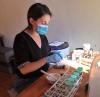
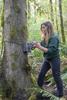
The eDNA & Genomics Group focuses on advancing biodiversity monitoring, species detection, and ecological research using environmental DNA (eDNA) and genomics technologies. Our members are engaged in the collection, sequencing, and analysis of DNA from environmental samples—such as soil, water, and feces—to detect species presence, assess genetic diversity, and study population structure without the need for direct observation or capture.
- Latest Resource
- /
- Assessing Critical Habitats Using Environmental DNA to Conserve the World’s Rarest Heron- White-bellied Heron Ardea insignis
The White-bellied Heron (Ardea insignis) is the world's rarest heron, with only about 60 individuals remaining globally. Bhutan holds nearly half of the remaining population, making conservation efforts within the country crucial to the species' survival. As part of my PhD research at Texas State University, I have been working to better understand the ecology, habitat suitability, and conservation needs of this critically endangered species. I employ an interdisciplinary approach that integrates field ecology, environmental DNA (eDNA) and portable genomics technologies to improve biodiversity monitoring and conservation planning for White-bellied Heron in Bhutan. Unlike traditional monitoring approaches that rely solely on direct observations, eDNA allows researchers to detect biodiversity from traces of genetic material left behind in the environment. The WILDLABS Award provided an exciting opportunity not only to advance research but also to demonstrate how emerging conservation technologies can be applied in remote landscapes while building local capacity for conservation genetics. Through this project, we sought to explore how portable molecular tools can support conservation decision-making while making advanced genetic technologies more accessible to researchers and practitioners in Bhutan.
Group
- Group Stats
-







- 968
- 535
- Latest Discussion
- London Climate Action Week 2026 Conservation Technology Related Events?
The WILDLABS Community Base is the ideal place to get oriented with the all that our community platform offers, hear about news and opportunities, and to meet new friends and collaborators.
- Latest Resource
- /
- The State of Conservation Technology: What Five Years of Data Tell Us
Our 2026 report is here, drawing on five years of community-sourced data to explore how the field is evolving, where progress is being made, and where collective action is still needed.
Bookmarks
¡Mantén un registro de los recursos que te interesan! Las colecciones te permiten guardar, organizar y compartir contenido de toda la comunidad de WILDLABS. Crea tu primera colección haciendo clic en el icono del marcador.
My Courses
These are your in-progress and completed courses. Explore more courses through our catalogue.
To find courses you have created, see your "My Draft Content" or "My Content" tabs.
Settings
Stephen Petersen's Content
Discussion
Data in the Data

Stephen Petersen
Hi All - I gave a talk recently on northern leopard frogs, and in the following discussions, it turned out that some colleagues with ARUs deployed for birds have been getting...
3 April 2026
Discussion
Tethered UAVs
Stephen Petersen
Does anyone have an experince using a tethered drone or bimp? I want to collect aerial images of beluga whales that are being sampled (acoustics and snot) to determine numbers and...
14 March 2018
Stephen Petersen commented on "Data in the Data"