

Badges
Editing badges. Drag to reorder.

Groups joined
Discussion Comments
Resources added

Consolata Gathoni Gitau added a new Article - "🌍🎶 **Inspiring Moments at the African Bioacoustics Community Conference!** 🎶🌍" to Acoustics

Consolata Gathoni Gitau added a new Article - "NEW PUBLICATION ALERT!" to East Africa Community

Consolata Gathoni Gitau added a new Career Opportunity - "A PHD POSITION AT NOTTINGHAM TRENT UNIVERSITY" to East Africa Community
Consolata Gathoni Gitau added a new Article - "Conservation of Kikuyu Escarpment Forest" to Acoustics
Consolata Gathoni Gitau added a new Career Opportunity - "PhD Position- Nottingham Trent University UK" to Conservation Tech Training and Education
Groups
Group
- Group Stats
-



- 249
- 231
The East Africa Community is WILDLABS first regional hub. This group creates a space to foster connections and collaboration between conservation and technology players in the Silicon Savannah.
- Latest Resource
- /
- Introducing the 2026 Cohort: Women in Conservation Technology Programme, Tanzania 2026
We're delighted to announce the launch of our fourth Women in Conservation Technology Programme, in partnership with the Grumeti Fund and with support from the JRS Biodiversity Foundation. Join us in welcoming the 2026 cohort as they kick off the training with an in-person workshop in Tanzania this July!
Group
- Group Stats
-




- 723
- 388
Geospatial data and analysis are critical for conservation, from planning to implementation and measuring success. The Geospatial group focuses on all aspects of this field, from field surveys to remote sensing and data development/analysis to GIS systems. The ability to visualize and analyze spatial data underpins many areas of conservation, this group may serve as a landing point and gateway for those new to conservation technology.
🌍 Conservation technology is transforming how we protect wildlife, but are we thinking carefully enough about the risks? Drones, camera traps, GPS trackers, acoustic sensors, AI, and remote sensing have become essential tools for conservation practitioners around the world. They help us monitor species, detect threats, and respond faster than ever before. But these same technologies can also introduce unintended risks, and in some cases, can be exploited by those seeking to harm the very wildlife we're trying to protect. 🦏 Input now and/or join the discussions/research.
Group
- Group Stats
-



- 1406
- 620
Artificial intelligence is increasingly being used in the field to analyse information collected by wildlife conservationists, from camera traps and satellite images to audio recordings. AI can learn how to identify which photos out of thousands contain rare species; or pinpoint an animal call out of hours of field recordings - hugely reducing the manual labour required to collect vital conservation data. The AI For Conservation group is intended to unite and inspire all WILDLABS community members—whether already involved in AI for conservation, or not—to understand how to use and/or directly contribute to open-source research and development efforts.
- Latest Resource
- /
- Deep Voice - A Free Online Platform for AI-Based Marine Mammal Sound Detection and Classification
Passive acoustic monitoring floods marine researchers with data that can take months to annotate by hand, and the AI models that could help have long required Python setup, GitHub repos, and complex config files. Funded by the WILDLABS Awards 2025, Deep Voice removes that barrier with a free, public web app that turns marine mammal sound detection into a simple drag-and-drop task.
Group
- Group Stats
-



- 753
- 285
The Animal Movement Group is a collaborative community dedicated to advancing the study, monitoring, and conservation of animal movement. It provides a space for researchers, practitioners, and innovators to exchange knowledge, explore bio-logging approaches and data, and address conservation challenges linked to species mobility.
- Latest Resource
- /
- Wild Moves and Wild Album: New GBIF Data Portals for Animal Tracking and Camera Trap Data
New data portals are making it easier to discover and explore wildlife tracking and camera trap datasets from around the world.
Group
- Group Stats
-




- 926
- 304
- Latest Discussion
- Camera Trap Suggestions for Time-lapse Seabird Monitoring?
Looking for a place to discuss camera trap troubleshooting, compare models, collaborate with members working with other technologies like machine learning and bioacoustics, or share and exchange data from your camera trap research? Get involved in our Camera Traps group! All are welcome whether you are new to camera trapping, have expertise from the field to share, or are curious about how your skill sets can help those working with camera traps.
- Latest Resource
- /
- Practical Considerations for Camera Trap Photography
Trail Cameras & Custom Camera Traps: Technology, Ethics & Strategies for Success
Group
- Group Stats
-






- 286
- 103
Welcome to the home of the Women in Conservation Technology Programme (WiCT)! This is a space for the women and mentors involved in the programme to keep in touch, share updates and resources, and problem solve together! Drop into our group to say hello and keep in touch with the programme and participants.
- Latest Resource
- /
- Introducing the 2026 Cohort: Women in Conservation Technology Programme, Tanzania 2026
We're delighted to announce the launch of our fourth Women in Conservation Technology Programme, in partnership with the Grumeti Fund and with support from the JRS Biodiversity Foundation. Join us in welcoming the 2026 cohort as they kick off the training with an in-person workshop in Tanzania this July!
Group
- Group Stats
-





- 947
- 404
- Latest Discussion
- Loaning Bioacoustics Recorders
Acoustic is one of our biggest and most active groups, with members collecting, analysing, and interpreting acoustic data from across species, ecosystems, and applications, from animal vocalizations to sounds from our natural and built environment.
- Latest Resource
- /
- Open-Source Solutions for Amphibian Passive Acoustic Monitoring: Lessons from Patagonia
Monitoring amphibians across the temperate forests of Patagonia presents significant logistical and technical challenges. Remote locations, harsh environmental conditions, and the large volumes of data generated by Passive Acoustic Monitoring (PAM) can make long-term biodiversity surveys difficult to implement and maintain. In addition, environmental data often relies on multiple independent devices, increasing costs, complexity, and logistical demands in remote field conditions. Through the WILDLABS Awards 2025, our team explored practical ways to address these challenges by combining open-source hardware, environmental sensing, and AI-assisted acoustic analysis.
Group
- Group Stats
-





- 686
- 312
- Latest Discussion
- Getting behavioral data out of datasets that weren't built for it
This group is for anyone interested in applying software to conservation and wildlife research. Whether you're a developer eager to contribute to conservation or a newbie with valuable data and ideas but limited software experience, this group connects people with diverse expertise. It provides a space for asking questions, sharing resources, and staying informed about new technologies and best practices.
🌍 Conservation technology is transforming how we protect wildlife, but are we thinking carefully enough about the risks? Drones, camera traps, GPS trackers, acoustic sensors, AI, and remote sensing have become essential tools for conservation practitioners around the world. They help us monitor species, detect threats, and respond faster than ever before. But these same technologies can also introduce unintended risks, and in some cases, can be exploited by those seeking to harm the very wildlife we're trying to protect. 🦏 Input now and/or join the discussions/research.
Bookmarks
My Courses
These are your in-progress and completed courses. Explore more courses through our catalogue.
To find courses you have created, see your "My Draft Content" or "My Content" tabs.
Settings
Consolata Gathoni Gitau's Content
Article
🌍🎶 **Inspiring Moments at the African Bioacoustics Community Conference!** 🎶🌍

Consolata Gathoni Gitau
The African Bioacoustics Conference!
18 September 2024
Article
NEW PUBLICATION ALERT!
Consolata Gathoni Gitau
One of the most thrilling moments for any researcher is seeing their hard work published for the world to see. As part of the Women in Conservation Technology (WiCT) Kenya Cohort One, we not only learnt about the use of...
17 June 2024
Article
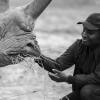
On 27th March, our Women in Conservation Technology Programme Kenya Alumni and East Africa Community participated in a vibrant #IWD2024 gathering in Nairobi in collaboration with other women-focused organisations...
9 April 2024
Careers
A PHD POSITION AT NOTTINGHAM TRENT UNIVERSITY
Consolata Gathoni Gitau
Do you know anyone interested in this position? Let them know by sharing widely.
27 February 2024
Article
Conservation of Kikuyu Escarpment Forest
Consolata Gathoni Gitau
With the support of Women in Conservation Technology (Kenya) and Arm, I had a chance to work with Kijabe Environment Volunteers in Kikuyu Escarpment Forest. This was an opportunity to channel my passion for the...
1 December 2023
Careers
PhD Position- Nottingham Trent University UK
Consolata Gathoni Gitau
Pathways to the resilience of agro-pastoral communities in Kenya- PhD Position at NTU
1 December 2023
Article
Volunteering at Kijabe Environment Volunteers (KENVO)
Consolata Gathoni Gitau
At KENVO's Environmental and Conservation Department, I was able to participate in detailed bird, biodiversity and threatened plant species monitoring in Kereita Forest as part of an ITF restoration project, as well as...
14 November 2023
Consolata Gathoni Gitau commented on "IMPACTING NATURE CONSERVATION THROUGH YOUTH RESTORATION INITIATIVES &TECHNOLOGY"