
En las últimas décadas, el uso de perros en labores de conservación se ha disparado. Desplegados para detectar especies invasoras o difíciles de encontrar, excrementos, cazadores furtivos, productos del comercio ilegal de vida silvestre y mucho más, los equipos caninos de conservación están entrenados para ayudar a los equipos en el campo. Con ventajas como búsquedas más rápidas en grandes áreas, una precisión de detección comprobada y facilidad de transporte y muestreo, los perros de conservación también ofrecen la posibilidad de mejorar otros métodos tecnológicos al confirmar o proporcionar resultados en tiempo real.
Los equipos caninos de conservación ahora detectan excrementos, reptiles, especies acuáticas, excrementos de ballenas y plantas invasoras, entre otras muchas cosas. Esta expansión de su uso se debe en parte a técnicas de entrenamiento más sofisticadas que ofrecen una mayor capacidad en funciones de detección muy especializadas, y en parte a que cada vez más personas reconocen las capacidades y los beneficios de los perros entrenados.
En concreto, la utilización de perros en la conservación ha experimentado un aumento considerable en los últimos años, a medida que se reconoce la importancia de su capacidad para el trabajo de campo. Entre los beneficios de que los perros ofrezcan una detección mejorada para apoyar los estudios se incluyen:
- Velocidad de búsqueda
- Cubriendo grandes áreas de manera efectiva
- Capacidad de detección probada
- Calibrado en una variedad de especies, si es necesario
- Precisión en la detección de objetivos e ignorancia de especímenes similares no objetivo
- Y fácil de transportar a los sitios de estudio.
Si entrenas, manejas, utilizas o te interesa saber más sobre perros de conservación, ¡esta es la comunidad para ti! Este grupo está creciendo, así que si quieres empezar y conectar con otros, aquí tienes algunas sugerencias:
- ¿Tienes algún consejo que quieras compartir con otras personas interesadas en probar por primera vez el trabajo con perros de conservación? ¿O necesitas asesoramiento sobre si los perros de conservación se adaptan a tu trabajo?
- ¿Tienes recursos o investigaciones que puedas compartir sobre el entrenamiento o el uso de perros de conservación?
- ¿Tiene algún estudio de caso o actualización de proyecto que involucre perros de conservación?
- ¿Tienes alguna pregunta sobre cómo conseguir perros de conservación para tu propio trabajo?
El coordinador de tu grupo es Paul Bunker. Puedes contactarlo directamente a través de WILDLABS o escribirle un correo electrónico aquí si tienes alguna pregunta o sugerencia.
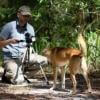
Foto de encabezado: Bill, fotografiado por Stephanie O'Donnell
Aún no se han agregado destacados a este grupo.

- @carlybatist
- | she/her
ecoacoustics, biodiversity monitoring, nature tech



- 133 Recursos
- 373 Discusiones
- 19 Grupos

- @StephODonnell
- | She / Her
Tech, Sustainable Finance at World Bank & CFA (prev. Founder WILDLABS)


- 197 Recursos
- 670 Discusiones
- 31 Grupos

- @TaliaSpeaker
- | She/her
WILDLABS & World Wide Fund for Nature/ World Wildlife Fund (WWF)
I'm the Executive Manager of WILDLABS at WWF



- 28 Recursos
- 64 Discusiones
- 33 Grupos

Saint Louis Zoo
Solutions architect focused on geoAI and dataEng, currently building business intelligence and conservation tech for the Saint Louis Zoo


- 0 Recursos
- 23 Discusiones
- 13 Grupos

WILDLABS & Wildlife Conservation Society (WCS)
I'm the Bioacoustics Research Analyst at WILDLABS. I'm a marine biologist with particular interest in the acoustics behavior of cetaceans. I'm also a backend web developer, hoping to use technology to improve wildlife conservation efforts.



- 53 Recursos
- 42 Discusiones
- 34 Grupos
Department of Conservation (New Zealand)
Computer Engineer and Environment Enthusiast
- 0 Recursos
- 1 Discusiones
- 16 Grupos
Conservation is collaboration
- 0 Recursos
- 5 Discusiones
- 8 Grupos

a career switcher currently pursuing a Master of Natural Resources at the University of Idaho, I am actively transitioning my skills to align with my passion for conservation. After 15 years working for the Department of Navy as an Engineer, I now aspire to excel as a GIS Conserv
- 0 Recursos
- 0 Discusiones
- 9 Grupos

Software Engineer

- 0 Recursos
- 8 Discusiones
- 10 Grupos

St. Lawrence University
Professor of Biology at St. Lawrence University
- 0 Recursos
- 2 Discusiones
- 12 Grupos

Georgia Institute of Technology
Grad Student
- 0 Recursos
- 2 Discusiones
- 7 Grupos

Queensland University of Technology (QUT)
- 1 Recursos
- 20 Discusiones
- 6 Grupos
Artículo

🌍 Conservation technology is transforming how we protect wildlife, but are we thinking carefully enough about the risks? Drones, camera traps, GPS trackers, acoustic sensors, AI, and remote sensing have become...
22 Mayo 2026
Carreras

Summer internship opportunity with WWF
3 Marzo 2026
Artículo
Oxford Nanopore sequencing combined with environmental DNA (eDNA) metabarcoding as a rapid and field-adapted tool for monitoring elusive carnivores
8 February 2026
Artículo

Scientists at Victoria's Healesville Sanctuary are using trained sniffer dogs on paddleboards to track and identify platypuses in their habitat.
23 July 2025
Murray-Darling carpet python populations in South Australia have declined due to loss of habitat and predation. Trials using conservation detection dogs to find the snakes in the Riverland have so far had positive...
26 Mayo 2025
Artículo
A published research study
15 Enero 2025
Artículo
Their keen noses are helping researchers document the diversity of fungi living underneath Pacific Northwest forests.
15 Enero 2025
Artículo
Published research paper
27 August 2024
Artículo
New WILDLABS Funding & Finance group

Frank van der Most
WildLabs will soon launch a 'Funding and Finance' group. What would be your wish list for such a group? Would you be interested in co-managing or otherwise helping out?
5 Junio 2024
Enlace
YouTube link to interview regarding the Saola Detection Canine project in Laos
10 Diciembre 2023
Artículo
This article discusses a project utilizing canines to detect the scat of a critically endangered mammal, the Saola.
10 Diciembre 2023
Enlace

A secure platform designed for those working to monitor & protect natural resources. Insight facilitates sharing experience, knowledge & tools to increase efficiency & effectiveness in conservation. By...
7 November 2023
Marzo 2026
evento

Diana Mastracci
| Descripción | Actividad | Respuestas | Grupos | Actualizado |
|---|---|---|---|---|
| Greetings, I'm based in Gibsonia, PA and looking to help anyway I can part time either local or remote.My skillsets are the following:.NET... |
|
Acústica, IA para la Conservación, Movimiento Animal, Cámaras Trampa Autónomas para Insectos, Comunidad para Crear tus Propios Registradores de Datos, Cámaras Trampa, Ciencia Ciudadana, Cambio Climático, Base Comunitaria, Conectividad, Perros de Conservación , Capacitación y Educación en Tecnología para la Conservación, Data Management & Mobilisation, Drones, Comunidad de Observación de la Tierra 101, Comunidad de África Oriental, Edge Computing, ADN ambiental y genómica, Tecnologías Emergentes, Ética de la Tecnología para la Conservación, Financiamiento y Finanzas, Geoespacial, Human-Wildlife Coexistence, Comunidad Latinoamericana, Conservación Marina, Herramientas para la Gestión de Áreas Protegidas, Sensores, Sustainable Fisheries | 3 meses 2 semanas ago | |
| We have been placing trap cameras along our saliva collector in a forested area in our campus, where for the past 4 months some semi-feral dogs have established their campsite (... |
|
Perros de Conservación | 5 meses ago | |
| Thank you! I will follow up by email. |
+8
|
Movimiento Animal, Perros de Conservación , Comunidad de África Oriental, Geoespacial, Sensores, Programa Mujeres en Tecnología para la Conservación (WiCT) | 1 año 3 meses ago | |
| Yes, Belgian Malinois dogs are very common nowadays to accompany park rangers in South Africa. 🐕🦺The park I worked with had three of them, but training them is quite expensive,... |
|
Perros de Conservación | 1 año 5 meses ago | |
| The PCB mount terminals are actually quite robust and paired with a lock washer and something that would better secure the nylon (e.g., a piece of flat grooved plastic to add... |
|
Acústica, Perros de Conservación , Sensores | 1 año 7 meses ago | |
| Hi Steph, We appreciate the support! Thanks for the tag and your help managing the community!Patrick |
|
Sensores, Acústica, Perros de Conservación , Tecnologías Emergentes, Soluciones de Código Abierto | 2 años 2 meses ago | |
| These are great materials to refer to. I just have to wrap my amateur brain around the technological words but I should be fine. Thank you Harold. |
|
Perros de Conservación , Programa Mujeres en Tecnología para la Conservación (WiCT) | 3 años 4 meses ago | |
| "Preliminary results- Fecal samples are increasingly used in wildlife research to confirm species’ presence and to estimate population... |
|
Perros de Conservación | 4 años ago | |
| In this short presentation, Dr. Edgar Aviles-Rosa of the Canine Olfaction Lab at Texas Tech University joins Chiron K9's Principal,... |
|
Perros de Conservación | 4 años 3 meses ago | |
| The UK's first Conservation Canine conference is now available for replay ticket purchase. Day 1 9:30 -... |
|
Perros de Conservación | 4 años 4 meses ago | |
| thanks Pete, yes we're going to collect some from captive animals when they come out of hibernation. I'll keep in touch. |
|
Perros de Conservación | 4 años 7 meses ago | |
| Thank you! I just replied via email. |
|
Perros de Conservación | 4 años 7 meses ago |




















Help shape best-practice guidance on conservation technology - input to survey
22 Mayo 2026 10:20am

Looking To Utilize My Skillsets To Help
19 Marzo 2026 10:26pm
Assessing Oxford Nanopore-based eDNA metabarcoding for carnivore monitoring in Saudi Arabia: detection of Arabian leopard DNA as a case study
8 February 2026 6:43pm
Do dogs influence small mammal trapping success rates?
4 August 2025 7:51pm
Dogs cruise creeks on paddleboards to sniff out and help the vulnerable platypus
23 July 2025 2:54pm

Detection dogs sniff out South Australia's elusive Murray-Darling carpet python
26 May 2025 9:36pm
Detection dogs sniff out South Australia's elusive Murray-Darling carpet python - ABC News
So-called conservation detection dogs are being trialled in the Riverland and Murraylands to find elusive, but once thriving, Murray Darling carpet pythons.
 •
21 May 2025
•
21 May 2025
GPS collars for domestic dogs
20 Enero 2025 3:26am

20 February 2025 8:46pm
What are your parameters? Do you need yes no movement, which could be collected with an accelerometer and no lat-long data?
Movement on an XY grid once an hour within a tightly bounded area?
High resolution once per second data? Large geographic area?
Different technologies deliver ddifferent datasets. Sometimes, significantly!
10 March 2025 11:37am
Hi Stephanie, at https://Savannahtracking.com we develop and manufacture a variety of collars with sizes ranging from about 95 grams for Raptors, 200grams - 1200g for mammals, and collars for large mammals such as Elephants. We currently have collars deployed on Dingoes which are about the same size as domestic dogs, and I believe that a similar solution will be perfect for your needs.
Our GPS collars can be programmed to collect high resolution data (15-minute gps positions) with hourly uploads via iridium satellite to our server where you can view and download the data from our dedicated windows or MAC SDM platforms. We also have a view only android/ios app. All our collars have two-way satellite communication, Internet based downloading via the free accompanying Savannah Tracking data manager software, automated Google Earth links for visualization, fully user definable geo fencing allowing for point, line and polygon fences and automated app and mail alarms in case of zone violation.
Kindly reach out to us and we can discuss a bespoke solution for your tracking needs at [email protected]
11 March 2025 3:31am
Thank you! I will follow up by email.
Conservation dogs deployed in Assam to counter poaching
26 Junio 2017 3:33pm
27 June 2017 2:53pm
Awesome!

3 January 2020 7:13pm
Hi jprobert, my name is Jennifer Hartman and I work with Rogue Detection Teams. I wanted to share some other resources for you if you are still interested in learning more about conservatin detection dogs and thier applications. From live animals, invasive species as well as scat and toxin surveys, our teams have conducted a great many projects around the world and we're happy to talk shop with you. There are also several other detection dog groups around the world and if you would like to be put in touch with them, we're happy to assist. Please let us know if we can help. We can be reached at [email protected] or you can first check us out at roguedogs.org. Warm regards, Jennifer

7 February 2025 4:27pm
Yes, Belgian Malinois dogs are very common nowadays to accompany park rangers in South Africa. 🐕🦺
The park I worked with had three of them, but training them is quite expensive, both time- and money-wise.
Still, they are incredibly good and worth this effort. We had them walk along after fencecuts and they led us right past all the snares laid by poachers. Not to say how fierce they can be if things get serious and their handler lets them loose on a target...
They also help the ground rangers sense natural dangers like lions etc. earlier, or also while otherwise occupied (with eg radio etc).
‘Good boy!’ Truffle-sniffing dogs are helping uncover hidden underground ecosystems
15 Enero 2025 2:20am
Collar Automatic Release Mechanisms
3 November 2024 8:14pm
9 November 2024 6:24pm
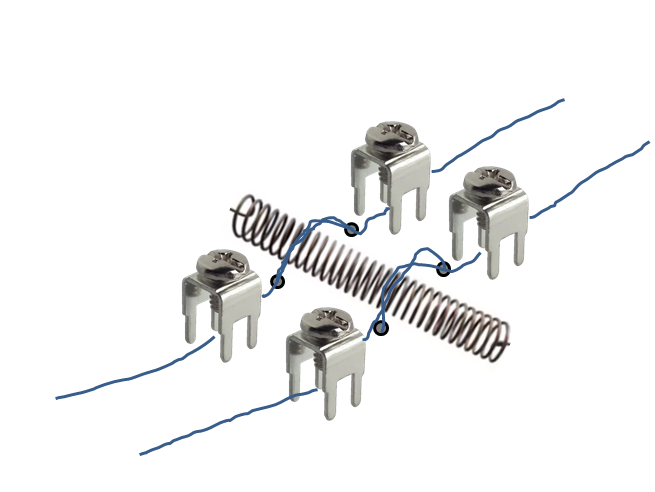
Re: the conversation about alternatives to knots/tying nylon line, I wonder if something like these PCB mount screw terminals would be strong enough to hold line in place for a long time, but also not sever it? They could be mounted either side of the nichrome coil, with holes for the nylon to come through from underneath, pulled over the nichrome and then through the screw terminal, where it can be secured in place. The metal screws could potentially be replaced with nylon to make it a little 'softer' on the line maybe? Below is an absolutely amazing diagram of the idea! Could even make a PCB for it all (or mod the current drop-off PCB to have this at the front)...the only thing is they aren't the smallest things in the world...so good for larger drop-offs maybe (certainly ok for AWDs I reckon) but not smaller critters...

10 November 2024 4:58pm
I've been trying to find something off the shelf along those lines @Rob_Appleby
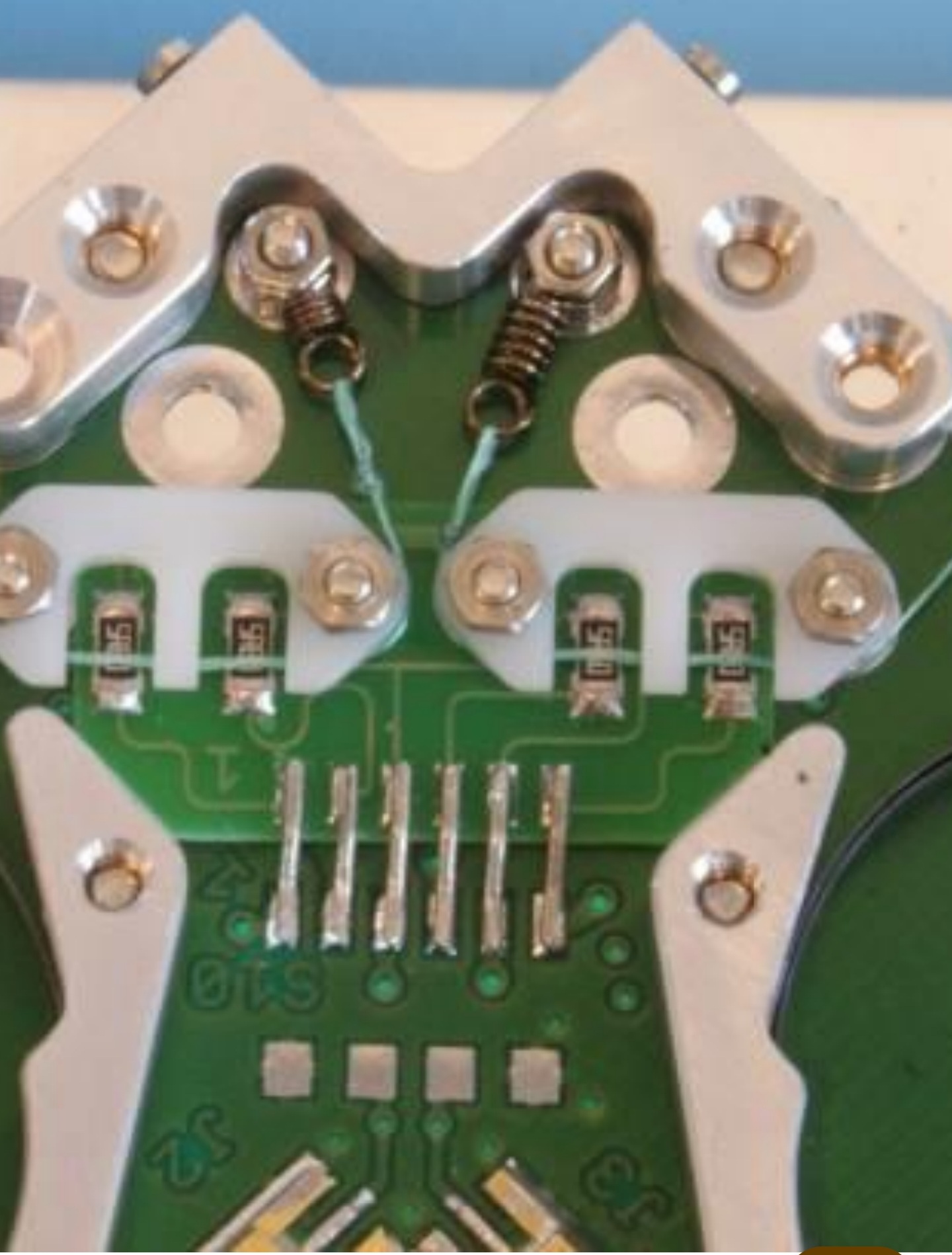
This is a cubesat example that's neat but not really meant to withstand the load an animal would put on it.
Seems like most tensioning examples out there are custom made but I'm convinced it can be done with off the shelf parts.
Regarding worries of damaging the line you can use ptfe tube or polyester/fep heatshrink for added abrasion resistance.
10 November 2024 9:00pm
The PCB mount terminals are actually quite robust and paired with a lock washer and something that would better secure the nylon (e.g., a piece of flat grooved plastic to add compressive loads across the string and not pinch it), I think it would work nicely.
As a separate idea, I just designed a circuit with SMD threaded standoffs, which I am going to secure in plastic and screw onto aluminum pieces that I'll be testing the ElectRelease with once it delivers. The standoffs are mounted on a circuit board, giving a 50V differential with a single-cell LiPo, hopefully releasing the epoxied aluminum plates.

Scent of a frog: Can conservation detection dogs be used to locate endangered amphibians in the wild?

30 August 2024 10:22pm
New WILDLABS Funding & Finance group
5 Junio 2024 3:24pm

5 June 2024 4:14pm
This is great, Frank! @StephODonnell, maybe we can try to bring someone from #Superorganism (@tomquigley ?) or another venture company (#XPRIZE) into the fold!

6 June 2024 1:38am
I find the group to be dope, fundraising in the realm of conservation has been tough especially for emerging conservation leaders. There are no centralized grants tracking common databases that effectively manage the array of fragmented RFPs and CFPs, especially with the emergence of integrated and collaborative approaches in conservation.
This is both an opportunity to expand ones footprint in tracking and managing CFPs and RFPs in conservation, yet an opportunity for the experienced fish to explore opportunities to capacity build and strengthen skills and networks in Conservation fundraising.
6 June 2024 4:16am
Thank you for your encouraging words and support Paul Edonga!
Which databases do you know that you do not find effective enough? I ran across some, like Terra Viva, and the recently published Biodiversity Finance Initiative, but I don't have much experience with the first and none with the latter.
CollarID: multimodal wearable sensor system for wild and domesticated dogs
3 Mayo 2024 1:42am
3 May 2024 10:14am
Hi Patrick,
This is so cool, thanks for sharing! It's also a perfect example of what we were hoping to capture in the R&D section of the inventory - I've created a new entry for #CollarID so it's discoverable and so we can track how it evolves across any mentions in different posts/discussions that come up on WILDLABS. This thread appears on the listing, and I'll make you three the contacts for it too. But please do go in and update any of the info there as well!
Steph
3 May 2024 2:01pm
Hi Steph,
We appreciate the support! Thanks for the tag and your help managing the community!
Patrick
Saola Detection Canine in Laos; an interview with the training partners
10 December 2023 3:29pm
Scent Detectives: Extraordinary Partners in the Quest to Find Saola in the Wild of Laos
10 Diciembre 2023 3:25pm
AWMS Conference 2023
Insight; a secure online platform designed for sharing experiences of conservation tool use.
7 November 2023 1:01pm
Scent detection dogs as a novel method for oestrus detection in an endangered species, the Tasmanian devil
25 October 2023 1:02pm
Frontiers | Scent detection dogs as a novel method for oestrus detection in an endangered species, the Tasmanian devil (Sarcophilus harrisii)
Captive breeding is a critical tool for conservation of endangered species. Identifying the correct time to pair males and females can be a major challenge f...

The Wildlife Society Conference
19 Junio 2023 5:59am
Researchers Using Dogs to Combat Spotted Lanternflies – NBC 5 Dallas-Fort Worth
26 April 2023 2:51pm
Researchers Using Dogs to Combat Spotted Lanternflies – NBC 5 Dallas-Fort Worth
Researchers are using dogs to sniff out spotted lanternflies, an invasive species with the ability to cause millions in forestry and agricultural damages.

Thinking out loud
24 November 2022 2:21am

11 February 2023 2:51am
11 February 2023 6:19pm
Thank you for this exciting reply and links to the papers. I use an olfactometer that utilizes Arduino boards. It has been used linked to a treat and train, although my system provides sound feedback and I provide the reinforcements. I found these links very interesting!
28 February 2023 7:26pm
These are great materials to refer to. I just have to wrap my amateur brain around the technological words but I should be fine. Thank you Harold.
Working with Detection Dog Teams
15 February 2023 9:49am
These Dogs Are a Bird's Best Friend | Audubon
15 September 2022 1:13pm
These Dogs Are a Bird's Best Friend | Audubon
With their boundless enthusiasm and amazing powers of smell, canines are playing a growing role in global efforts to protect wildlife.


14 January 2026 9:18am
Not a direct answer, but I think it might help address this question. We trapped gerbils in coastal sand dunes, and in some of our plots, we had foxes who learnt to look for the Sherman traps with a gerbil in them, take them away, and try to break them to eat the gerbil. As a solution, I tried a method that a colleague told me worked for him in the Mojave Desert - we collected human urine in a bottle and added a few drops on each trap roof. The next morning, the entire plot area was littered with fox tracks, indicating that they had moved between all traps, deposited their urine and feces on some of them, and likely sniffed all the others. The result was that no gerbil entered any of the traps, and there were hardly any gerbil tracks in the plot during that night. Moral of the story - a canine moving freely in your trapping plots may reduce your trapping success.
6 February 2026 1:43pm
We have been placing trap cameras along our saliva collector in a forested area in our campus, where for the past 4 months some semi-feral dogs have established their campsite (and had a litter). We see the dogs roaming around our collectors, and once they do that, no other species come to that particular collector. Also those non-dogs that come are visibly more attentive to their environment and run away a minute before some dogs shows up.
So I'd say that your dog is not helping your research. He might be more useful at the lab. :-)