
Curadores del grupo

Pen-Yuan Hsing
- @Nycticebus_scientia
- | he/they
MammalWeb.org

Shannon Rankin
- @srankin
- | she/her
NOAA Fisheries

Brianna Johns
- @briannajohns
- | she/they
Gathering for Open Science Hardware (GOSH)
A pesar de los avances cruciales en las soluciones tecnológicas disponibles para los conservacionistas de todo el mundo, muchas herramientas existentes resultan prohibitivas en los paisajes que más las necesitan. Además, quienes crean alternativas de bajo costo y código abierto a las costosas tecnologías del mercado suelen operar con presupuestos ajustados, lo que significa que necesitan más recursos para promocionar sus soluciones a un público más amplio. Necesitamos una mayor comunicación sobre estas soluciones para destacar su disponibilidad, compartir las lecciones aprendidas en su creación y evitar la duplicación de esfuerzos.
Este grupo es un espacio para compartir dispositivos de bajo costo y código abierto para la conservación; describir cómo se utilizan, incluyendo las necesidades que abordan y cómo se integran en el mercado tecnológico de la conservación; identificar los obstáculos para el desarrollo de estas tecnologías; y debatir el futuro de estas soluciones, en particular su sostenibilidad y la mejor manera de colaborar en el futuro. Agradecemos las contribuciones tanto de creadores como de usuarios, ya sean activos o potenciales.
Así es como vemos el panorama actual del software de código abierto y cómo este grupo planea transformarlo, apoyando tanto a creadores como a usuarios:
Muchos usuarios no aprecian los importantes beneficios de la tecnología de código abierto. Este grupo educará a los usuarios sobre las ventajas y la necesidad de la tecnología de código abierto, específicamente en el contexto del trabajo ecológico. Lo lograremos fomentando debates regulares en el foro y animando y apoyando a los usuarios a utilizar herramientas de código abierto siempre que sea posible.
Desarrollar software de código abierto puede ser difícil. Queremos apoyar tanto a creadores experimentados como a potenciales que deseen desarrollar software de código abierto. El grupo de software de código abierto es un espacio donde los creadores pueden encontrar oportunidades de financiación, hacer preguntas a usuarios actuales y potenciales, y compartir sus tecnologías.
Usar software de código abierto puede ser difícil. También queremos apoyar a quienes adoptan la tecnología de código abierto. Lo hacemos ofreciendo un espacio donde los usuarios puedan compartir los desafíos que enfrentan y obtener asesoramiento colectivo sobre temas como la elección de tecnología o el soporte técnico.
Los creadores pueden no tener acceso a una diversidad de usuarios. El grupo de software de código abierto es un espacio que facilita la conversación entre creadores y usuarios. Esto dará voz a los usuarios y garantizará que los desarrolladores conozcan sus necesidades, lo que les permitirá crear mejores soluciones.
La comunidad es pequeña y dispersa. Queremos crear una comunidad inclusiva de profesionales del software libre. Nuestro objetivo es convertirnos en el punto de referencia para debatir sobre este tema, donde la gente se sienta integrada.
Recursos para empezar
- ¿Cómo utilizo datos de teledetección de código abierto en Google Earth Engine? | Tech Tutors
- ¿Cómo puedo usar datos de teledetección de código abierto para monitorear la pesca? | Tech Tutors
- Soluciones de bajo coste y código abierto | Encuentro virtual
- ¿Cómo sería un conjunto de herramientas tecnológicas de conservación de código abierto? | Debate
- Convocatoria de la comunidad de soluciones de código abierto de diciembre de 2024
Imagen de encabezado: Shawn F. McCracken
Curadores del grupo
- @Nycticebus_scientia
- | he/they
MammalWeb.org
Co-founded citizen science camera-trapping project with interest in developing 100% open source wildlife tech. Advocate for open science/open research. Former Community Councilor of the Gathering for Open Science Hardware.



- 4 Recursos
- 27 Discusiones
- 3 Grupos
- @srankin
- | she/her
NOAA Fisheries
Bioacoustics researcher with the National Oceanographic and Atmospheric Administration (NOAA).



- 0 Recursos
- 8 Discusiones
- 16 Grupos
- @briannajohns
- | she/they
Gathering for Open Science Hardware (GOSH)
Interested in the application of open source technologies for conservation research.

- 11 Recursos
- 5 Discusiones
- 4 Grupos
Aún no se han agregado destacados a este grupo.
- @LucyD
- | She/They
Backend engineer and data scientist with an ecology and conservation twist


- 0 Recursos
- 3 Discusiones
- 10 Grupos

- @carlybatist
- | she/her
ecoacoustics, biodiversity monitoring, nature tech



- 133 Recursos
- 373 Discusiones
- 19 Grupos

- @StephODonnell
- | She / Her
Tech, Sustainable Finance at World Bank & CFA (prev. Founder WILDLABS)


- 197 Recursos
- 670 Discusiones
- 31 Grupos

- @crazybirdguy
- | Him
Field Biologist at Yayasan Cikananga Konservasi Terpadu, Indonesia, with experience and interest mainly in ornithology, citizen science and bioaccoustic
- 0 Recursos
- 11 Discusiones
- 12 Grupos
Post Ecology PhD, MSc in Applied Ecology, MSc in Global Wildlife Conservation & Wildlife Health
- 0 Recursos
- 3 Discusiones
- 3 Grupos
Conservationist | Ecologist| Geospatial Scientist
- 0 Recursos
- 1 Discusiones
- 12 Grupos
- @silbelliard
- | she/her/ella
National Scientific and Technical Research Council of Argentina (CONICET)
Argentina-based researcher specializing in ecophysiology of insects. I am also co-founder of Tymbachu'i reserve. I am currently working to establish long-term insect monitoring in the Paraná Atlantic Forest.
- 0 Recursos
- 0 Discusiones
- 6 Grupos

- @TaliaSpeaker
- | She/her
WILDLABS & World Wide Fund for Nature/ World Wildlife Fund (WWF)
I'm the Executive Manager of WILDLABS at WWF


- 28 Recursos
- 64 Discusiones
- 33 Grupos

Committed to using technology, data and innovation to create efficient, safe and impactful solutions.
- 0 Recursos
- 0 Discusiones
- 16 Grupos

As a software engineer I've made a career building large scale financial products. I'm looking to apply my skills to support non-profits and help solve funding problems.
- 0 Recursos
- 5 Discusiones
- 11 Grupos
My research focuses on using Next-Generation Sequencing (NGS) to study endangered species, including carnivores, chiropterans (bats), and lizards, as well as their microbiomes.
- 7 Recursos
- 10 Discusiones
- 20 Grupos
- @Angele
- | She/Her
Working with IPLCs and applying data/geospatial tools for a conservation/carbon forestry project in the Philippines 🌿
- 0 Recursos
- 0 Discusiones
- 8 Grupos
Artículo
BAM (Biodiversity Around Me) widget

Camille Monchicourt
I am happy to introduce and share our new project BAM, to make open biodiversity data easily accessible to everyone, everywhere!
30 Junio 2026
Artículo
It was on the shores of French Guiana, at 4am in the morning, that after 8 years of research and development to develop a ready-to-deploy open source satellite sea turtle tag, we achieved our goal.
7 Junio 2026
Artículo

🌍 Conservation technology is transforming how we protect wildlife, but are we thinking carefully enough about the risks? Drones, camera traps, GPS trackers, acoustic sensors, AI, and remote sensing have become...
22 Mayo 2026
Carreras
A 3-year, fully-funded PhD studentship at the interface of ecological theory, AI and global biodiversity mapping
28 April 2026
Artículo
Invitation to submit articles for a Special Issue of the journal "Sensors"
28 April 2026
Carreras
Yukon2Yellowstone (https://y2y.net/) team is seeking a developer to design, implement, and deploy an application within the MoveApps platform (Movebank) to estimate animal survival.
16 Enero 2026
Carreras
Volunteer Google Ads Specialist Needed!
Rebekka Stutz
We’re reaching out again because we haven’t received any matching applications yet—and we truly believe someone in the Wildlabs community could be the perfect fit. If you care about conservation and want to use your...
19 November 2025
Artículo

The University of Hawai‘i - Ocean & Resources Engineering program is seeking project ideas from community groups, marine/ocean scientists, government agencies, companies, and non-governmental organizations for their...
16 November 2025
Artículo
Things have been busy for the Mothbox team over the past few months as we continue developing a new, scalable Mothbox version that can be built and sold anywhere in the world.
27 Octubre 2025
Financiamiento
NEW! eDNA Collaborative 2025 Microgrant

Shana Hirsch
Funding for low-cost DIY Fluorometers by DIYNAFLUOR
15 Octubre 2025

Open-source desktop app, to run AI for biodiversiy
30 Septiembre 2025
Enlace
Request to Participate and Share the Survey

Md Niaz Morshed
Hello, I would greatly appreciate it if you could participate and share the survey link below with your developers and code reviewers. Thank you in advance. https://universityofalabama.az1.qualtrics.com/jfe/form...
23 Septiembre 2025
FREE Drone & GIS Mini Course from GeoWing Academy


FREE Drone & GIS Mini Course from GeoWing Academy
FREE Drone & GIS Mini Course from GeoWing Academy


Fantastic Fields: Field Data Collection the Smart Way
Fantastic Fields: Field Data Collection the Smart Way
Fantastic Fields: Field Data Collection the Smart Way
Drone Photogrammetry & GIS Advanced Course
Drone Photogrammetry & GIS Advanced Course
Drone Photogrammetry & GIS Advanced Course
Drone Photogrammetry & GIS Intermediate Course
Drone Photogrammetry & GIS Intermediate Course
Drone Photogrammetry & GIS Intermediate Course
Drone Photogrammetry & GIS Introduction (Foundation) Course
Drone Photogrammetry & GIS Introduction (Foundation) Course
Drone Photogrammetry & GIS Introduction (Foundation) Course


Agosto 2026

Junio 2026
evento
Rebekka Stutz
Mayo 2026
evento
Rebekka Stutz
| Descripción | Actividad | Respuestas | Grupos | Actualizado |
|---|---|---|---|---|
| Good concept and the component choices are sensible for a low-cost prototype. A few technical observations from working with similar architectures in remote African deployments:On... |
|
Soluciones de Código Abierto | 1 semana 2 días ago | |
| Great discussion — the trade-offs you're navigating with Loko are exactly the right ones for open-source wildlife tracking.A few thoughts on the points raised, particularly for... |
+6
|
Sensores, Movimiento Animal, Soluciones de Código Abierto | 1 semana 2 días ago | |
| Looks very beautiful. Well done.Poor Rob Appleby. He's just a youngun. |
|
Movimiento Animal, Soluciones de Código Abierto | 3 semanas 2 días ago | |
| Thanks for this! I've shared this post with the WildTrax (https://wildtrax.ca/) team and CanAvian (https://canavian.ca/) to investigate. We're exploring data standards as... |
|
Acústica, Cámaras Trampa Autónomas para Insectos, Cámaras Trampa, Data Management & Mobilisation, Soluciones de Código Abierto, Desarrollo de Software | 3 semanas 2 días ago | |
| Hi all, just sharing a workflow we’ve been refining over the last 15 months. We wanted to move beyond visual observations and truly... |
|
Drones, Ciencia Ciudadana, Capacitación y Educación en Tecnología para la Conservación, Tecnologías Emergentes, Geoespacial, Soluciones de Código Abierto, Herramientas para la Gestión de Áreas Protegidas, Sensores | 3 semanas 6 días ago | |
| That is so cool! Love the video! |
|
Acústica, IA para la Conservación, Comunidad Latinoamericana, Soluciones de Código Abierto | 4 semanas 1 día ago | |
| Hi John,The standard rate for Argos airtime for NGOs is typically €63 p/m for unlimited transmissions within that month for marine projects (sea turtles etc). For fixed assets (... |
|
Soluciones de Código Abierto | 1 mes ago | |
| Using drone mapping as a way to create beautiful maps and 3D models of our study sites is pretty cool. Those photogrammetry outputs are... |
|
Ciencia Ciudadana, Capacitación y Educación en Tecnología para la Conservación, Data Management & Mobilisation, Drones, Tecnologías Emergentes, Geoespacial, Soluciones de Código Abierto, Sensores | 1 mes ago | |
| A halow router by itself will draw a bit over 4W. Maybe 4.5 from memory with my tests. |
|
Soluciones de Código Abierto, Sensores | 1 mes 1 semana ago | |
| It certainly is! The great thing about it too is that the aerial detections often lead to more ground detections when teams are locating the trees from the map data and by using... |
|
Capacitación y Educación en Tecnología para la Conservación, Drones, Tecnologías Emergentes, Geoespacial, Soluciones de Código Abierto | 1 mes 1 semana ago | |
| Hi all!I'm an engineer in search of volunteer/paid work in conservation tech. I just graduated with my master's in mechanical engineering... |
|
Base Comunitaria, Acústica, Movimiento Animal, Drones, ADN ambiental y genómica, Conservación Marina, Soluciones de Código Abierto, Sensores | 1 mes 2 semanas ago | |
| Myself and the Fauna & Flora Conservation Technology team will be there (@Chelsea_Smith and @ugyenpenjor ) and also the WILDLABS team @HRees ! See you! |
+6
|
Geoespacial, Acústica, IA para la Conservación, Cámaras Trampa, Ciencia Ciudadana, Base Comunitaria, Data Management & Mobilisation, Tecnologías Emergentes, Soluciones de Código Abierto, Herramientas para la Gestión de Áreas Protegidas | 1 mes 3 semanas ago |























BAM (Biodiversity Around Me) widget
30 Junio 2026 7:10pm

SwarmGuard: low-cost autonomous mesh system to detect poaching threats and protect wildlife
15 Junio 2025 7:03pm
21 July 2025 2:41pm
Good morning Aleksey,
Your idea is very similar to an idea I had -- I guess we are experiencing some convergent evolution. I'd be very interested in understanding your project more. I'd be curious to know if you've done much testing with Lora and dense foliage. I'm just curious to know if you've hit any real limitations. Reading your description, it sounds like perhaps you are using some mesh networking. Anyway -- it's nice to meet you and see we had similar ideas.
Chris
4 August 2025 8:20am
29 June 2026 9:07pm
Good concept and the component choices are sensible for a low-cost prototype. A few technical observations from working with similar architectures in remote African deployments:
On the ESP32 deep sleep current — the ESP32-WROOM in deep sleep draws ~10-20μA in practice, which is fine for battery life calculations, but the TP4056 charging IC has a quiescent current of ~55μA in standby. This means the charging circuit itself can dominate your sleep current if the solar panel voltage is too low to trigger charging. Worth profiling the actual system current rather than relying on datasheet deep sleep figures alone.
On the MAX9814 — it's a good low-cost choice but has a relatively high quiescent current (~3mA continuously) for a mic preamp. If you're using sound threshold waking via an interrupt, the mic circuit needs to stay powered during sleep, which significantly impacts your power budget. The ICS-43432 I2S MEMS mic combined with a hardware comparator for wake-up threshold detection is a more power-efficient alternative for this use case.
On the SX1278 LoRa mesh — the SX1278 supports raw LoRa but not LoRaWAN natively. For a mesh topology you need a protocol layer on top — Meshtastic or a custom implementation. Worth being explicit about this in the architecture, as it affects how you integrate with existing ranger communication infrastructure.
On the IP65 enclosure in African savannah — IP65 protects against dust and water jets but not against the daily thermal cycling that drives condensation inside sealed enclosures. A Gore-Tex vent membrane port is worth adding to any permanent outdoor installation.
Interesting project overall — happy to discuss the power architecture in more detail.
GPS Tracker For Wildlife
27 February 2025 12:13pm
8 October 2025 12:52pm
Hi Akio,
Yes we can have a chat about this at some stage.
Best wishes
Nigel
15 October 2025 9:49pm
Hi Akio!
Is there any more extensive documentation for Loko than what I see on the website in the link you sent? I'm curious to learn more, such as what the mean and median positional errors are, and how long the battery would last at various fix intervals (such as 5 minutes fixes vs 15 minute fixes), whether the device is capable of taking more than 6,500 consecutive fixes if it is able to regularly connect to the ground device, how it handles failed fixes (i.e. there are no satellites detected), etc.
I'm working on a project in which we are deploying GPS receivers on gopher tortoises. As with many devices, one of our biggest challenges is finding a device that can store a lot of fixes so that we can leave it out for long deployments (we have been looking at devices with pure receivers, and no transmission option), and as someone else mentioned, ruggedness is very important as well- the turtles can be very hard on trackers. These animals present some unique tracking challenges because they spend much of their time underground, meaning that the device will be unable to detect satellites and/or get a good fix most of the time. We also value customizability- someone else pointed out that we biologists have been known to open up devices and DIY them for our own uses- and we are wont to do the same with software as well, if able. For example, for my study we are interested in options where we can choose an adaptive fix interval, for example, every 5 minutes but only during daylight hours, to save on battery as well as memory space. I know triggered firmware is a common request as well- various groups will use different sensors, such as light, temperature, moisture, float, accelerometer, etc. to tell a device when it's appropriate to take a fix (when the animal moves, when it surfaces, etc.).
Best,
Jocelyn
29 June 2026 8:52pm
Great discussion — the trade-offs you're navigating with Loko are exactly the right ones for open-source wildlife tracking.
A few thoughts on the points raised, particularly for large animal tracking in Africa with limited budget:
On waterproofing the LoRaWAN antenna — the antenna does need to protrude or be positioned at the surface of the enclosure, but this doesn't have to compromise IP rating. A simple approach is to use a helical or meandered trace antenna on the PCB itself (no external stub needed) and cast the entire PCB in epoxy or use a conformal coating, with the enclosure providing the mechanical protection. For collar deployments on large mammals, the antenna is often routed along the collar belt itself as a flexible element, which also improves radiation pattern.
On geofencing for large animals with infrequent fixes — I'd agree with the caution raised earlier. For animals with large home ranges like elephants or lions in Africa, a 1-4 hour fix interval means an animal can travel 10-30km between fixes. Geofencing only works reliably when you can predict where the base station receiver will be relative to the animal's trajectory. For open savannah, a LoRaWAN gateway on a fixed elevated point (a termite mound, a tree, a ranger station) with 10-20km range is more practical than trying to download when the animal passes close.
On memory — 6,500 records at hourly fixes gives about 270 days of logging, which is enough for most large mammal deployments. The limiting factor in practice is usually battery rather than storage.
I work with LoRaWAN-based tracking systems and have field experience in southern Africa — happy to discuss specific deployment scenarios.
Imageomics Institute: FloraPalooza, August 2026
17 Junio 2026 4:49pm
10 years later, achievement unlocked! A breakthrough for sea turtle satellite tracking
7 Junio 2026 1:05am
16 June 2026 12:48am
This post makes me so freaking happy! Glad to have met you through conservation technology discussions all the way over here in Australia back in the early days :) I am also super excited to see your innovations continue.
16 June 2026 2:13pm
Looks very beautiful. Well done.
Poor Rob Appleby. He's just a youngun.
Safe and Sound project report: Is Camtrap DP a suitable standard for (bio)acoustic data?
18 Marzo 2026 4:17pm
12 April 2026 6:19pm
Your report on extending Camtrap DP to bioacoustics resonated with something we are just beginning to explore in Mindoro Island, Philippines.
We have ongoing camera trap deployments in interior forest habitats and are beginning to examine the acoustic layer embedded in those recordings, particularly for nocturnal species such as the Mindoro Boobook. The discussion around terminology and how datasets are structured feels especially relevant, though I am still trying to understand how frameworks like Camtrap DP would apply in practice to this kind of data.
It is encouraging to see this direction being shaped at the community level. I will be following this closely as we continue to learn and figure out how our own datasets might eventually align.
15 June 2026 11:54pm
Thanks for this! I've shared this post with the WildTrax (https://wildtrax.ca/) team and CanAvian (https://canavian.ca/) to investigate. We're exploring data standards as part of a recent initiative so this will be very helpful! @jeffcullis
Quantifying 15-months of fynbos vegetation recovery using Drone Photogrammetry and QGIS
12 Junio 2026 11:56am
🐸 WILDLABS Awards 2025: Open-Source Solutions for Amphibian Monitoring: Adapting Autonomous Recording Devices (ARDs) and AI-Based Detection in Patagonia
27 Mayo 2025 8:39pm
12 November 2025 7:36pm
🌿 Project Update — November 2025
Sharing our experience at the Symposium on Physics Applied to Ecology and Conservation (Foz do Iguaçu, Brazil).
We’d like to thank Carlos Araujo for kindly inviting us to take part in the Symposium on Physics Applied to Ecology and Conservation, held on November 6–7, 2025, at the PTI Campus – Universidade Federal da Integração Latino-Americana (UNILA) in Foz do Iguaçu, Brazil.
The event aimed to build bridges between researchers from different disciplines and countries, exploring how physics can support acoustic monitoring, ecological data collection, and biodiversity conservation.
🎙️ We joined Roundtable 3 — Hardware, Sensors, and Audio Recording, where we discussed:
Open-source autonomous recorders for biodiversity monitoring.
Energy-efficient design and sensor integration.
Alternative battery types and power solutions (particularly relevant to our developments)
🎥 Watch the roundtable recording here.
It was also a great opportunity to share our experience and highlight the WildLabs community, connecting with colleagues working at the intersection of physics, ecology, and technology.
9 June 2026 3:36pm
Hi everyone!
Following up on our project development, we have just published the full report on our work integrating environmental monitoring into AudioMoth devices and the resulting BirdNET workflows for Patagonian amphibians. You can find the complete documentation and results here.
Beyond the technical implementation, we’ve documented the custom firmware, the AI training pipeline for our species, and the practical challenges we faced during field deployments:
Project Video: YouTube Video Link
Firmware: AudioMoth I2C Firmware Repository (GitLab)
AI Workflow: BirdNET-based Workflow for Amphibians (GitHub)
Edge Models: TinyFrog Repository (GitHub)
PyTorch reimplementation: BirdNET-Analyzer (GitHub)
If you are working on similar setups or have questions about the hardware or the workflow, feel free to reach out. I hope this documentation proves useful for your own research.
Thanks for the support and the exchange of ideas during these months!
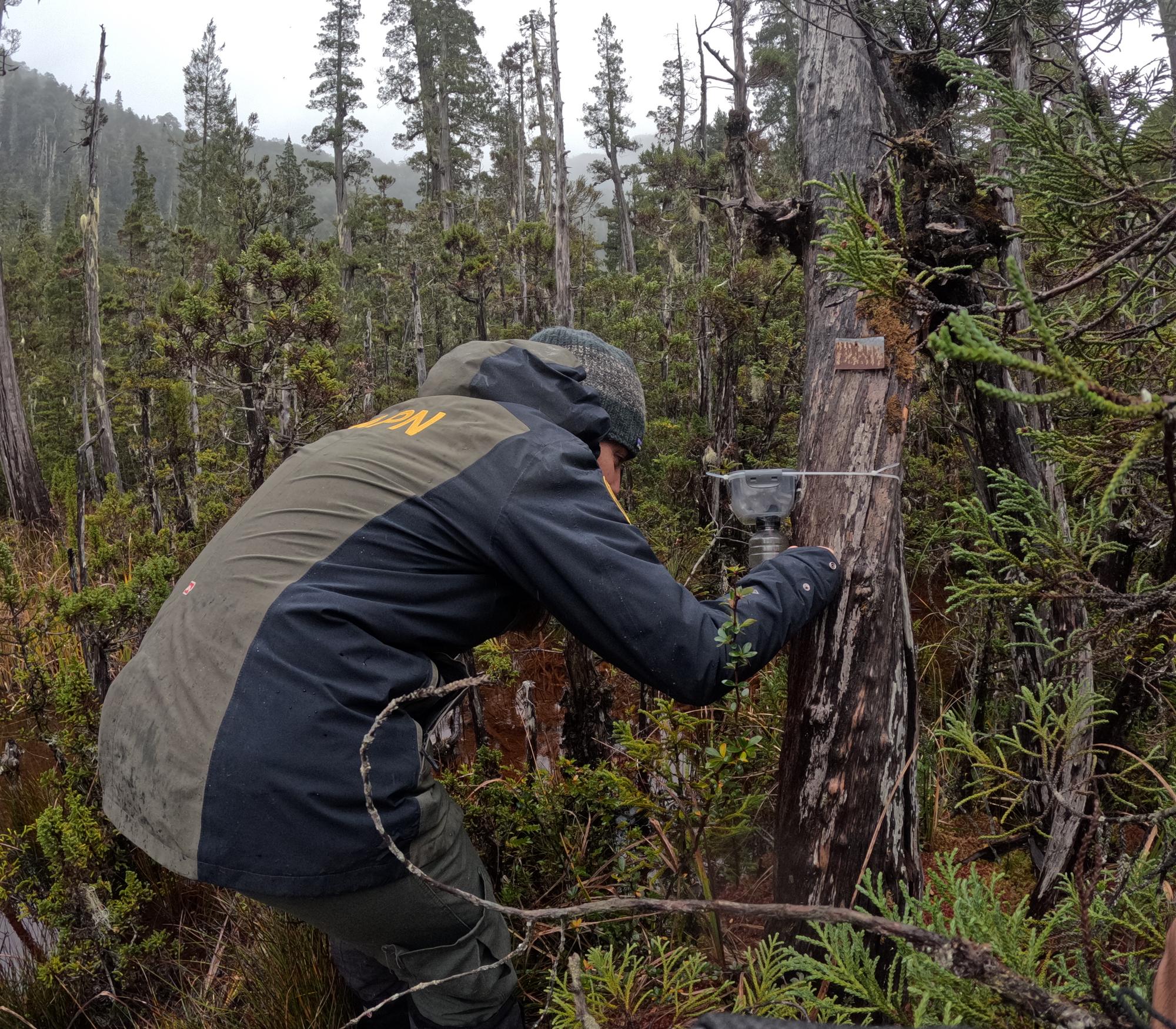
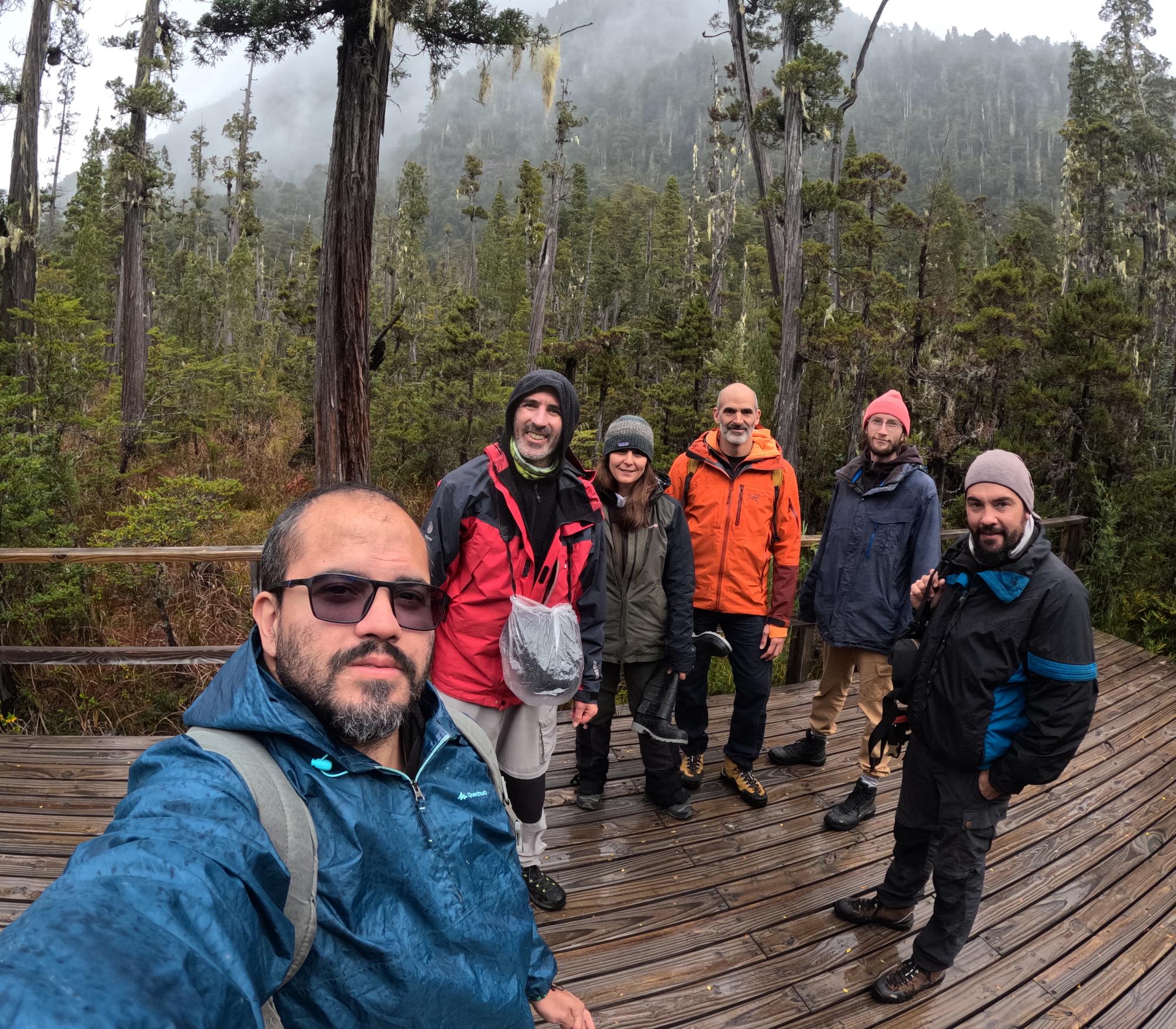
10 June 2026 1:58pm
That is so cool! Love the video!
Design your own wildlife satellite tag at the ICTC
17 Enero 2026 8:20pm
14 March 2026 12:18pm
Hi Arky,
We enjoyed running the workshop and it was a fantastic conference overall. Due to the nature of running it live we couldn't record the session, but we have some ideas to try and make it a more regular thing, so watch this space.
17 April 2026 6:52pm
Did not make it to the conference, but this is a topic of interest. Will keep an eye out for future workshops announcements.
It looks like the hardware is reasonably priced. Can you give a sense of what the connectivity costs are?
7 June 2026 12:35pm
Hi John,
The standard rate for Argos airtime for NGOs is typically €63 p/m for unlimited transmissions within that month for marine projects (sea turtles etc). For fixed assets (ground stations) it's possible to discuss bulk discounting prices, but for 1 tag you'll be looking at the above.
Here's a new article too with an overview of the latest sea turtle satellite tag developed with the SMD - A breakthrough in low cost sea turtle satellite tagging and telemetry
A breakthrough in low cost sea turtle satellite tagging and telemetry
7 Junio 2026 12:37am
8 June 2026 3:14pm
Huge congratulations to the whole team of Arribada for years of dedication to making this happen and delivering incredible open hardware for the community 😃
12 June 2026 4:08pm
Amazing 🤩 🤩
Super congratulations for the perseverance and so many years of work.
Thank you also for keep everything open source.
Looking forward to deploy a few tags.
Pretty exciting.
Beyond the Map: How Drone Data Reveals Ecological Recovery Through Statistics
5 Junio 2026 10:06am
Habitat box monitoring?
14 Enero 2026 10:39am
30 May 2026 11:19pm
Quickest way to do that is to do a simple range test using 2 modules like this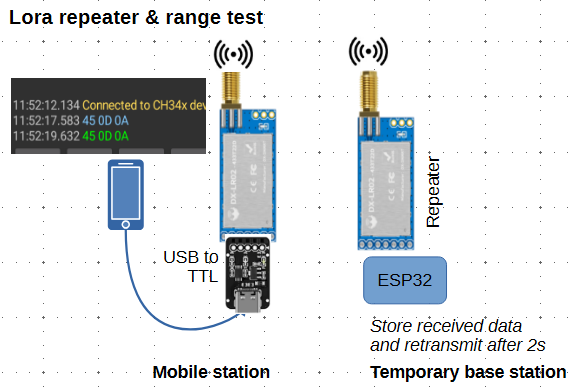
It's minimal cost and no need for any wiring or soldering etc. You can also use it to see how antenna height affects the range, and - if needed - use the temporary base station as a repeater to extend the range of boxes that are in difficult locations. But the repeater will need to be equipped with a solar cell to keep the battery charged.
I use a kit like this - but with longer antenna to get a better range
I think they are on sale at the moment https://www.aliexpress.com/item/1005009827293700.html
If you like, just send me the coordinates of the area where you intend to monitor the boxes. With Google Earth (or a contour map if you have) I may be able to give you an indication of what range you can expect.
31 May 2026 2:36am
also certainly interested if anyone has experimented with low-cost devices supporting HaLow Wifi, to get enough bandwidth to send back pictures for a webcam
31 May 2026 7:40am
A halow router by itself will draw a bit over 4W. Maybe 4.5 from memory with my tests.
WOOHOO ITS WORKING!! Tech finds undetected decades old Alien Invasive Parent Plants in indigenous forest!
24 July 2025 12:21pm
8 October 2025 1:26pm
Thanks @SeanHill - I'll take a look!
5 May 2026 11:02pm
This is a very promising result. The use of drones for detecting invasive species demonstrates strong potential for improving monitoring efficiency and accuracy. In a country like Brazil, where ecosystems are significantly affected by invasive species such as Hovenia dulcis (Japanese raisin tree) and Pinus spp., this technology could become a valuable tool for early detection and management.
29 May 2026 10:15am
It certainly is! The great thing about it too is that the aerial detections often lead to more ground detections when teams are locating the trees from the map data and by using the ground app, they are able to mark the locations and photograph the newly discovered aliens and sync it to the existing maps as well. This allows for truly comprehensive removal and monitoring data capture.
Help shape best-practice guidance on conservation technology - input to survey
22 Mayo 2026 10:20am
Engineer Searching for Biologists
20 Mayo 2026 3:18pm
Nature Tech Unconference - Anyone attending?
8 Marzo 2025 12:11pm
24 April 2026 9:59am
What about this year? Who will be there?
https://www.naturetechweek.com/
I am planning to be there for the Unconference and some satellite events.
28 April 2026 4:10pm
I'll be there for the Unconference- looking forward to it!
13 May 2026 12:05pm
Myself and the Fauna & Flora Conservation Technology team will be there (@Chelsea_Smith and @ugyenpenjor ) and also the WILDLABS team @HRees ! See you!
Nature Credit Markets Webinar with Sensing Clues: Trustworthy Data for Validation and Verification Purposes
11 Mayo 2026 6:51am
Looking for internships, fellowships, and scholarships in conservation technology
2 Mayo 2026 9:03am
Looking for opportunities in AI for Bioacoustics and Environmental Monitoring
6 April 2026 10:37am
8 April 2026 7:26pm
Hi I am also looking for collaborators
if interested in the project let me know
we can add acoustic monotoring for bees
17 April 2026 1:19pm
Hi Leonardo,
Let’s chat! I potentially have some opportunities, collaborations or even short-term employment. Send me a message.
1 May 2026 3:51pm
Hey Leonardo
I might have something. Lets chat, reach out to me at [email protected]
Open PhD project: Decoding and mapping Earth's species interactions with ecological AI
28 April 2026 4:51pm
"Sensor Systems for Biodiversity and Ecosystem Monitoring" - Special Issue Invitation
28 April 2026 12:10pm
Biowatch: a free, open-source desktop app for camera trap analysis
21 April 2026 10:07am
22 April 2026 11:30am
Thanks Andrew! Looking forward to your feedback when you get a chance to test it out!
22 April 2026 7:50pm
This looks amazing and I look forward to trying it out when I get the chance!
Just wondering, when it comes to the AI recognitions, is there a way to "rename" the recognitions that were incorrect?
23 April 2026 12:56pm
Yes it is possible. We provide an annotation UI to let you quickly review the model predictions and update them as you see fit!
Reproducible Builds in Software Development
8 Septiembre 2025 8:47pm
3 April 2026 2:46pm
Hi Stephen,
My experience of Nix is limited unfortunately but I think it offers a lot of the same benefits. I'm an Emacs/Lisp fan so it's perfect for me :)
There is Cuirass, which is a Guix specific CI and build automation service and a pack command to create containers. It's nice to have everything linked with Guix rather than different systems/frameworks
I built a small POC to explain the benefits.
3 April 2026 6:39pm
Makes sense, I thought there might be a Lisp preference factoring in there 🙂
Cuirass looks cool, I'm going to check it out, and the eco-pulse-monitor project looks great too, well done!
Related to AI sustainability, have you checked out any of the CodeCarbon tools by chance? I've been working on incorporating their library into our daily code tasks at work, seems like a worthwhile project -
EcoLogits just joined CodeCarbon too I think, also neat -
Thanks!
5 April 2026 10:10pm
Thank you. That looks great! I was trying to build something similar but, as usual, there's a Python library already :) I was leaning towards trying SLMs like llama.cpp
My end goal is to find ways to use this approach in animal conservation specifically. I'm looking at data sets from the IUCN to see what's possible. I'd love to hear more about your work
Camera Trap Integration Webinar with Sensing Clues: Connecting Your Camera Traps with All Your Conservation Data
19 Marzo 2026 10:07am
The boring fund: Standardizing Passive Acoustic Monitoring (PAM) data - Safe & sound
27 Enero 2025 3:47pm
12 February 2025 4:15pm
Hey Sanne, awesome - we definitely need a consistent metadata standard for PAM.
If you haven't already, I would suggest sharing this on the Conservation Bioacoustics Slack channel and the AI for Conservation Slack channel. You would reach a lot of active users of PAM, including some folks who have worked on similar metadata efforts.
If you're not a member of either one of those, DM me your preferred email address and I'll send you an invite!
7 April 2025 11:07pm
Hello everyone,
Thank you all for your contribution!
You can read some updates about this project in this post.
Julia
18 March 2026 3:48pm
For future readers, here you can find the report for this project:
Seeking input: FAIR & AI-ready wildlife drone datasets
4 Marzo 2026 9:21am
7 March 2026 10:27am
Thanks Sean! Looking forward to the community's feedback on this! Feel free to fill out the survey, or open an issue on GitHub to track specific suggestions.
12 March 2026 11:11am
Hi @jennamkline , are you in the SCB Drones and Data Working Group? I think it would be great to have that as a topic for discussion during the next meeting! I'd be keen to hear more about this work.
@annavallery this might be of interest to you.
13 March 2026 2:36pm
hi @elsa thanks so much for the suggestion! i would love the SCD Drones and Data Working Group's input on this proposal. I was planning on attending one of their meetings later in March to solicit feedback. If there are additional venues to engage with the group, please let me know!
How to measure canopy heights with a drone and free software: A quick easy guide!
9 Marzo 2026 3:16pm
When Wildlife Becomes Data: Ethical AI in Biodiversity Monitoring- Join the GEO Indigenous Alliance Summit 2026 March 16-19
5 Marzo 2026 3:53pm
AI Segmentation Tool for QGIS
2 Marzo 2026 8:29am
2 March 2026 7:08pm
Interesting.
3 March 2026 7:51am
It is a fantastic tool, really helps save time and increases efficiency. Have you used or designed tools like this before?
Introducing Bio-Sentinel for Machine Learning Wildlife Monitoring Quality Assurance
2 Marzo 2026 4:57pm