
Curadores del grupo

Jenna Kline
- @jennamkline
- | She/Her
Imageomics Institute
AI and Biodiversity Change (ABC) Global Center

Youssef Bayouli
Este grupo busca reunir a profesionales, investigadores y tecnólogos que trabajan en la intersección de la IA de borde y la conservación. Ante la creciente necesidad de procesar datos en tiempo real y directamente en los dispositivos, la computación de borde se está convirtiendo en una herramienta vital para monitorear ecosistemas, detectar amenazas y tomar decisiones en entornos con conectividad a internet limitada o inexistente.
Nos centramos en aplicaciones prácticas y probadas de la IA de borde, como cámaras trampa inteligentes, dispositivos de monitoreo acústico, redes de sensores y modelos ligeros de aprendizaje automático implementados en hardware de bajo consumo. Al reunir diversas perspectivas, desde biólogos de vida silvestre que implementan sistemas en áreas remotas hasta ingenieros que desarrollan pipelines de borde optimizados, esperamos acelerar la innovación, resolver obstáculos comunes y mejorar la resiliencia de los sistemas en entornos adversos.
El grupo servirá como un centro de colaboración para compartir herramientas de código abierto, modelos de aprendizaje automático, flujos de trabajo de implementación, estrategias de gestión de energía y estudios de caso. Los miembros también explorarán temas clave como la soberanía de los datos, la implementación ética de la IA en la conservación, el diseño energéticamente eficiente y el papel de los sistemas de borde en el monitoreo comunitario.
Mediante reuniones comunitarias, tutoriales, charlas de expertos, desafíos colaborativos y posibles hackatones o cursos de verano, buscamos fomentar un ecosistema conectado de innovadores en computación de borde que aborden desafíos ambientales del mundo real. Ya sea que estés implementando sistemas de borde en la selva tropical, creando prototipos de hardware de aprendizaje automático alimentado por energía solar o simplemente tengas curiosidad por la intersección entre la IA y la ecología, este grupo ofrece un espacio para conectar, aprender y cocrear.
Curadores del grupo
- @jennamkline
- | She/Her
Imageomics Institute & AI and Biodiversity Change (ABC) Global Center
PhD Student @ OSU, Edge AI for Adaptive Animal Ecology Field Studies


- 4 Recursos
- 15 Discusiones
- 8 Grupos
MSc student in Advanced Engineering for Robotics & AI. AI projects on camera traps and edge bioacoustics for bird mapping. Nat Geo & Nature Conservancy marine conservation externship alumnus.




- 1 Recursos
- 33 Discusiones
- 4 Grupos
Aún no se han agregado destacados a este grupo.
MSc student in Advanced Engineering for Robotics & AI. AI projects on camera traps and edge bioacoustics for bird mapping. Nat Geo & Nature Conservancy marine conservation externship alumnus.
- 1 Recursos
- 33 Discusiones
- 4 Grupos

Founder | Entrepreneur | Head of Product | Engineer
- 0 Recursos
- 3 Discusiones
- 4 Grupos
I love to share my passion for Electronics, Machine Learning and Data Analysis through personal projects
- 3 Recursos
- 24 Discusiones
- 3 Grupos

- @TaliaSpeaker
- | She/her
WILDLABS & World Wide Fund for Nature/ World Wildlife Fund (WWF)
I'm the Executive Manager of WILDLABS at WWF


- 28 Recursos
- 64 Discusiones
- 33 Grupos

As a software engineer I've made a career building large scale financial products. I'm looking to apply my skills to support non-profits and help solve funding problems.
- 0 Recursos
- 5 Discusiones
- 11 Grupos
- @Riley
- | she/they
I'm a Data Scientist at Western EcoSystems Technology. I am interested in AI processing and statistical modeling of acoustic data and camera trap and drone imagery.

- 3 Recursos
- 5 Discusiones
- 6 Grupos
- @diego_lizcano
- | He/Him
Wildlife biologist interested in biodiversity monitoring and the conservation of mammals. Passionate photographer.
- 0 Recursos
- 0 Discusiones
- 8 Grupos

WILDLABS & Wildlife Conservation Society (WCS)
I'm the Bioacoustics Research Analyst at WILDLABS. I'm a marine biologist with particular interest in the acoustics behavior of cetaceans. I'm also a backend web developer, hoping to use technology to improve wildlife conservation efforts.




- 53 Recursos
- 42 Discusiones
- 34 Grupos

- @keenanjohnson
- | he/him
Technologist working on machine learning for kelp and citizen science GHG monitoring
- 0 Recursos
- 8 Discusiones
- 7 Grupos

Computer programmer and economist with 20+ years of experience. Committed to wildlife protection and habitat restoration and conservation.
- 0 Recursos
- 0 Discusiones
- 10 Grupos

I'm a software developer that has pivotted to starting a company, Wildlife Security Innovations, to help people and wildlife live together safely.


- 0 Recursos
- 518 Discusiones
- 8 Grupos
Bioacoustics for marine mammal conservation
- 0 Recursos
- 0 Discusiones
- 5 Grupos
Carreras
Consider applying if you have a passion for conservation, low-powered hardware, edge-AI, and embedded systems.
18 Junio 2026
Carreras
Full Stack Developer - Conservation X Labs

Dante Wasmuht
Conservation X Labs is looking for an awesome Full-Stack Developer!
18 Junio 2026
Carreras
Ecologist (Postdoctoral Research Fellow), IS-0408-09

Lacey Hughey
The Smithsonian’s National Zoo & Conservation Biology Institute (in collaboration with Duke Farms, a center of the Doris Duke Foundation) is seeking a postdoctoral researcher to lead the development of next-gen...
1 Junio 2026
Artículo

🌍 Conservation technology is transforming how we protect wildlife, but are we thinking carefully enough about the risks? Drones, camera traps, GPS trackers, acoustic sensors, AI, and remote sensing have become...
22 Mayo 2026
Enlace
Solar Powered Mini AI wildlife Monitor!

Luke Ditria
Hi all, I'm sharing the latest update to my edge-compute wildlife monitor, this time Solar powered for full off-grid operation! The Code and 3d printable STLs files for this project are all available!
21 Mayo 2026
Carreras
A 3-year, fully-funded PhD studentship at the interface of ecological theory, AI and global biodiversity mapping
28 April 2026
Carreras
Ecological Data Scientist
Lacey Hughey
The Smithsonian Institution is the world’s largest museum, education, and research complex, with 21 museums and the National Zoo. This position is located in the Smithsonian's National Zoo and Conservation Biology...
21 April 2026
Carreras
SDZWA Summer Fellowship 2026

Kyra Swanson
12-week paid tech internship at the San Diego Zoo Safari Park
25 Diciembre 2025
Artículo

The University of Hawai‘i - Ocean & Resources Engineering program is seeking project ideas from community groups, marine/ocean scientists, government agencies, companies, and non-governmental organizations for their...
16 November 2025
Artículo
Connecting people, projects, and possibilities at the edge.
4 November 2025
Enlace
Solar Powering a Raspberry Pi!
Luke Ditria
I've been building a lot of experimental devices for edge computing. After not being able to to find a great solution for powering a Raspberry Pi, or other SBC, from a solar battery set-up that could also interface and...
23 Octubre 2025
Financiamiento
Edge AI Earth Guardians Contest on Hackster.io

Jinger Zeng
Hackster invites Wildlab community to submit your project to the global competition for a chance to win cash prizes and go-to-market opportunities.
22 Septiembre 2025
Marzo 2026
evento
Diana Mastracci
| Descripción | Actividad | Respuestas | Grupos | Actualizado |
|---|---|---|---|---|
| This is a great project! Some comments:RaspberryPI though accessible is not the best fit for video pipelines and AI workloads or off grid deployments:- it lacks onboard ISP which... |
+22
|
IA para la Conservación, Cámaras Trampa Autónomas para Insectos, Cámaras Trampa, Edge Computing | 21 horas 22 minutos ago | |
| Hi Luke,Really enjoyed another one of your videos, you've definitely got me experimenting more with edge compute and AI in my garden. I was wondering whether you’ve done much with... |
|
Edge Computing | 1 día 5 horas ago | |
| Thank you so much Luke! |
+20
|
IA para la Conservación, Cámaras Trampa, Edge Computing | 1 semana 2 días ago | |
| nothing like a concrete, interesting problem to find focus:-]my partner is into chickens ... trust me, it's a whole subculture 🤣We were talking with friends about pecking... |
|
Edge Computing | 1 mes ago | |
| Thank you for these links; I will have a read of them :) |
|
Edge Computing | 3 meses 2 semanas ago | |
| Greetings, I'm based in Gibsonia, PA and looking to help anyway I can part time either local or remote.My skillsets are the following:.NET... |
|
Acústica, IA para la Conservación, Movimiento Animal, Cámaras Trampa Autónomas para Insectos, Comunidad para Crear tus Propios Registradores de Datos, Cámaras Trampa, Ciencia Ciudadana, Cambio Climático, Base Comunitaria, Conectividad, Perros de Conservación , Capacitación y Educación en Tecnología para la Conservación, Data Management & Mobilisation, Drones, Comunidad de Observación de la Tierra 101, Comunidad de África Oriental, Edge Computing, ADN ambiental y genómica, Tecnologías Emergentes, Ética de la Tecnología para la Conservación, Financiamiento y Finanzas, Geoespacial, Human-Wildlife Coexistence, Comunidad Latinoamericana, Conservación Marina, Herramientas para la Gestión de Áreas Protegidas, Sensores, Sustainable Fisheries | 3 meses 2 semanas ago | |
| hi @elsa thanks so much for the suggestion! i would love the SCD Drones and Data Working Group's input on this proposal. I was planning on attending one of their meetings later in... |
|
Drones, IA para la Conservación, Data Management & Mobilisation, Edge Computing, Soluciones de Código Abierto, Sensores | 3 meses 3 semanas ago | |
| Conservation monitoring seeks decision-relevant signals at scale. Ecological research often pursues specific, project-driven questions.... |
|
Comunidad de África Oriental, IA para la Conservación, Cámaras Trampa, Drones, Edge Computing, Tecnologías Emergentes, Human-Wildlife Coexistence, Comunidad Latinoamericana, Conservación Marina, Herramientas para la Gestión de Áreas Protegidas, Sensores | 4 meses 3 semanas ago | |
| AMAZING |
|
Edge Computing | 6 meses 2 semanas ago | |
| Awesome. Lets keep in touch |
|
Comunidad de África Oriental, Acústica, IA para la Conservación, Cámaras Trampa, Base Comunitaria, Edge Computing | 8 meses 3 semanas ago | |
| Hello Samuel,First of all, all the best of success with the Edge AI Earth Guardians contest.Based on my experience with using PAM for poaching/hunting pressure monitoring, a photo... |
|
Acústica, IA para la Conservación, Cámaras Trampa, Capacitación y Educación en Tecnología para la Conservación, Edge Computing | 9 meses ago | |
| Hey Nikhil,Thanks a lot for your message! The group is no longer just a proposal , it’s now officially created 🎉 You can join us here: I’d be super keen to hear more... |
+55
|
IA para la Conservación, Base Comunitaria, Edge Computing | 9 meses 2 semanas ago |





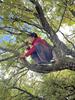











Mini AI Wildlife Monitor
25 Junio 2025 12:27pm

5 July 2026 5:19pm
Wow, what a great project.
8 July 2026 8:36pm
This is a great project! Some comments:
RaspberryPI though accessible is not the best fit for video pipelines and AI workloads or off grid deployments:
- it lacks onboard ISP which means either software implemented ISP, distorted data or on camera non energy optimized ISP.
- it lacks any power management techniques, low power modes, etc.
- it runs from SDCard using the same one for OS, swap and data, any corruption can lead to full loss.
- it runs any AI/ML workload on CPU which is extremely non efficient and any addon accelerators such as Hailo8 add a lot to power consumption and heat dissipation representing more challenges.
The advantages are of course plenty of documentation, community and all kind of makers addons, hats, etc.
For something more realistic, real life suitable I would suggest using something based on SoC with integrated NPU such as Hailo 15, Renesas RZ/V, Synaptics SL1680, MediaTek Genio or even the I.MX8M Plus for very light AI/ML workload. All of these have variety of SBCs, kits or even standalone smart camera oriented designs available from different vendors.
Raspberry Pi Alternatives for Edge AI!
6 July 2026 7:10am
8 July 2026 12:01pm
Hi Luke,
Really enjoyed another one of your videos, you've definitely got me experimenting more with edge compute and AI in my garden. I was wondering whether you’ve done much with NVIDIA Jetson boards? I think you mentioned having an older version in a previous video.
I got an Orin nano super developer kit since the higher-memory RPis doubling in the past year, while the Orin Nano/Orin Nano Super now seem surprisingly fairly static in price over that time period. What interests me is the possibility of using them for wildlife monitoring: running detection or ID models locally, collecting new field data, self labelling and training then using that data to periodically improve the model all on the edge.
I’m not sure whether full on-device training would be practical, but perhaps a more realistic workflow would be active learning or a teacher–student/pseudo-labelling setup: the device flags uncertain or interesting detections, those get reviewed or labelled, and the model is retrained or fine-tuned periodically self redeploying via scripts or a local model and agentic harness.
There also seems to be a good ecosystem of cameras and sensors around Jetson. I assume you find limitations in the Jetson boards for ecology/wildlife-monitoring projects?
AI Edge Compute Based Wildlife Detection
23 February 2025 5:24am
30 June 2026 2:06am
I find the performance of micro-nano sized models that run on MCUs impractical for many applications. This is due to the low FPS, tiny Image resolution processed and very low model capacity.
I think people underestimate the huge jump in complexity from something working on the benchtop detecting a person from a meter away to trying to detect a cat-size object several meters away in a noisy environment.
30 June 2026 6:59am
Well stated Luca. Totally with you on this.

30 June 2026 2:04pm
Thank you so much Luke!

Senior Hardware Product Development Engineer - Conservation X Labs
18 Junio 2026 4:42pm
Full Stack Developer - Conservation X Labs
18 Junio 2026 3:37pm
remote sites as 'Edge computing'
22 Marzo 2026 4:54pm
21 April 2026 6:30am
Oh yeah. On a Jetson that sort of thing would be viable.
Our Pi 5 is really pushing the boundaries with what we have it doing.
To put it into perspective. Our polar bear detector is round robin checking 22 cameras with a more than 20,000,000 parameter model on a middle of the range Jetson.
22 April 2026 2:07am
Yes, I was considering inference only in this case. I see it as a filter applied to raw images and audio before uploading to cloud/server to save bandwidth (if it is necessary at all?), which I think was the OP's request.
It is then a balance of power requirements and power stability (and physical security?) to keep a small server running and connected. But a starlink system is relatively power hungry for a remote station too, so they may have this covered.
Software wise, the "TRAPPER" system might do what you need, with a local/LAN installation and allow for admin access externally. https://os-conservation.org/trapper/
8 June 2026 12:58am
nothing like a concrete, interesting problem to find focus
:-]
my partner is into chickens ... trust me, it's a whole subculture
🤣
We were talking with friends about pecking orders , and thought... hmmmm
so, after riffing with Claude a bit, assembling RPi4+ USB Coral acclerator + Tapo 120 to tinker with RTSP streams Frigate Plus , COCO, Pytorch, etc. to automatically determine a pecking order, from an RTSP webcam.
Claude's got the strategy all figured out! 🤣
And we've got an Audiomoth and a StealthCam we use on occasion.
SO, managing/evolving that RPi4-based from behind the firewall at her house, versus mine, will be fun.
Just installed the Wireguard client; off we go...
(Viv, top of the pecking order, sole survivor of a previous weasel attack; all the others are newcomers...)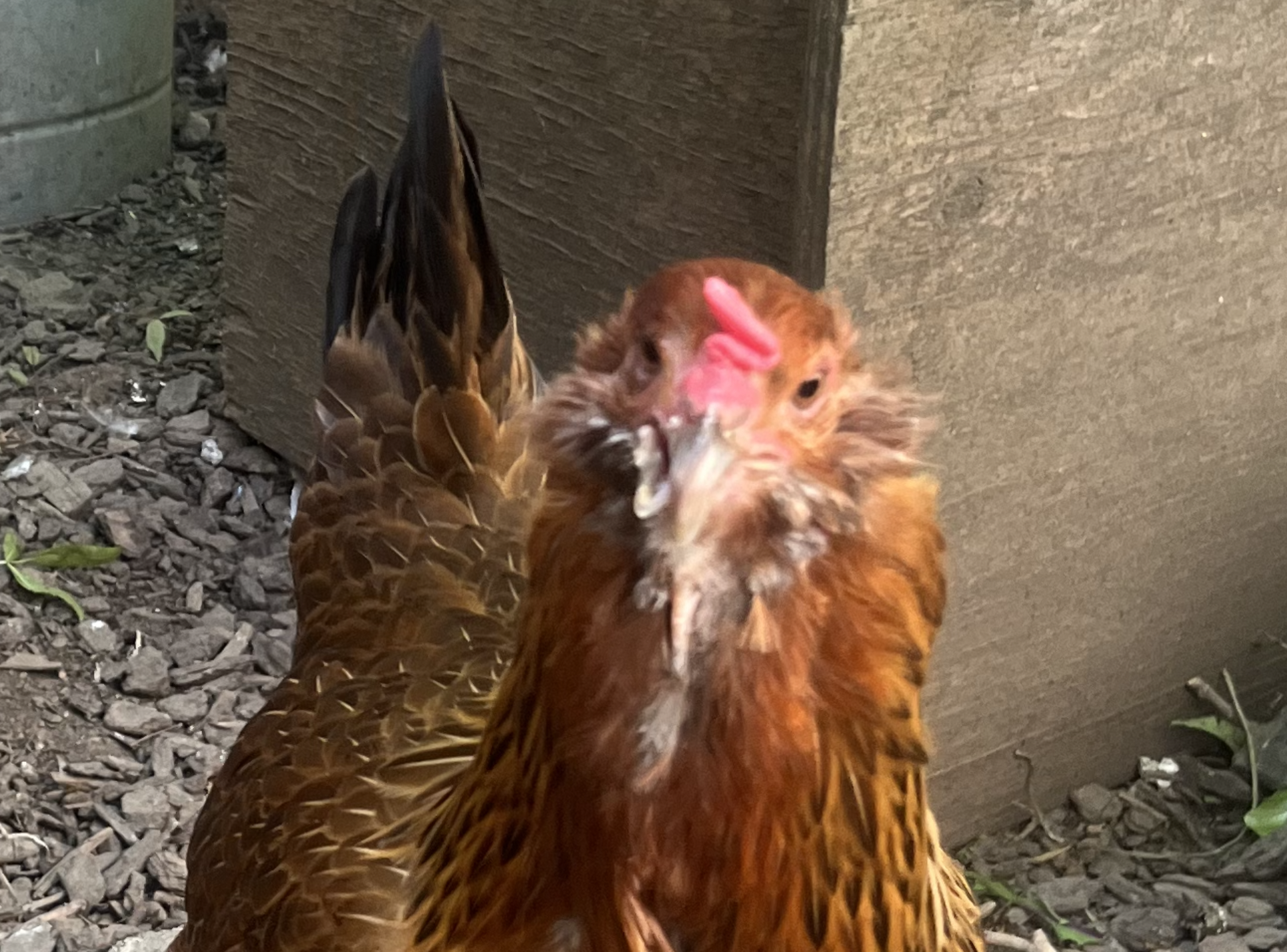
Ecologist (Postdoctoral Research Fellow), IS-0408-09
1 Junio 2026 4:02pm
Help shape best-practice guidance on conservation technology - input to survey
22 Mayo 2026 10:20am

Solar Powered Mini AI wildlife Monitor!
21 May 2026 2:07am
Open PhD project: Decoding and mapping Earth's species interactions with ecological AI
28 April 2026 4:51pm
Ecological Data Scientist
21 April 2026 9:22pm
Help us find our cover image!
18 February 2026 4:19pm
20 March 2026 12:02am
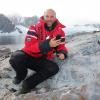
How about this one. Three wolves captured on a solar powered thermal imaging triggered wolf detector. One wolf about to jump the ditch to take a closer look at the horses in the field.
This marks the end of an era. The alpha she-wolf of this pack was unfortunately killed on a highway today. She raised many pups. We grieve for you Noella.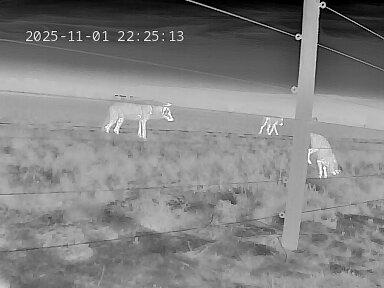
The video for this shot is here
23 March 2026 9:55pm
Hi Philip,
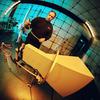
Here's an overview and a blog on Voltaic's website. We manually recover the microSD cards, but it would also be possible to use Iridium SBD by including a Rockblock connected to the RPi for full recovery of images (although we don't need to, as the ideal situation is to remove the cameras and leave nothing behind many years later).
26 March 2026 10:55am
Thank you for these links; I will have a read of them :)
Looking To Utilize My Skillsets To Help
19 Marzo 2026 10:26pm
Seeking input: FAIR & AI-ready wildlife drone datasets
4 Marzo 2026 9:21am
7 March 2026 10:27am
Thanks Sean! Looking forward to the community's feedback on this! Feel free to fill out the survey, or open an issue on GitHub to track specific suggestions.
12 March 2026 11:11am
Hi @jennamkline , are you in the SCB Drones and Data Working Group? I think it would be great to have that as a topic for discussion during the next meeting! I'd be keen to hear more about this work.
@annavallery this might be of interest to you.
13 March 2026 2:36pm
hi @elsa thanks so much for the suggestion! i would love the SCD Drones and Data Working Group's input on this proposal. I was planning on attending one of their meetings later in March to solicit feedback. If there are additional venues to engage with the group, please let me know!
What Do Other Fields Most Often Underestimate About Your Work?
13 February 2026 12:45pm
Edge AI for Conservation Workshop
23 February 2026 8:38am
Hi All, thanks so much to everyone who participated in the workshop and made it a success! We've uploaded the slides here:
Thanks!
Jenna
23 February 2026 8:38am
Hi All, thanks so much to everyone who participated in the workshop and made it a success! We've uploaded the slides here:
Thanks!
Jenna
SDZWA Summer Fellowship 2026
25 Diciembre 2025 6:12pm
Advancing Conservation with Edge AI: Key Takeaways from Our Recent Session
16 Diciembre 2025 11:22am

25 December 2025 8:54am
AMAZING
AI for conservation on the edge with Project SPARROW
20 November 2025 9:44am
🚨 🔔 Call for Project Ideas: Partner with Graduate Ocean Instrumentation and Technology Course!
16 November 2025 7:22am
Highlights from the WILDLABS Edge Computing Group Kickoff Meeting

10 November 2025 7:20pm
Hello! A friend pointed me to this new group. Exciting! If folks are interested in the NSF AI-Edge Computing project Sage, we are having a (virtual) workshop on Wednesday the 12th.
WILDLABS Edge Computing Group Meetup
23 Octubre 2025 8:53pm

25 October 2025 10:13pm
Hi @jennamkline and others,
There's some confusion on the time for this event. It's listed as November 4 at 11:00 am ~ 12:00 pm EDT (UTC -4), but daylight savings ends in the US on November 2. November 4 is during standard time. Easter Standard Time is UTC -5.
Is this meant to be 11am to noon EST?
25 October 2025 10:21pm
I see the event image says 11 AM EST. I'm on the West Coast, and the Zoom page said 8 AM Pacific Time (no mention of standard vs daylight savings). After I registered, the calendar invite is showing up as 7 AM.
I believe the call will be at 8 AM PST, so that's how I have it on my calendar, but I suggest people double check!
27 October 2025 3:42pm
Hi Ed, thanks so much for the heads up on this! The event is scheduled at 11 AM EST (UTC-5)/8 AM PST
Solar Powering a Raspberry Pi!
23 October 2025 8:15am
Connecting with Conservation Tech Leaders in Kenya
9 Octubre 2025 7:57am
13 October 2025 8:53am
Hi Youssef
Greetings from Arusha, Tanzania. We are happy to see that you are interested in connecting. I am a co-leader for the East Africa Group. I would like to connect and invite you for a tech-talk with our fellows, East Africans. If you have got some space, let me know.
16 October 2025 11:29am
Hi Susan ,
Thank you for your reply and your kind invite . Unfortunately my stay in Nairobi was short but there is a chance to come back to visit east Africa again in the beginning of November and potentially going to Tanzania . Let's keep in touch :)
18 October 2025 5:07pm
Awesome. Lets keep in touch
Solar edge-AI forest watcher (prototype)
29 Septiembre 2025 12:05pm

3 October 2025 12:39pm
Hello Samuel,
First of all, all the best of success with the Edge AI Earth Guardians contest.
Based on my experience with using PAM for poaching/hunting pressure monitoring, a photo would not be really useful - unless you have a very specific setting (which I can't think of right now). The strength of PAM is that you do not need to have line of sight to detect a sound event (unlike with camera traps). Now, if you were detecting vehicle sounds, and you had the camera at a road bent, then yes, in principle, a sound + image could be useful (but then again...the sound will trigger the sensor long before the car/truck appears in the field of view of the camera....).
My concern with real-time AI is how to eliminate false positive triggering (esp. with gunshots sounds). Unless this is resolved, I would be skeptical about the use of similar solutions (and we have tried something similar in the field).
Finally, another concern is the way of data transmission - here you are using WiFi. So this is to be used at a homestead - farm setting, and not really at a remote forest, which is where we most need early warning systems.
Best regards, Christos
Edge AI Earth Guardians Contest on Hackster.io
22 Septiembre 2025 4:35pm
Edge AI on Zephyr: ULP Acoustic Monitoring for Wildlife
22 Septiembre 2025 12:21pm
Exploring the Wild Edge: A Proposal for a New WILDLABS Group
9 Junio 2025 5:41pm

18 July 2025 2:22pm
Hello Youssef,
Yes, let's keep contact. I'm currently looking for good conferences to publish my work, if you are aware of something, please let me know.
4 September 2025 1:33pm
Hey everyone!
This looks really cool and I'm really interested :)
Remote sensing is indeed one of the major challenges in conservation, especially with the rate and diversity of incoming data. I recently attended a climate codefest where the goal was to compress this incoming data using AI to make sense of it. We ended up using unsupervised learning to cluster meaningful data and transport it on limited bandwidths.
But there is so much more to do and learn! I'm glad you guys made this group. I would love to explore more of this area and learn from your experiences.
How can I be more involved? Let me know!
Cheers, nikhil
20 September 2025 11:06pm
Hey Nikhil,
Thanks a lot for your message! The group is no longer just a proposal , it’s now officially created 🎉 You can join us here:
I’d be super keen to hear more about your codefest experience , it sounds exactly the kind of knowledge-sharing that could spark great discussions. Why not share it in the group? You’re more than welcome!
Looking forward to learning from you, :)
Youssef
Predict Air Pollution with Computer Vision

17 Septiembre 2025 1:20pm
8 June 2026 9:15pm
In case someone. Find this totally out of place commemt… this is how I solved it, I've decided to use a IMX477 HQ Camera, building a *manual, heavy-duty optical rig* utilizing C/CS-mount lenses and physical macro extension tubes.