





Thanks to WILDLABS 'Boring Fund' support, we are hosting a workshop on AI for biodiversity monitoring in Medellin, Colombia, April 21st to 24th. This is a followup discussion to our event notification, copied below.
"I’m excited to announce our upcoming workshop on ‘AI for ecological monitoring in the Andes’. Funded by WILDLABS, we are hosting a four-day session in Medellin, Colombia, from April 21st to 24th. Our aim is to bring together ecologists working with machine learning data for biodiversity science, as well as computer scientists interested in contributing to biodiversity conservation. Primarily aimed at students in Colombia and Ecuador, we hope to build skills in applied machine learning, share best development practices, and strengthen the network of scientists working at the intersection of machine learning and the environment. Each day will focus on developing models from different acquisition hardware, such as camera traps, drones, and autonomous audio recorders. Thanks to generous support from WILDLABS, travel assistance is available and lodging will be covered. The workshop will be taught in a mixture of English and Spanish. To apply visit https://weecology.github.io/AI_for_ecology_workshop/. Once accepted, applicants are expected to participate in pre-workshop activities. In addition, we would love to curate short virtual talks to highlight the growth in AI talent in Latin America. Get in touch with me at [email protected]."
An update as of today, we have received 53 applicants from an amazing group. We ranked each applicant by our scoring criteria to attract a diverse array of participants and will be sending out invites shortly to the top group. Responses to our application were really interesting. I wanted to highlight some lessons learned so far.
There is a huge desire for AI workshops in Latin America.
When I first pitched this idea to colleagues, we weren't 100% sure how many applicants we would get. We have only had the application open two weeks and already have double the number that we can support for travel funding. The largest barrier is support for travel and housing. We will close the application page soon!
Ranking applications is difficult!
We developed a rubric that balanced student preparedness, study taxa, and background in order to assess the likelihood that a participant could act as a catalyst for further learning and application in their community. This is difficult to gauge in a short questionnaire, especially for the computer science students interested in learning more about biological applications.
Many participants are aware of AI solutions and experience in R, but not python.
There is a mismatch between the programming languages that are being prioritized for data analysis in Latin America, and the development of AI tools, which is primarily in python. I am hopeful that emerging code assist tools (Copilot) will help ease this transition.
A few selected responses from applicants on what they hope to learn and contribute.
"Quisiera aprender de cosas diferentes como el uso de la IA para identificar especies provenientes de monitoreo con bioacustica o camaras trampa."
"Me gustaría mucho saber como están usando IA en otros paises de latinoamerica para el monitoreo de fauna y buscar nuevas utilidades para la herramienta. Acá recién estamos tratando de incorporarlo y nuestro nivel aún es básico."
"Espero aprender cómo las herramientas de IA pueden generar procesos de innovación para la caracterización y el monitoreo de la biodiversidad, y cómo traducir estos conocimientos en "insights" relevantes para los tomadores de decisión. Esto me permitirá contribuir al desarrollo de estrategias que movilicen recursos y acciones en favor de un desarrollo responsable enfocado en el mantenimiento de la biodiversidad en Colombia y Latinoamérica. Además, me gustaría compartir mi experiencia en proyectos relacionados con la sostenibilidad y la conservación, así como en la potencial aplicación de tecnologías innovadoras en estos ámbitos."
"Desde hace tiempo he estado esperando una oportunidad como está para seguir aprendiendo sobre inteligencia artificial. No es lo mismo explorar el tema por internet que tener a un experto a tu lado hablándote de dicho tema. Si además se combina con el análisis de datos aplicado al monitoreo, sería una experiencia increíble. Al final, más que solo aprendizaje, sería un espacio chévere para compartir, experimentar y crecer con personas que comparten las mismas ganas de poder asimilar un conocimiento."
I'll post followup threads as we continue this process if others are interested in hearing about its development. I'm currently thinking about how to balance coding sessions with presentations from participants, how to create better connections among participants, and what aspects can be done before the workshop to reduce technical challenges when participants arrive.
I want to thank Juan Parra and the University of Antioquia for help support this effort. Jose Francisco Ruiz Munoz from Universidad Nacional de Colombia, Santiago Guzman from University of Pittsburgh, Juan Sebastián Ulloa from the Humboldt Institute, Boris Tinoco from Universidad de Azuay, Ecuador and many others are contributing their time and energy and into making this a success.
7 February 2025 3:18pm
This is so cool!
Thanks for sharing the lessons learnt too. I would definitely be interested in hearing how it goes.
For analyzing the outputs of detectors and pose estimation frameworks (aka trajectories of animals' bodyparts), maybe you want to have a look at this Python package I am involved in: movement. It supports a few formats for reading keypoint and bounding box data - you can see a few example use cases here. Maybe it is helpful for a programming workshop? The package is developed to support animal behaviour research, mostly from a neuroscience perspective, but we are keen to expand its use in ecology (and more generally outside the lab).
If you prefer analysing your data in R, a good alternative may be the animovement toolbox, which is very similar in scope. We (the `movement` developers) are working together with its developer to gradually converge on common data standards and workflows.
I was also wondering, will the virtual talks be open to the public? I'd be interested to attend.
Good luck with this project, looking forward to hearing more about it!

8 February 2025 4:29pm
Hey @benweinstein , this is really great. I bet there are better ways to find bofedales (puna fens) currently than what existed back in 2010. I'll share this with the Audubon Americas team.
2 May 2025 2:59pm
Hi everyone, following up here with a summary of our workshop!
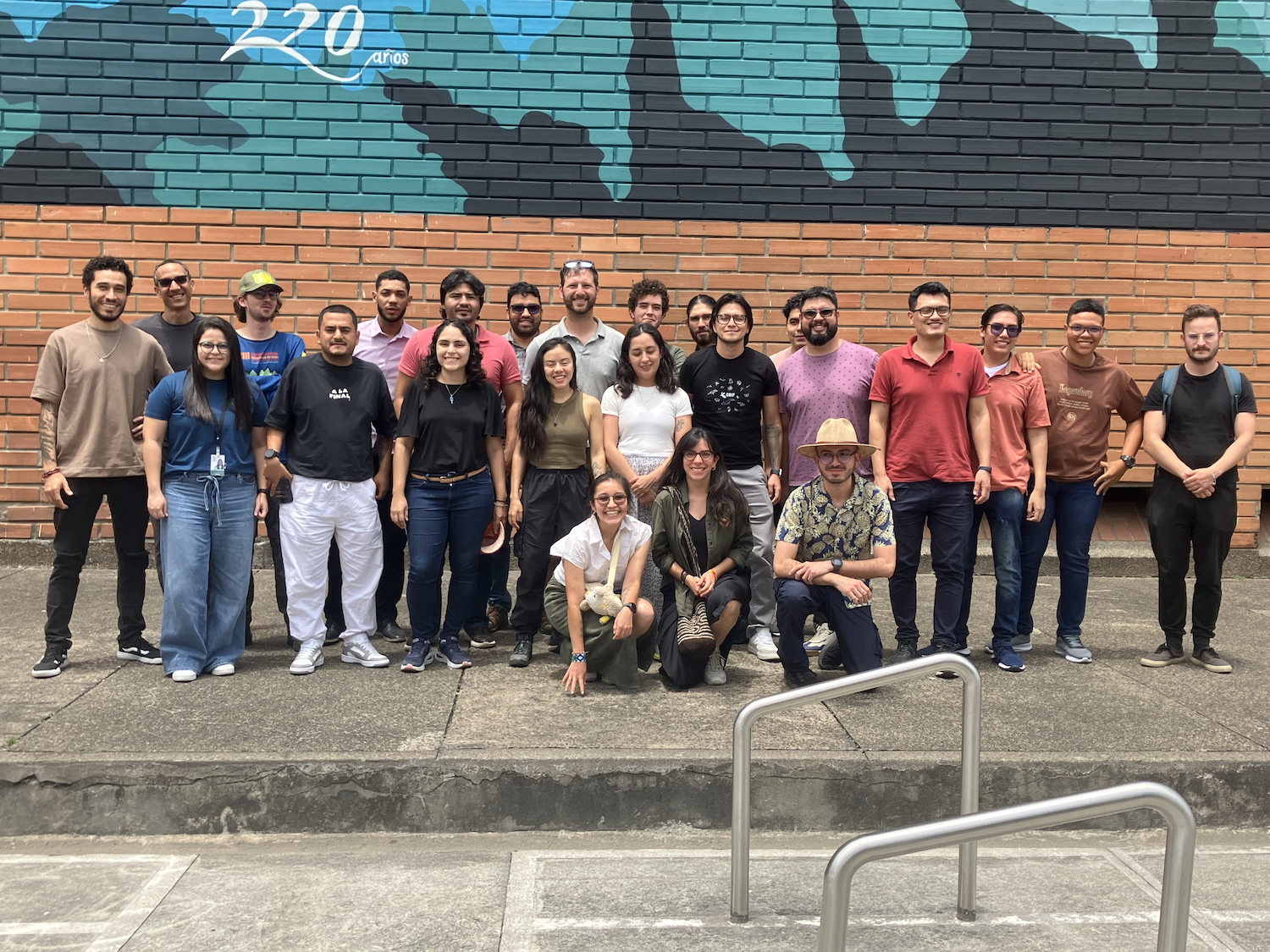
The AI for Biodiversity Monitoring workshop brought together twenty-five participants to explore uses of machine learning for ecological monitoring. Sponsored by the WILDLABS ‘Boring Fund’, we were able to support travel and lodging for a four-day workshop at the University of Antioquia in Medelín, Colombia. The goal was to bring together ecologists interested in AI tools and data scientists interested in working on AI applications from Colombia and Ecuador. Participants were selected based on potential impact on their community, their readiness to contribute to the topic, and a broad category of representation, which balanced geographic origin, business versus academic experience, and career progression.
Before the workshop began I developed a website on github that laid out the aims of the workshop and provided a public focal point for uploading information. I made a number of technical videos, covering subjects like VSCODE + CoPilot, both to inform participants, as well as create an atmosphere of early and easy communication. The WhatsApp group, the youtube channel (link) of video introductions, and a steady drumbeat of short tutorial videos were key in establishing expectations for the workshop.
The workshop material was structured around data collection methods, Day 1) Introduction and Project Organization, Day 2) Camera Traps, Day 3) Bioacoustics, and Day 4) Airborne data. Each day I asked participants to install packages using conda, download code from github, and be active in supporting each other solving small technical problems. The large range of technical experience was key in developing peer support. I toyed with the idea of creating a juypterhub or joint cloud working space, but I am glad that I resisted; it is important for participants to see how to solve package conflicts and the many other myriad installation challenges on 25 different laptops.
We banked some early wins to help ease intimidation and create a good flow to technical training. I started with github and version control because it is broadly applicable, incredibly useful, and satisfying to learn. Using examples from my own work, I focused on github as a way both to contribute to machine learning for biology, as well as receive help. Building from these command line tools, we explored vscode + copilot for automated code completion, and had a lively discussion on how to balance utility of these new features with transparency and comprehension.
Days two, three and four flew by, with a general theme of existing foundational models, such as BirdNET for bioacoustics, Megadetector for Camera traps, DeepForest for airborne observation. A short presentation each morning was followed by a worked python example making predictions using new data, annotation using label-studio, and model developing with pytorch-lightning. There is a temptation to develop jupyter notebooks that outline perfect code step by step, but I prefer to let participants work through errors and have a live coding strategy. All materials are in Spanish and updated on the website. I was proud to see the level of joint support among participants, and tried to highlight these contributions to promote autonomy and peer teaching.
Sprinkled amongst the technical sessions, I had each participant create a two slide talk, and I would randomly select from the group to break up sessions and help stir conversation. I took it as a good sign that I was often quietly pressured by participants to select their talk in our next random draw. While we had general technical goals and each day had one or two main lectures, I tried to be nimble, allowing space for suggestions. In response to feedback, we rerouted an afternoon to discuss biodiversity monitoring goals and data sources. Ironically, the biologists in the room later suggested that we needed to get back to code, and the data scientists said it was great. Weaving between technical and domain expertise requires an openness to change.
Boiling down my takeaways from this effort, I think there are three broad lessons for future workshops.
- The group dynamic is everything. Provide multiple avenues for participants to communicate with each other. We benefited from a smaller group of dedicated participants compared to inviting a larger number.
- Keep the objectives, number of packages, and size of sample datasets to a minimum.
- Foster peer learning and community development. Give time for everyone to speak. Step in aggressively as the arbiter of the schedule in order to allow all participants a space to contribute.
I am grateful to everyone who contributed to this effort both before and during the event to make it a success. Particular thanks goes to Dr. Juan Parra for hosting us at the University of Antioquia, UF staff for booking travel, Dr. Ethan White for his support and mentorship, and Emily Jack-Scott for her feedback on developing course materials. Credit for the ideas behind this workshop goes to Dr. Boris Tinoco, Dr. Sara Beery for her efforts at CV4Ecology and Dr. Juan Sebastian Ulloa. My co-instructors Dr. Jose Ruiz and Santiago Guzman were fantastic, and I’d like to thank ARM through the WILDLABS Boring fund for its generous support.
2 May 2025 2:59pm
Sofía Miñano