


Morag Boyd
- @Ruralhedgehogs
- | She her


Hi all - a query about potential limitations of camera trapping at night in very dark woodland environments. My organisation (PTES/BHPS) runs the national hedgehog monitoring project. We collect images of creatures using a range of habitats and are using them to generate density estimates of hedgehogs in a variety of habitats and locations. We lack data on hedgehogs in woodlands, and during a discussion, it made me wonder how efficient camera traps are at collecting identifiable images of small, low to the ground creatures in very dark and complex environments. Could it be that we are lacking information because: hedgehogs tend not to live in the depths of woodlands, as is the assumption, or could it be that they either don't trigger cameras unless very close, or that the images taken when triggered by hedgehogs at more of a distance are not clear enough to accurately identify them as hedgehogs? As someone without a lot of experience working with trail cams, the question has been bobbing around in my head for a few days...
5 March 2026 8:59am
These are very good questions Morag. It would be a great research topic for someone. Determining the detection distance of animals of different sizes with PIR sensors. I do indeed think that our view of the world is skewed due to limitations of the most common type of camera trap sensor.
Have people actually placed camera traps in woodlands with the express purpose of looking for hedgehogs ? I know from PIR sensors on my driveway in the past. small dogs and cats would sometimes trigger PIR sensors, but I think in general a slow moving hedgehog would indeed have to be very close and also moving across the field of view to be detected (Not to or from the sensor as then the thermal pulse tends not to change quickly enough).
PIR sensors simply detect an infrared pulse of a certain volume over a certain time. The smaller the object the smaller the pulse and the slower or faster the object moves would also affect it.
We (Wildlife Security Innovations) have a wildlife camera that uses thermal imaging modules and will do motion detection based on thermal image differences. I have detected rats walking slowly at 18m distance with this.
Below are images of a hedgehog we dectected at 13m and a closer up image. The 13m distance is where this hedgehog was detected, on the right middle of the image. But I'm sure it could trigger from further away as well.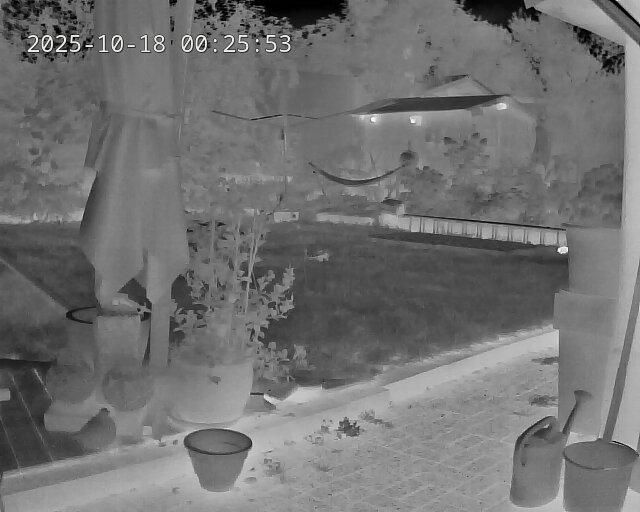
And when it was close up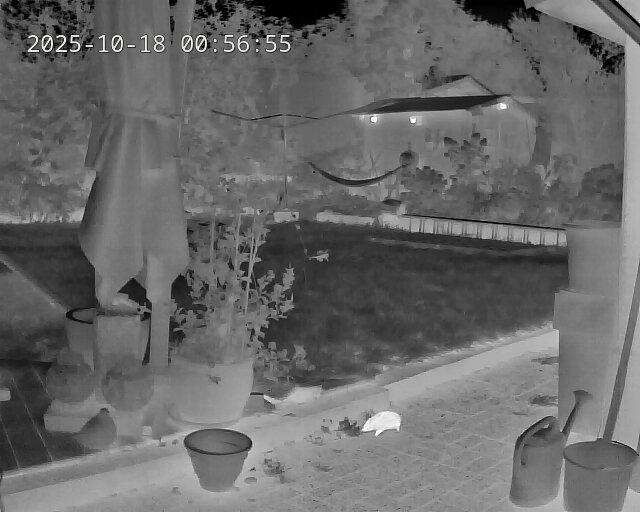
And we can also detect fast moving small objects, like these birds at night.
And here we detect a mouse walking at around 5m distance. This would absolutely not be possible with PIR sensors.
These wolves however would be very easy to detect with PIR sensors.
But it would be a very valuable discovery to be able to revise our assumptions by using more effective sensing.



6 March 2026 1:19pm
Dear Morag,
have you considered using something like the Mostela boxes developed originally - I believe - in Netherlands? (see link here) .
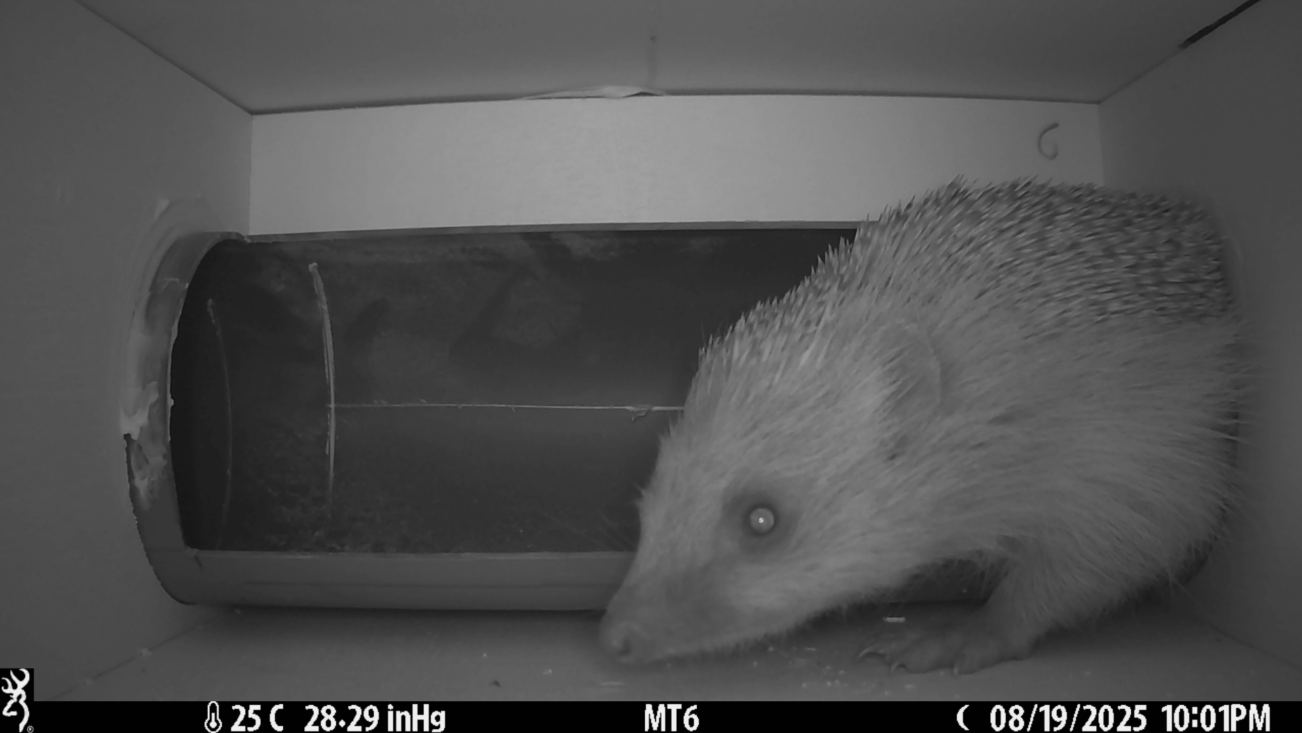
We have build our own boxes here in Greece and recorded hedhehogs clearly. From our experience, they are not likely to be detected consistently using typical cameras placed along trails aimed for a larger bodied range of species (e.g. badgers, foxes, martens, wildcats etc.). We have placed a +3 lense in front of the camera, and the clarity of the photos was very good indeed. I am sure other members have tried similar solutions.
Regards
Christos




7 March 2026 12:06am
We’ve gotten skunks, squirrels, weasels, woodrats, and packrats on our trail cameras, which are all about the size of hedgehogs. Also much smaller animals – including mice and voles. Make sure that you set the camera up close enough to your target so the hedgehogs pass through the PIR detection zone(s) of your camera (https://winterberrywildlife.ouroneacrefarm.com/2022/08/01/deep-tech-trail-camera-detection-zones/ ) so they are detected. Too far away, and the signal will be too small, or the animal may avoid the detection zones.
“Very dark” shouldn't be an issue, since the PIR detectors ignore visible light anyway and are sensitive only to the far-IR emitted by the animal itself.
I don’t know much (anything) about the habits and track and sign of hedgehogs. But for other small animals we’ve camera trapped, knowing the kinds of places they prefer, or finding past sign will significantly increase your capture efficiency. “Random” placement is problematic because there are so many places hedgehogs never go . I like Christos’s “hedgehog photo booth”
Examples of our small animal sets:
https://youtu.be/YXILiny5Kbw?si=M1a8VOwsZriz3GGa
https://youtu.be/Tu6bYoZEdf8?si=WaSmpFiPFimuy_zp
https://youtu.be/pI4z5uYLyuw?si=6Py9FAaiicwvB1G_
https://youtu.be/MIWvB-EULno?si=x4_mUCwV9FrWZPHB




1 April 2026 7:54am
Last night a hedgehog triggered our system. This is the first hedgehog I've seen here in six months. Not a woodland area. It triggered at around the 15-20m distance mark, though if looking for hedgehogs could be tuned to trigger reliably for longer distances.
Anybody here know if a hedgehog would trigger on a traditional camera at around 15m? (The distance to the closest part of this view).
PS. Initially I thought from memory that this was around 7m. But I went out there yesterday and saw that it was much further than I thought, around 15-20m.
Kim Hendrikse