
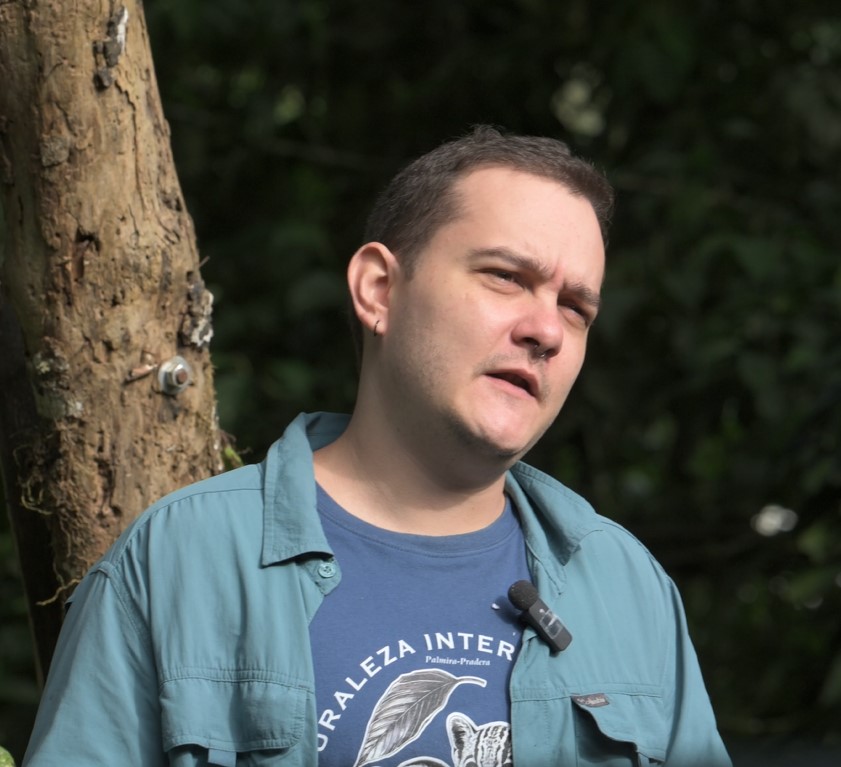
Insignias
Editando insignias. Arrastra para reordenar.





Grupos a los que te has unido
Discusiones iniciadas
Comentarios de la discusión
Recursos añadidos

Jorge Lizarazo agregó un nuevo Discusión - "A technical and conceptual curiosity... Could generative AI help us simulate or decode animal communication?" hasta Acoustics

Jorge Lizarazo contribuyó a Organización - "Universidad Icesi"

Jorge Lizarazo completó un curso"How to Create a WILDLABS Course"
 Hace 11 meses
Jorge Lizarazo se inscribió en un nuevo curso -"How to Create a WILDLABS Course"
Hace 11 meses
Jorge Lizarazo agregó un nuevo Organización - "Universidad Icesi"
Jorge Lizarazo contribuyó a Producto - "nestling-growth-app"
Jorge Lizarazo agregó un nuevo Producto - "nestling-growth-app"
Jorge Lizarazo agregó un nuevo Artículo - "BoutScout – Beyond AI for Images, Detecting Avian Behaviour with Sensors" hasta AI for Conservation
Jorge Lizarazo agregó un nuevo Discusión - "Project Update — Nestling Growth App" hasta Data Management & Mobilisation
Jorge Lizarazo agregó un nuevo Discusión - "WILDLABS AWARDS 2024 - BoutScout: Monitoring System for Avian Nesting Behavior Studies" hasta Build Your Own Data Logger Community
Grupos
Grupo
- Estadísticas del grupo
-




- 522
- 324
- Última discusión
- Getting behavioral data out of datasets that weren't built for it
¿Quieres hablar sobre sensores que no encajan del todo en ninguno de nuestros grupos técnicos específicos? ¡Este es el lugar para publicar! Desde sensores de temperatura y humedad hasta sensores de flujo de aire y presión, existen muchas herramientas de detección ambiental que pueden aportar datos valiosos a las tecnologías básicas de monitoreo de la conservación. Con la creciente disponibilidad de opciones de bajo costo y código abierto, hemos observado un interés cada vez mayor en integrar este tipo de sensores de bajo ancho de banda en las herramientas existentes. ¿Con qué tipo de sensores trabajas?
🌍 Conservation technology is transforming how we protect wildlife, but are we thinking carefully enough about the risks? Drones, camera traps, GPS trackers, acoustic sensors, AI, and remote sensing have become essential tools for conservation practitioners around the world. They help us monitor species, detect threats, and respond faster than ever before. But these same technologies can also introduce unintended risks, and in some cases, can be exploited by those seeking to harm the very wildlife we're trying to protect. 🦏 Input now and/or join the discussions/research.
Grupo
- Estadísticas del grupo
-






- 405
- 36
- Última discusión
- Custom Hydrophone Records Dolphins
Bienvenido al foro oficial del grupo de nuestro curso virtual, Construya su propio registrador de datos este es tu espacio para interactuar con los instructores del curso, Akiba y Jacinta de Freaklabs, encontrar ayuda y recursos para cada módulo, colaborar y chatear con tus compañeros del curso, y compartir tu progreso en tu propio proyecto de registrador de datos.
- Último recurso
- /
- Open-Source Solutions for Amphibian Passive Acoustic Monitoring: Lessons from Patagonia
Monitoring amphibians across the temperate forests of Patagonia presents significant logistical and technical challenges. Remote locations, harsh environmental conditions, and the large volumes of data generated by Passive Acoustic Monitoring (PAM) can make long-term biodiversity surveys difficult to implement and maintain. In addition, environmental data often relies on multiple independent devices, increasing costs, complexity, and logistical demands in remote field conditions. Through the WILDLABS Awards 2025, our team explored practical ways to address these challenges by combining open-source hardware, environmental sensing, and AI-assisted acoustic analysis.
Grupo
- Estadísticas del grupo
-





- 157
- 85
- Última discusión
- The Climate Change AI Virtual Summer School 2026!
Este grupo tiene como objetivo establecer un centro regional en América Latina que proporcione un espacio para el intercambio de conocimientos y la creación de redes entre el creciente número de personas que trabajan en tecnología para la conservación en la región.
🌍 Conservation technology is transforming how we protect wildlife, but are we thinking carefully enough about the risks? Drones, camera traps, GPS trackers, acoustic sensors, AI, and remote sensing have become essential tools for conservation practitioners around the world. They help us monitor species, detect threats, and respond faster than ever before. But these same technologies can also introduce unintended risks, and in some cases, can be exploited by those seeking to harm the very wildlife we're trying to protect. 🦏 Input now and/or join the discussions/research.
Marcadores
Mis Cursos
Estos son tus cursos en progreso y completados. Explora más cursos a través de nuestro catálogo.
Para encontrar los cursos que has creado, consulta las pestañas “Mi Contenido Borrador” o “Mi Contenido
Configuración
Jorge Lizarazo's Contenido
Discusión
Hi everyone,I recently watched a talk by Aza Raskin where he discusses the idea of using generative models to explore communication with whales. While the conversation wasn’t...
21 July 2025
Artículo
In this case, you’ll explore how the BoutScout project is improving avian behavioural research through deep learning—without relying on images or video. By combining dataloggers, open-source hardware, and a powerful...
24 Junio 2025
Discusión
Project Update — Nestling Growth App

Jorge Lizarazo
Although the core of the BoutScout project focuses on developing multi-sensor dataloggers for automated nest monitoring, a significant complementary outcome...
22 April 2025
Discusión
First things first, our team — @jcguerra10 , @bmgarrido , and special acknowledgment to @Mantolehmann, who joined the team as an intern until December and...
31 Marzo 2024
Product
The App is an open-source, web-based tool that helps researchers model and visualise bird nestling growth using classic biological functions. It supports multilingual interfaces, model comparison, and high-quality output for field-collected data on weight and wing-tarsus.
Jorge Lizarazo's Comentarios
Un contacto en los siguientes elementos del Inventario
Product
The App is an open-source, web-based tool that helps researchers model and visualise bird nestling growth using classic biological functions. It supports multilingual interfaces, model comparison, and high-quality output for field-collected data on weight and wing-tarsus.

Jorge Lizarazo comentado en "What questions would you ask an AI agent for conservation tech?"