


Groups joined
Discussion Comments
Groups
Group
- Group Stats
-







- 254
- 101
- Latest Discussion
- Engineer Searching for Biologists
The eDNA & Genomics Group focuses on advancing biodiversity monitoring, species detection, and ecological research using environmental DNA (eDNA) and genomics technologies. Our members are engaged in the collection, sequencing, and analysis of DNA from environmental samples—such as soil, water, and feces—to detect species presence, assess genetic diversity, and study population structure without the need for direct observation or capture.
- Latest Resource
- /
- Assessing Critical Habitats Using Environmental DNA to Conserve the World’s Rarest Heron- White-bellied Heron Ardea insignis
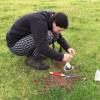
The White-bellied Heron (Ardea insignis) is the world's rarest heron, with only about 60 individuals remaining globally. Bhutan holds nearly half of the remaining population, making conservation efforts within the country crucial to the species' survival. As part of my PhD research at Texas State University, I have been working to better understand the ecology, habitat suitability, and conservation needs of this critically endangered species. I employ an interdisciplinary approach that integrates field ecology, environmental DNA (eDNA) and portable genomics technologies to improve biodiversity monitoring and conservation planning for White-bellied Heron in Bhutan. Unlike traditional monitoring approaches that rely solely on direct observations, eDNA allows researchers to detect biodiversity from traces of genetic material left behind in the environment. The WILDLABS Award provided an exciting opportunity not only to advance research but also to demonstrate how emerging conservation technologies can be applied in remote landscapes while building local capacity for conservation genetics. Through this project, we sought to explore how portable molecular tools can support conservation decision-making while making advanced genetic technologies more accessible to researchers and practitioners in Bhutan.
Group
- Group Stats
-



- 487
- 196
Used to pick up signals from tracking gear on the ground, collect images of wildlife and habitats from the air, gather acoustic data with specialized hydrophones, or even collect snot samples from whales' blowholes, drones are capable of collecting high-resolution data quickly, noninvasively, and at relatively low cost.
🌍 Conservation technology is transforming how we protect wildlife, but are we thinking carefully enough about the risks? Drones, camera traps, GPS trackers, acoustic sensors, AI, and remote sensing have become essential tools for conservation practitioners around the world. They help us monitor species, detect threats, and respond faster than ever before. But these same technologies can also introduce unintended risks, and in some cases, can be exploited by those seeking to harm the very wildlife we're trying to protect. 🦏 Input now and/or join the discussions/research.
Group
- Group Stats
-





- 397
- 35
- Latest Discussion
- Custom Hydrophone Records Dolphins
Welcome to the official group forum for our virtual course, Build Your Own Data Logger. This is your space to engage with course instructors Akiba and Jacinta from Freaklabs, find help and resources for each module, collaborate and chat with your fellow course participants, and share your progress on your own Data Logger project!
🌍 Conservation technology is transforming how we protect wildlife, but are we thinking carefully enough about the risks? Drones, camera traps, GPS trackers, acoustic sensors, AI, and remote sensing have become essential tools for conservation practitioners around the world. They help us monitor species, detect threats, and respond faster than ever before. But these same technologies can also introduce unintended risks, and in some cases, can be exploited by those seeking to harm the very wildlife we're trying to protect. 🦏 Input now and/or join the discussions/research.
Bookmarks
Keep track of the resources that matter to you! Collections let you save, organise, and share content from all over the WILDLABS community. Create your first collection by clicking on the bookmark icon wherever you see it.
My Courses
These are your in-progress and completed courses. Explore more courses through our catalogue.
To find courses you have created, see your "My Draft Content" or "My Content" tabs.
EmanuelKivuyo's Comments