


Kristián Cuervo
- @kristian.cuervo
- | He/Him
Dear WildLabs community,
I'm currently designing a new type of sensor which I plan to use LoRa with. I've had discussions with other devleopers on whether using a LoRaWAN gateway would be necessary in order to set up a sensor network with LoRa, however there is also a counter argument that a LoRaWAN gateway is expensive and excessive and unless a high traffic is expected; simple LoRa transceivers would do the trick.
Does any have experience in applying LoRa without LoRaWAN? What would you think about in this trade-off between cost and data telecommunication capacities?
6 February 2025 4:22am
It depends on how you want to architect your system. If you use LoRaWAN, you can plug into existing infrastructure like firmware, hardware, back end services, and dashboards. However you are more limited in how you architect your system. Most LoRaWAN IT infrastructure expect that you're using a traditional multi-channel LoRaWAN gateway and most LoRaWAN gateways expect there's a MAINS power supply available to power it. Solar powered LoRaWAN gateways can get quite expensive and are bulky due to the battery and solar panel sizes required.
What you're trying to do is called a single channel gateway in LoRa/LoRaWAN terminology and there's not much support for it in most of the LoRaWAN IT infrastructure (at least when I last checked). Going outside of the LoRaWAN infrastructure means you'll generally have to piece together your architecture either by modifying what already exists or rewriting it completely.
FYI for people interested, we'll be holding a free day-long workshop on wireless sensor networks for conservation at ICCB 2025 in Brisbane, Australia.
Akiba




7 February 2025 12:21pm
Hey @kristian.cuervo!
LoRa is fundamentally simpler than LoRaWAN and I mainly use LoRa for my sensor networks. If you're using any of the Semtech radios and the firmware isn't abstracted by the module its integrated in, using LoRa is simple and there is an easy API.
The issue is if you need to have a dynamic network where you can switch settings on the fly (e.g., frequencies, spreading factor, etc.). LoRaWAN is designed for that and allows for more scalable and robust networks. However, if you are just scattering a bunch of sensors in an area and sending packets one way to a central point, I would default to LoRa. If you are thinking of intergrating other LoRa sensors in the future that are commercially available and support LoRaWAN then going LoRaWAN out of the gate is more advisable. Also, if you need bidirectional communications, LoRaWAN would make your life easier.
The gateway cost is debatable. There are companies that make gateways with a bunch of bells and whistles but you can also create your own using a single board computer (e.g., raspberrypi) and a LoRa/LoRaWAN dongle or raspberrypi hat with an antenna.
Hope that helps,
Patrick




1 November 2025 5:42am
Hi Kristián. Apologies for the late response, but I just noticed your query. In a nutshell, direct LoRa connection is simpe and easy and all you need for reporting sensor data. Also, assuming you only need to send data occaisonally, you can minimise power usage with direct connections whereas LoRaWAN need to be always listening to other nodes.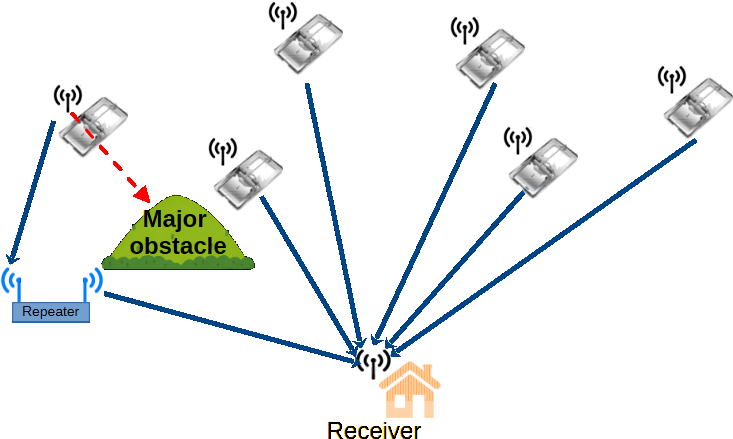
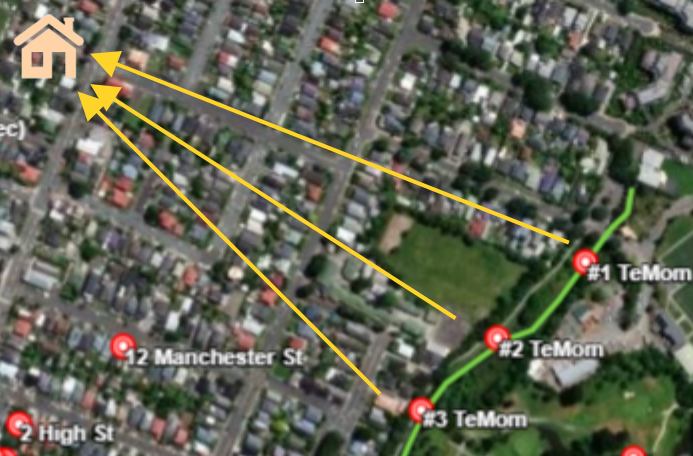
I have just started a field trial with a few DX SMART LR02 modules to transmit trap activation to a central location. DX SMART modified the modules for me so they transmit their unique ID when activated. You can probably use the same with your sensors. If you send me some detail of the sensors you use, I can have a look at it for you.


29 June 2026 8:43pm
Hi — I've worked with both LoRa and LoRaWAN in field deployments and wanted to add some practical perspective.
The LoRa vs LoRaWAN choice really comes down to three questions: do you need bidirectional communication, do you need to reconfigure devices remotely after deployment, and do you anticipate integrating commercial off-the-shelf sensors in the future?
If the answer to all three is no — for example, a simple one-way sensor network sending periodic GPS or environmental data to a fixed gateway — raw LoRa is perfectly adequate and significantly simpler to implement. The SX1276/SX1278 modules are cheap, the API is straightforward, and you avoid the overhead of OTAA/ABP join procedures, MAC layer management, and duty cycle limitations.
However, there are two scenarios where LoRaWAN is worth the added complexity: first, if you want to send downlinks to reconfigure sensors in the field without physical access — invaluable for wildlife tracking collars where changing sampling rates or triggering a GPS fix remotely can extend battery life significantly. Second, if you want to plug into existing infrastructure like The Things Network or ChirpStack without building your own backend from scratch.
My practical recommendation: for a small closed network of fixed environmental sensors, start with raw LoRa. For anything involving animal-borne tags, multi-site deployments, or integration with platforms like EarthRanger, go LoRaWAN from the start — retrofitting it later is painful.
Happy to share more on specific hardware choices if you describe your use case.
Akiba
Freaklabs