



Hi all! I’m Nurfatin Hamzah (Fatin), Community Manager at GainForest.
Earlier this year, I visited our community partner in Kenya, Community Based Environmental Conservation (COBEC), focusing on mangrove projects. GainForest provided them with an AudioMoth and an introduction to bioacoustics data. Currently, they are collaborating with SeaTrees to monitor marine biodiversity in the Marereni mangrove forest.
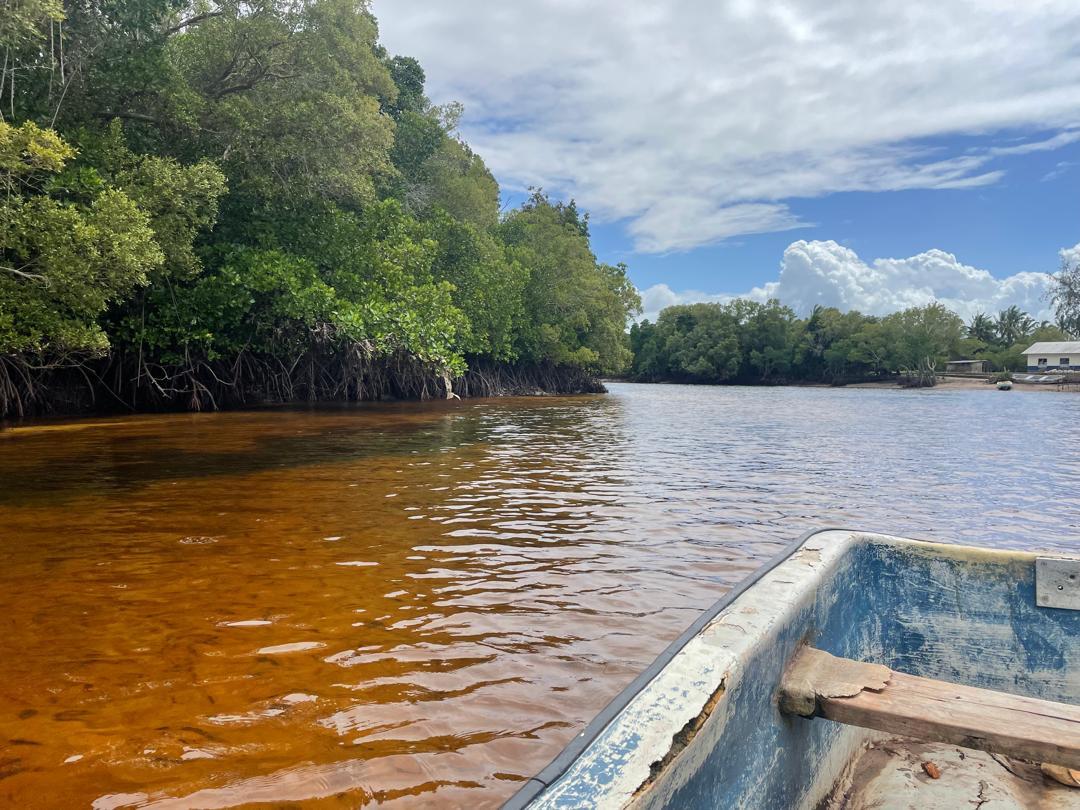
COBEC has already tried deploying the AudioMoth in four locations at Marereni. We are very interested in bioacoustics data and exploring how it can complement the sightings data already collected in collaboration with Seatrees
We have three questions:
1. COBEC has been having difficulty uploading bioacoustics data via the Arbimon uploader. If anyone has tips or tricks to help, it would be much appreciated.
2. Unfortunately, our team wasn’t there during deployment, so we can’t seem to resolve an issue where the AudioMoth doesn’t collect data according to the custom settings. They ended up using the default, generating very large files, which makes uploading a challenge. Any advice on handling this would be greatly appreciated.
3. We would like to invite any academics or researchers working (or interested to work) on Kenyan mangrove landscapes to collaborate, especially on data analysis.
Looking forward to learning and collaborating with this community!
14 November 2025 11:07am
Hi Fatin,
Sounds like an amazing project. I dont use Arbimon so I cant help there but can suggest a number of other analysis routes, some that I have developed training materials for if this is of help. Isthis terrestrial or aquatic recordings?
For the audiomoth, I know which settings they may have used, I have tried to upload a screenshot but its not allowing me, happy to send it to you. You can also run an r script over the data to break it down into 1 min files, I have a script for this somewhere.
We are running a workshop in Kenya looking at capacity around tech in Feb, where we know analysis will come up as one of the big barriers. We would love to invite someone from the orgaanisation along.
Feel free to reach out to chat further- [email protected]
Jenna
28 November 2025 12:29pm
Hi Nurfatin,
Just noting what an interesting topic this is (bioacoustics) and also sharing that we (Wetlands International Eastern Africa) also collaborate with COBEC particularly on mangrove related work in Kenya. It would be great to connect!
Warm regards,
Louisa


7 January 2026 2:01am
Hi @fatinhamzah96 - this is cool. Please try to attend our non-profit, volunteer led, Global Conservation Tech and Drone Forum in Nairobi and Konza, 2-6 March, and present on this www.GCTDF.org .

Jesse Turner
Colorado State University

9 January 2026 3:07pm
Hello Fatin,
For splitting Audiomoth recordings, the easiest method is using the Audiomoth Configuration App, under "Process" tab select "Split Audiomoth WAV recordings" and you can select the maximum file length of the output files you want. See screenshot:
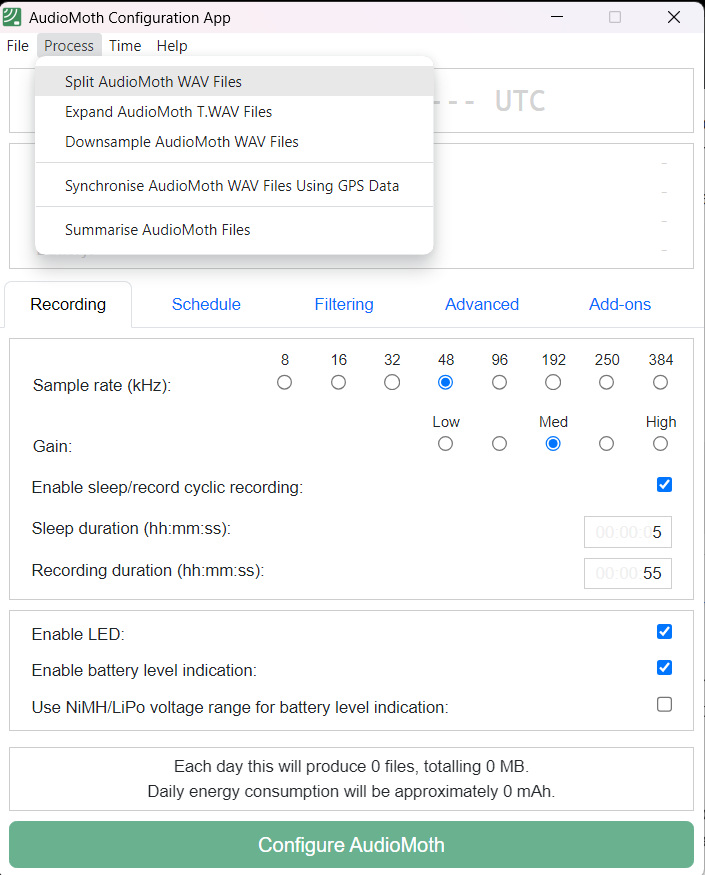
For uploading data to Arbimon, it would help if you could be more specific in what problems you are having to give targeted advice. For example, were you able to create a project under which to upload recordings? If you have a large dataset, I also suggest not uploading via the web interface and instead downloading the Arbimon Uploader program which is designed for large file transfers. More info here:
It also might help to describe in more detail the type of acoustic analyses you are hoping to accomplish, and many people can provide insight into software tools and programs. For example, are you trying to do bioacoustic classification, and if so do you have specific species of interest?
Cheers,
Jesse
Jenna Lawson