


Hi there
I am working with a small dendrobatid amphibian population living in tree tops in Panama, less than 30 mm SVL, and I want to monitor their movements using a kind of small transmitter, perhaps attached to the waist?
I would appreciate any advice as where to find this kind of device and if there is anyone able to cooperate!
Regards
Eric Flores
email: [email protected]
Coiba Scientific Station (Coiba AIP)
23 August 2025 5:17pm
Hi Eric,
What kind of habitat range and size (m2) are you hoping to detect the dendrobatid amphibian population moving through in the tree tops, and at what kind of accuracy / location? Micro VHF transmitters are typically about 0.27g and 1cm in size, but the antenna will be longer than 30mm (possibly 40mm) and battery life is 15 - 20 days typically with a limited range in wet humid rainforests (as well as actual localisation).
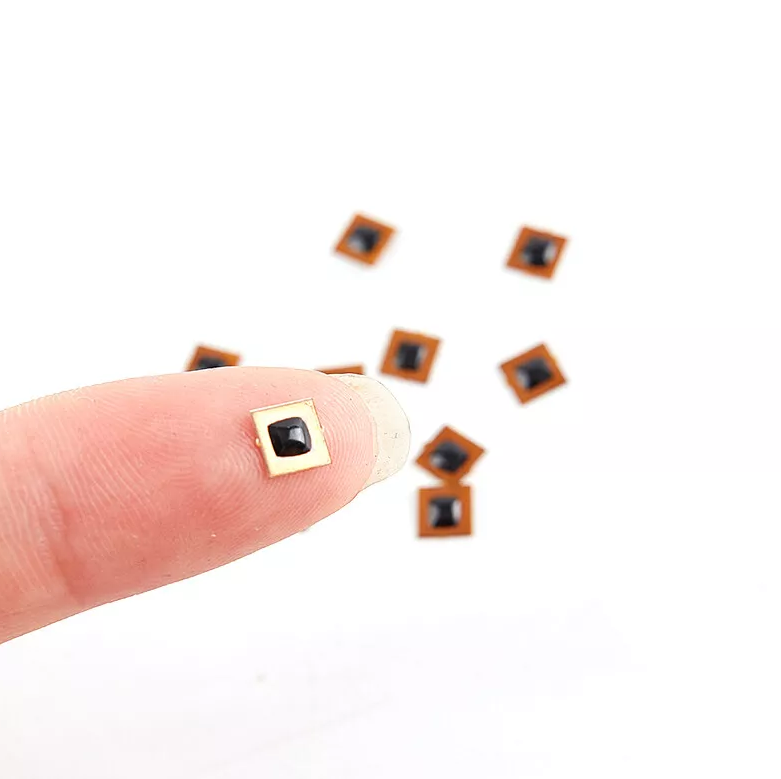
At 30mm SVL I would think that your most viable option may be a very small passive RFID tag or UV paint, but the attachment method would need R&D work to achieve < 0.3g for it to be viable.
I have had several conversations with researchers using UV paint to track partula snails, requiring fixed UV sensitive cameras but you'd need a good array. RFID tags glued on could be 5mm x 5mm, and you'd probably use a similar array to get the ID of a passing amphibian. You could get a highly accurate location with RFID placed strategically (but again - the habitat range would be quite small unless you can get enough receivers out and you have a good idea of the connectivity from the release site to adjacent trees.


15 September 2025 6:35pm
Hi Eric,
I've been working on dendrobatid behavior using tracking for over 10 years now. In short, it is possible with species > 2g, but very challenging. We have successfully tracked a couple of species (Dendrobates tinctorius and Oophaga sylvatica) that occasionally climb high, but they spend most of their time on the ground. And with a small canopy species, it's nearly impossible. Which species are you interested in? Do you know the approximate weight of your species? We have some published tracking data for Oophaga sylvatica that might be relevant.
There is no functional automated way to track small frogs that I am aware of. You have to use either small radio (VHF) transmitters (works for species >3 g) or harmonic tags (a type of passive transponder) and then track them manually. If the frogs are in the trees, that would mean that you have to climb after them for every localisation. You might be able to approximate, which tree the frog is in from the ground using radio tags, but even that is hard. Also, the tags are rather bulky, and the antennas are very long in comparison to the small frog size. For an arboreal species, that might mean reduced mobility and a high risk of antenna entangling. We had that issue when trying to track Oophaga sylvatica.
Here are a few references from our work you might want to check for the methods. There are some photos and videos in the supplements:
Pašukonis, A., Beck, K. B., Fischer, M. T., Weinlein, S., Stückler, S., & Ringler, E. (2017). Induced parental care in a poison frog: a tadpole cross-fostering experiment. Journal of Experimental Biology, 220(21), 3949-3954.
Pašukonis, A., Loretto, M. C., & Rojas, B. (2019). How far do tadpoles travel in the rainforest? Parent-assisted dispersal in poison frogs. Evolutionary Ecology, 33(4), 613-623.
Fischer, M. T., Ringler, M., Ringler, E., & Pašukonis, A. (2020). Reproductive behavior drives female space use in a sedentary Neotropical frog. PeerJ, 8, e8920.
Pašukonis, A., Serrano-Rojas, S. J., Fischer, M. T., Loretto, M. C., Shaykevich, D. A., Rojas, B., ... & O'Connell, L. A. (2022). Contrasting parental roles shape sex differences in poison frog space use but not navigational performance. Elife, 11, e80483
I also have small documents with some tips and guidelines for small amphibian tracking. I can send it to you by email.
Best,
Andrius




19 September 2025 1:15pm
It might be possible to use harmonic radar as mentioned by Andrius, and to use the work done by David Gaynor to track the tags. But I see some obvious issues. The drone will need a separate receiver, and probably the frequency will need to be increased (likely 2GHz is not high enough). Also, I have no idea how to attach a tag to an amphibian.
Thanks,
-harold
Alasdair Davies
Arribada Initiative