





Hello everyone, I have some questions about radio telemetry used for animal tracking. As you may know, using radio signals for tracking animals is very important. I’m currently working on a project to develop a homemade and low-cost radio telemetry tag. I would like to gather opinions on how often the transmitter should send signals for efficient and easy tracking.
In my setup, I have options ranging from 1 second, 1.5 seconds, 2 seconds, up to 8 seconds. The transmitter will send signals based on the configured interval. Personally, I think 1.5–2 seconds is a good choice. However, as we know, the faster the transmission interval, the higher the energy consumption, but energy use is not my main concern right now.
I would like to hear from users: how often should the radio signals be transmitted for effective tracking? Or if you have any additional recommendations, please feel free to share. Thank you!
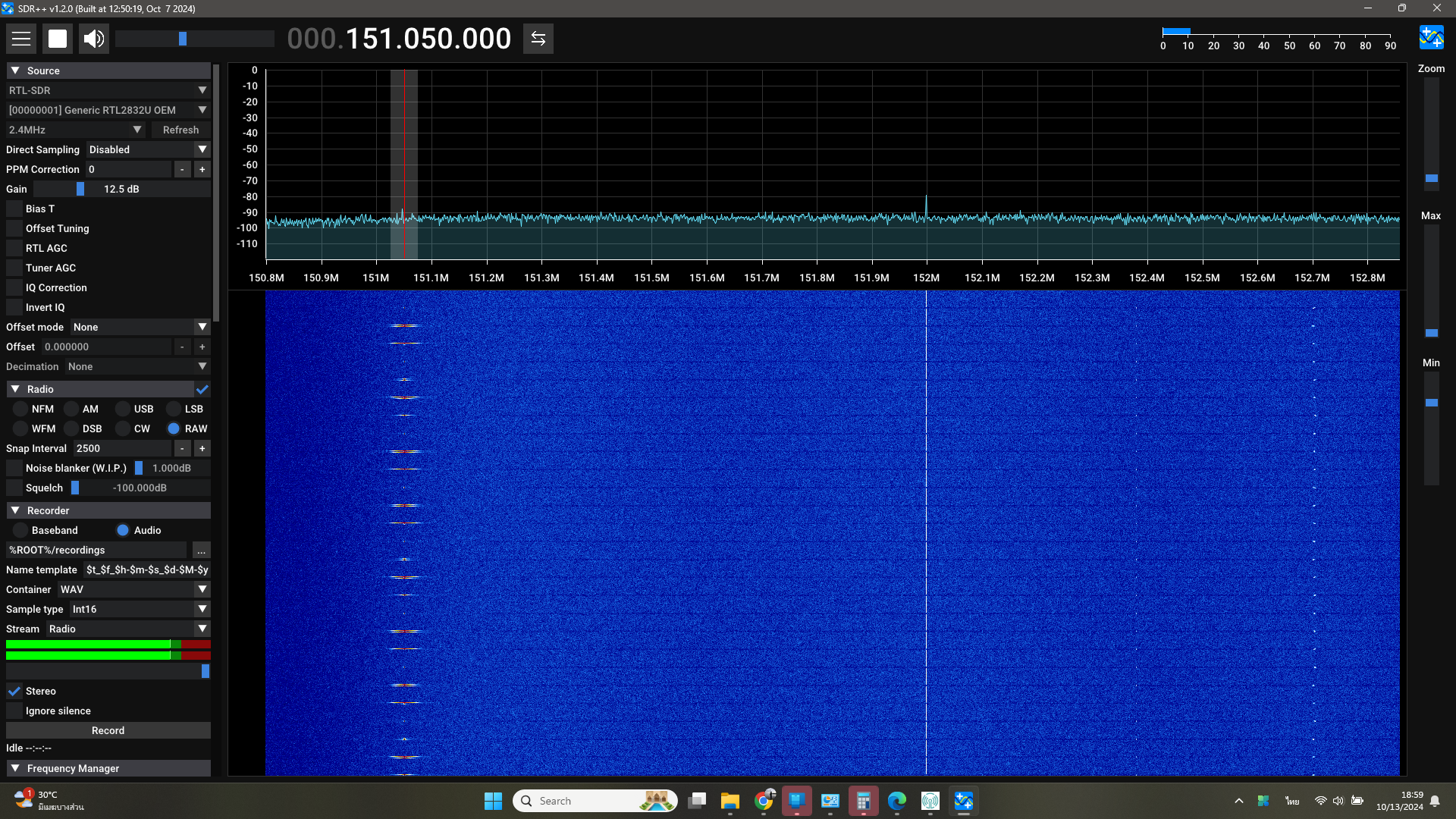
17 December 2024 4:30pm
I believe most VHF transmitters transmit in that frequency range (1-2sec). I think a good rule of thumb with this would be to look at the manufacturers' existing specs and mirror those taking into account responses from within the community.
I might also suggest, if you have not yet, that you do a quick paper search to see what is referenced in published papers (Research Gate and/or Google Scholar). I would expect that researchers noted the transmission frequency in their 'tools/methods' or similar.
...just a few ideas :)




10 January 2025 1:41pm
There was research on this in the very early days of VHF radio tracking. I presume what you are interested in is the period between audible bleeps vs the easeof detecting a mximum as an antenna is rotated to get a directional fix. If memory serves the optimum between battery life and ease of use was either an interval of 0.8s or a frequency of 0.8 Hz (so an interval of 1.2 s). The low end of your adjustment range would be midway between those two - the res tof the range would be very hard to use.


10 January 2025 4:06pm
Hi Chittakon,
I think an 'ideal' optimization between transmission interval and battery life would depend on the application. As I think Peter has indicated, longer transmission intervals could make it very difficult to determine direction, particularly on a moving animal. If you were not trying to find direction and/or locate the transmitter - maybe just detecting presence or absence - then a longer interval could work. cheers



29 January 2025 10:43pm
Choice of pulse interval on VHF transmitters really comes down to how mobile your study animal is and how complex the tracking environment is.
I have used pulse intervals down to 2 seconds on animals that spend a lot of time sitting still. This does save on power but if you are used to a faster pulse interval, it can be a real lesson in patience when you are trying to get an accurate bearing on the transmitter. For animals that are constantly on the move, don't even think about going slower than 1 second, particularly if the transmitter is likely to be intermittently blocked by habitat features.
Other ways of saving power can be to have periods when the transmitter is scheduled to sleep (when you are unlikely to be tracking) or to have bursts of pulses (say 1 minute on, one minute off).
Another important feature to consider is ensuring that the transmission has a stable pulse strength and frequency. There is nothing as frustrating as a transmitter that fluctuates in signal strength.
Thomas Gray
Cellular Tracking Technologies