

Ellie Warren
- @EllieW
- | She/Her



Every technology comes with a tradeoff in terms of sustainability. What matters is how we achieve the right balance between positive and negative impact. In this interview with Edge Impulse’s Daniel Situnayake, we discuss how we can achieve that balance for machine learning tools, and how to maximize technology’s potential for good.
Scaling Positivity: Machine Learning and Sustainability
By Daniel Situnayake and Ellie Warren
Share what you’ve done - data, skills, models. Share your knowledge and give freely, and that will help pay off whatever negative impact you’ve spent.”
Daniel Situnayake
There are infinite roads that can lead to each of us making conservation technology a more sustainable field. In our own individual corners of the conservation tech sphere, we can begin by considering how our work - and its inevitable impacts on the environment, big or small - fits into the grand scheme of things.
Some will discover that their most effective role is reducing the amount of batteries used and electronic waste produced; some will strive to lessen their carbon footprint either in terms of travel or shipping equipment; others with the skills to engineer technology will find new, greener ways to innovate. And some, like Daniel Situnayake of Edge Impulse, will build the idea of sustainability directly into their career paths.
From serving as our first-ever Tech Tutors presenter to mentoring conservation tech fellows, Dan is an active and immensely supportive presence in the WILDLABS community, and the perfect person to help us explore how the concepts of innovation and sustainability can work together hand-in-hand. While preparing for this interview, the biggest challenge was nailing down just one particular sustainability angle to bring to Dan.
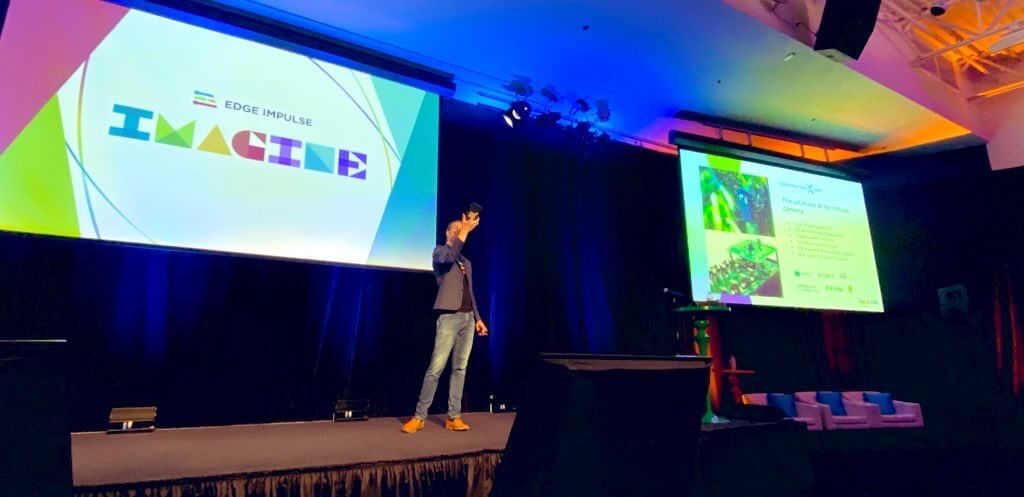
Conversations with him are always wide-ranging and full of the unexpected, which is exactly what you’d anticipate from someone’s whose career first intersected with conservation technology and sustainability through a very unexpected venture: co-founding an insect agriculture start-up called Tiny Farms. So rather than stick to one topic, we allowed the conversation to roam freely, exploring all the ways sustainability can touch upon a conservation technology career.
And of course, there’s no better place to start than with diving into that insect agriculture business. It began with creating open source instructions and kits for creating your own insect agriculture set-up; it eventually grew into a farming operation that used technology like sensors and computer vision to monitor the health of a massive amount of insects.
Dan cites this as his first experience with using technology to understand nature and living creatures. It clearly made an impact with him, as Dan is now one of the driving forces behind Edge Impulse’s efforts to innovate embedded machine learning’s role in conservation technology’s development. And because embedded machine learning has the potential to make data collection and analysis more streamlined and effective, it’s easy to follow the mental path to how innovations in machine learning can lessen the unsustainable footprint of our work over time.
“This may be a bit of a cliché metaphor, but you can think of data as the new oil,” says Dan, “in the sense that we’ve spent all this money and time and energy tapping into data, but we’re not making very efficient use of it. And we’re not taking advantage of it enough, given the amount of disruption we’ve caused by accessing it. But machine learning allows us to make more efficient use of that raw material. If there’s energy that we have to produce, this lets us make the most of it.”
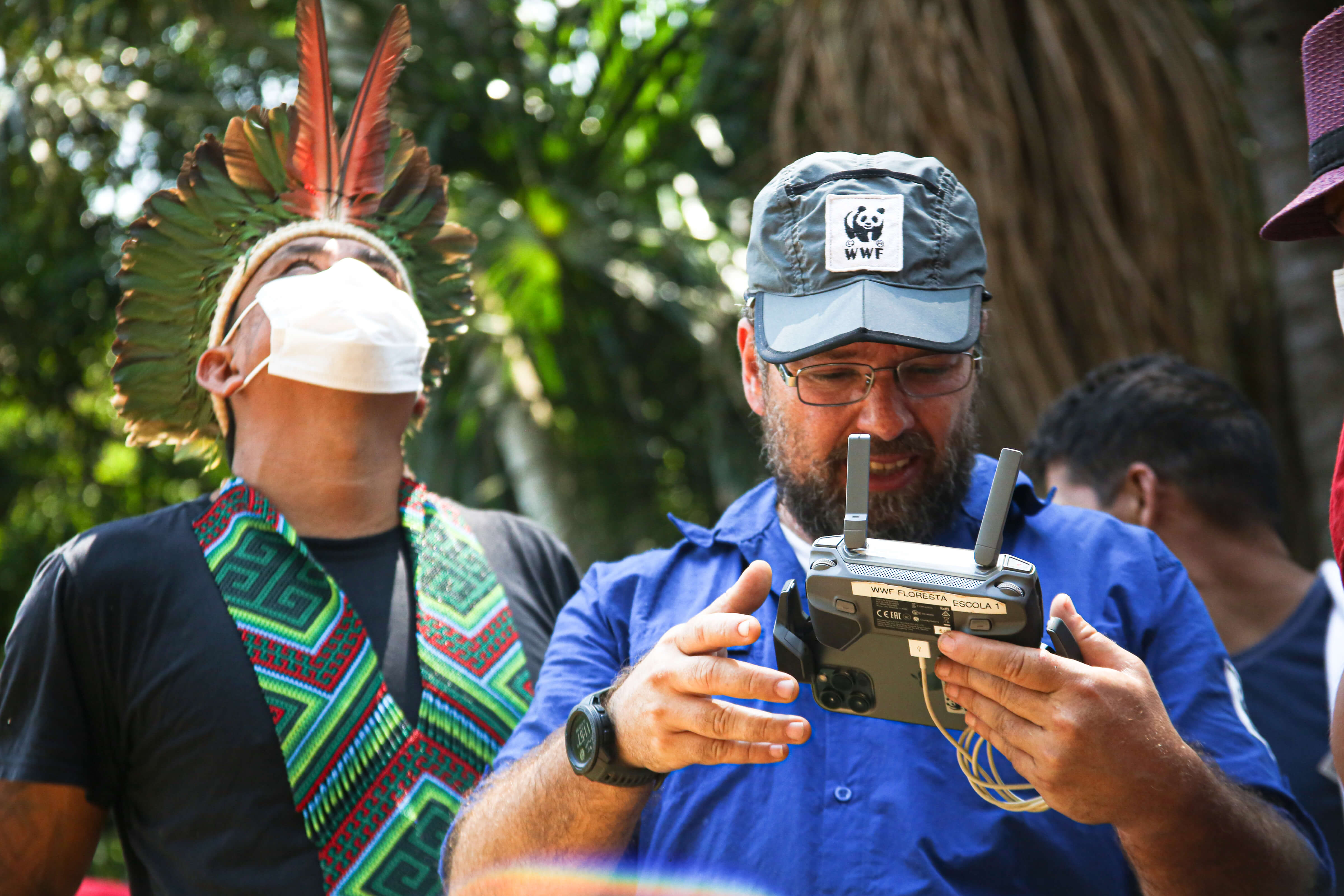
Dan offers the practical example of how embedded machine learning could help conservationists recognize and fix device failures in the field. “If you can be alerted that something’s gone wrong with your tool immediately, someone can go fix that much sooner, which will save you data loss, it might prevent you from needing a new tool or having to extend your project.”
And in another example that will appeal to conservationists concerned about the carbon footprint of travel, Dan explains that embedded machine learning could potentially let you monitor for specific environmental conditions remotely. “If you could potentially get some insight on your research from sensors and embedded ML without having to burn a load of fuel and go traipsing around each time to collect data, that’s a clear impact on sustainability. And the time saved by machine learning in all these ways is also time that you can use to actively work on solving important conservation problems versus using that time to sit on a plane or spend ages in front of a computer clicking through data.”
In this same vein, Dan and his colleagues are supporters of building capacity, another important step toward sustainability in conservation tech. The more accessible these tools are, the more technically skilled people working in their own regions and communities can become. And the more access they have to resources and training, the fewer outsider conservationists have to travel around the globe on planes hauling tools and supplies to places where local conservation leaders are just as capable of making positive changes. Likewise, if embedded machine learning can reduce time spent analyzing data and make data collection more efficient, capacity building becomes a simpler process, with less team hours, energy, and resources required for success.
But the concept of sustainability is full of contradictions, moral dilemmas, and difficult decisions. If it were more straight-forward, we wouldn’t need this series. And like every other type of technology, machine learning comes with its own challenges. According to our State of Conservation Technology research, machine learning is among the tools viewed as having the most potential for innovation. And while it’s also perceived as having a significant learning curve in order to use effectively, machine learning is evolving quickly, and new tools like Megadetector and similar automated classifiers are making it easier than ever for conservationists with limited ML skills to apply these tools to their work. And that’s great news for all of us! Right?
Yes! But, like all things in conservation technology, there is a tradeoff in terms of sustainability that we must understand in order to use any of our bright and shiny tools - even machine learning - responsibly and efficiently.
Before speaking with Dan, I hadn’t given much thought to the footprint of running an AI model, the same way I don’t often consider the footprint of, say, using my computer at home. While it’s easy to grasp how sustainability ties into conservation work that involves hardware - you’ve got tools made with unsustainably mined resources and materials like plastic in the mix, the eternal question of recycling and energy sources, and the footprint of the supply chain - for those of us who are not experts, the negative impact of software and tools like machine learning can seem much more ephemeral. Like anything else that requires energy, of course machine learning does have a carbon footprint, even if it feels more intangible than holding a tool made of plastic and metal in your hands.

According to some researchers, training a machine learning model may have the same footprint as somewhere between four and five cars in their lifetimes. That may sound like a lot, but what I’ve learned throughout the process of creating this series is, when broken down to negative impact alone… everything humans do sounds like a lot, particularly when it comes to technology. But that doesn’t mean the energy used to make this technology possible isn’t worthwhile.
The fact of the matter is that in order to solve our most pressing conservation issues, we need technology like machine learning, and in using that technology, we must accept that there will always be, somewhere within the many layers of our work, some negative impact. And from there, if we accept that it’s our responsibility to reduce that impact wherever we can, we can begin to find the positive balance between the footprint we create and the good we can achieve with technology.
And when it comes to machine learning, that potential for good is high. As Dan explains it, embedded machine learning is one of the conservation tech tools with an excellent return on investment when it comes to minimizing negative impact in the long run, partially because of its ability to put effective tools in the hands of people who can use them most efficiently. And building capacity to make conservation tech more accessible can have a mutually beneficial relationship with the sustainability of machine learning. While machine learning can help reduce the footprint of work in the field and in data analysis overall, empowering more people to use machine learning tools efficiently and for very specific project needs helps reduce the carbon footprint of training and running huge models.
“Even running a huge model requires this kind of infrastructure that only big companies can afford,” says Dan, “and from a practical view, that already limits the positive impact it can make if it’s not available to people whose projects might be able to do something meaningful, but don’t make a lot of revenue. And as this field has grown, I think a lot of people have seen that this is an opportunity to break the narrative of centralization and relying on massive models that take ages to train on enormous data sets. And instead, by asking what we can do with small, efficient models that inherently require less data and infrastructure to train, and take less energy during that training, people are able to build something that works locally for their project and their community, and delivers value.”
As we continually circle back to capacity building in our conversation, it becomes clear that by prioritizing this idea in conservation tech efforts, we have the opportunity to make everything we do significantly more sustainable as quickly as possible. “My philosophy about artificial intelligence, and about machine learning specifically, is that it’s a way of taking human insight and domain expertise, and capturing it in software so that it can be deployed at scale. And you can’t do a good job of this if you don’t have the domain expertise to know what it is you’re trying to solve. What we’re trying to do at Edge Impulse is build tools that allow the actual domain experts to work on solving what they understand best, instead of having some random person parachuting in who happens to be a technology expert, but doesn’t have a clue about the local context. By helping people scale what they can do individually and putting the power of these tools in the hands of people who are already living locally, you’re allowing those people to be the ones who solve conservation problems. Access isn’t out of reach or solely in the hands of big organizations on the other side of the planet who may have very different ideas of what’s needed within local communities and ecosystems.”
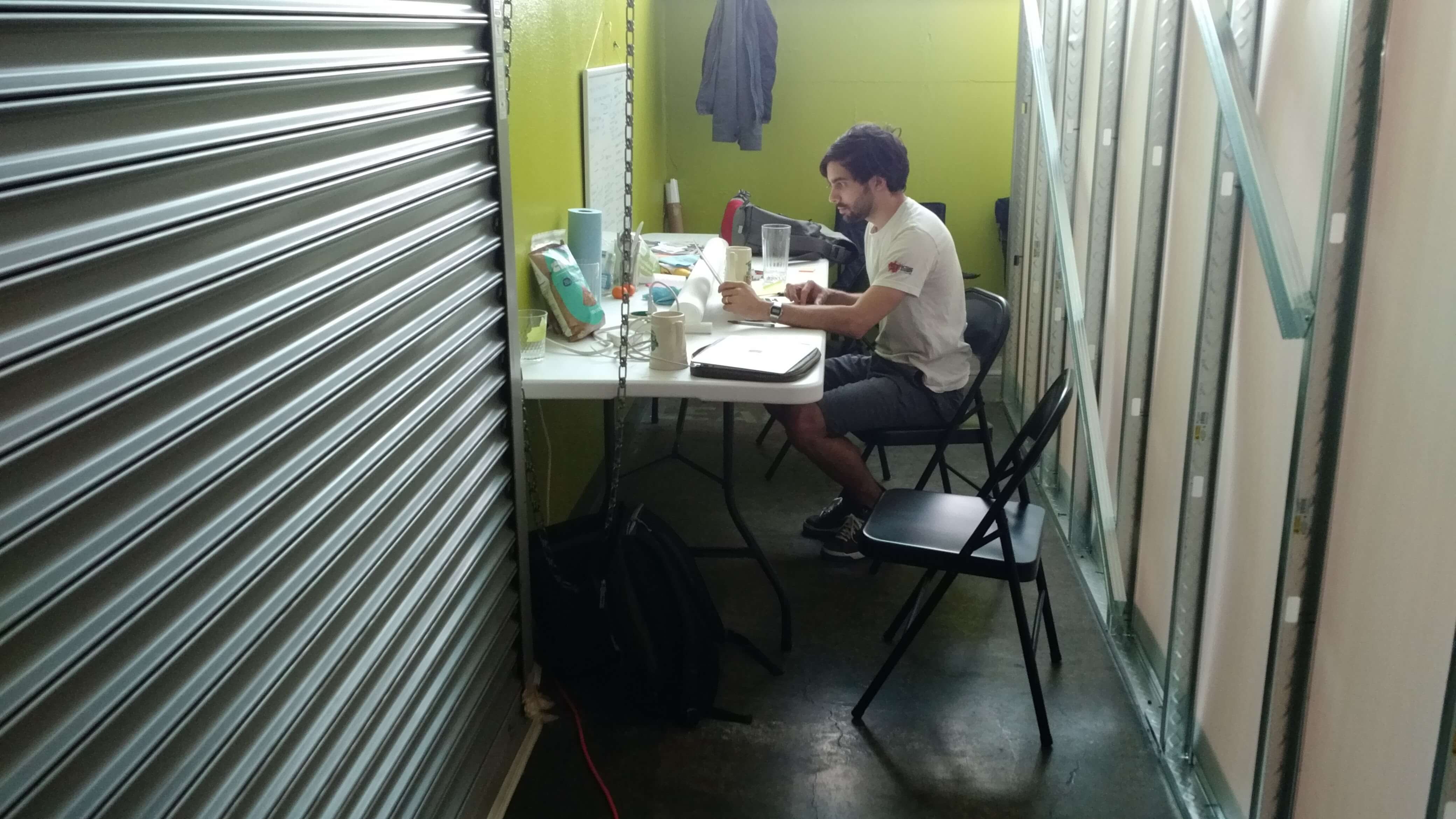
To close out, Dan offered some inspiration for even the most eco-anxious among us who struggle with the idea that we’ll never reach perfection in sustainability. Letting go of that need for perfection is a huge part of moving our field forward toward a more sustainable future, but so is recognizing the importance of what we do, and giving our work the value it deserves.
“I try to think about it in terms of scale,” says Dan. “There’s a limit to how much damage one person can cause with their footprint. Even if I were to fly around every weekend, there’s an upper limit to what my negative impact will be over a lifetime. But there’s the opposite end of things, where your potential good impact can scale, and it doesn’t have that same limit. If I put my time into a project or a tool that many people can use and benefit from, that good impact can go on into the future. It potentially has no end if people keep using it or helping each other use it. Think about the difference between traveling ten hours to talk to twelve people about technology - probably not going to make a huge difference in the world and could’ve been done through Zoom - versus traveling that same amount of time to train twelve people to use these tools, who will then train more people, and establish a local knowledge base. If you choose the right things to work on, you can have this long-term positive effect and maximize the benefit of your efforts. And that will outweigh any initial cost. Share what you’ve done - data, skills, models. Share your knowledge and give freely, and that will help pay off whatever negative impact you’ve spent.”
Download the Sustained Effort Series
This article is from our latest editorial series, Sustained Effort: Community Thoughts on Conservation Tech Sustainability.
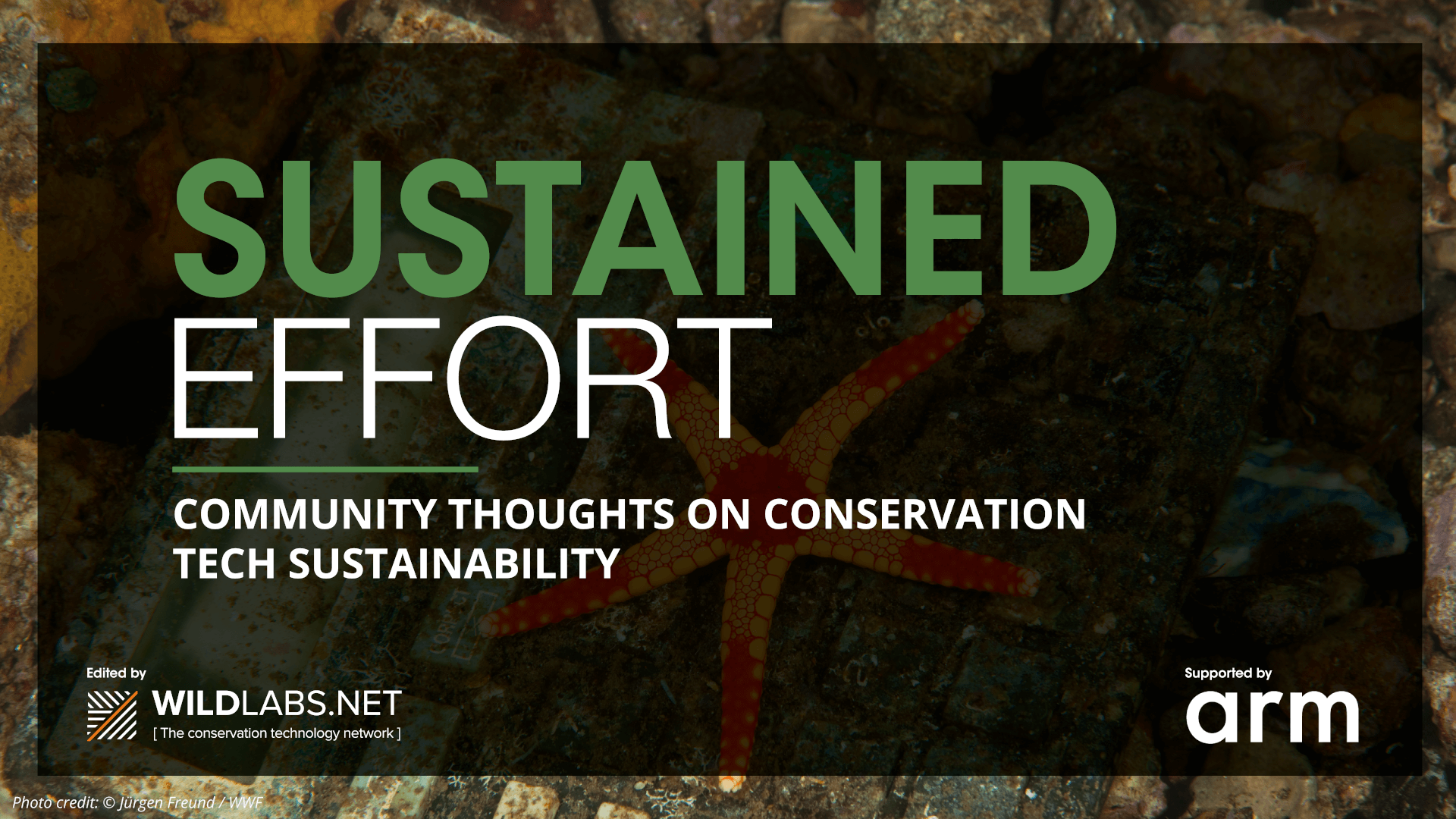
Our series Sustained Effort brings together conservation tech users and makers to share their own perspectives on this topic. Through these case studies, we'll consider the current challenges of working sustainably in our field, but more importantly, how we can all take realistic, practical, and effective steps toward not only lessening our negative impact right now, but discovering larger steps toward the longterm, system-wide change needed to make conservation technology truly sustainable for our planet.
The entire Sustained Effort series is now available to download here on WILDLABS.
Related content
Article
Download Now: The Sustained Effort Series
Ellie Warren
Welcome to Sustained Effort, a collection of community thoughts on the future of sustainability in the conservation technology field.
31 May 2023
Add the first post in this thread.