

Badges
Editing badges. Drag to reorder.



Groups joined
Discussions started
Discussion Comments
Resources added

Michelle Guins added a new Discussion - "🌊🐋 Join the Coastal and Marine Wildlife Working Group of The Wildlife Society! 🦈🐢" to Marine Conservation

Michelle Guins added a new Article - "🌊🐋 Join the Coastal and Marine Wildlife Working Group of The Wildlife Society! 🦈🐢" to Community Base
Michelle Guins added a new Discussion - "Timelapse Infrared Camera Suggestions" to Camera Traps
Michelle Guins added a new Discussion - "Good Thermal/ Night Vision Cameras?" to Camera Traps
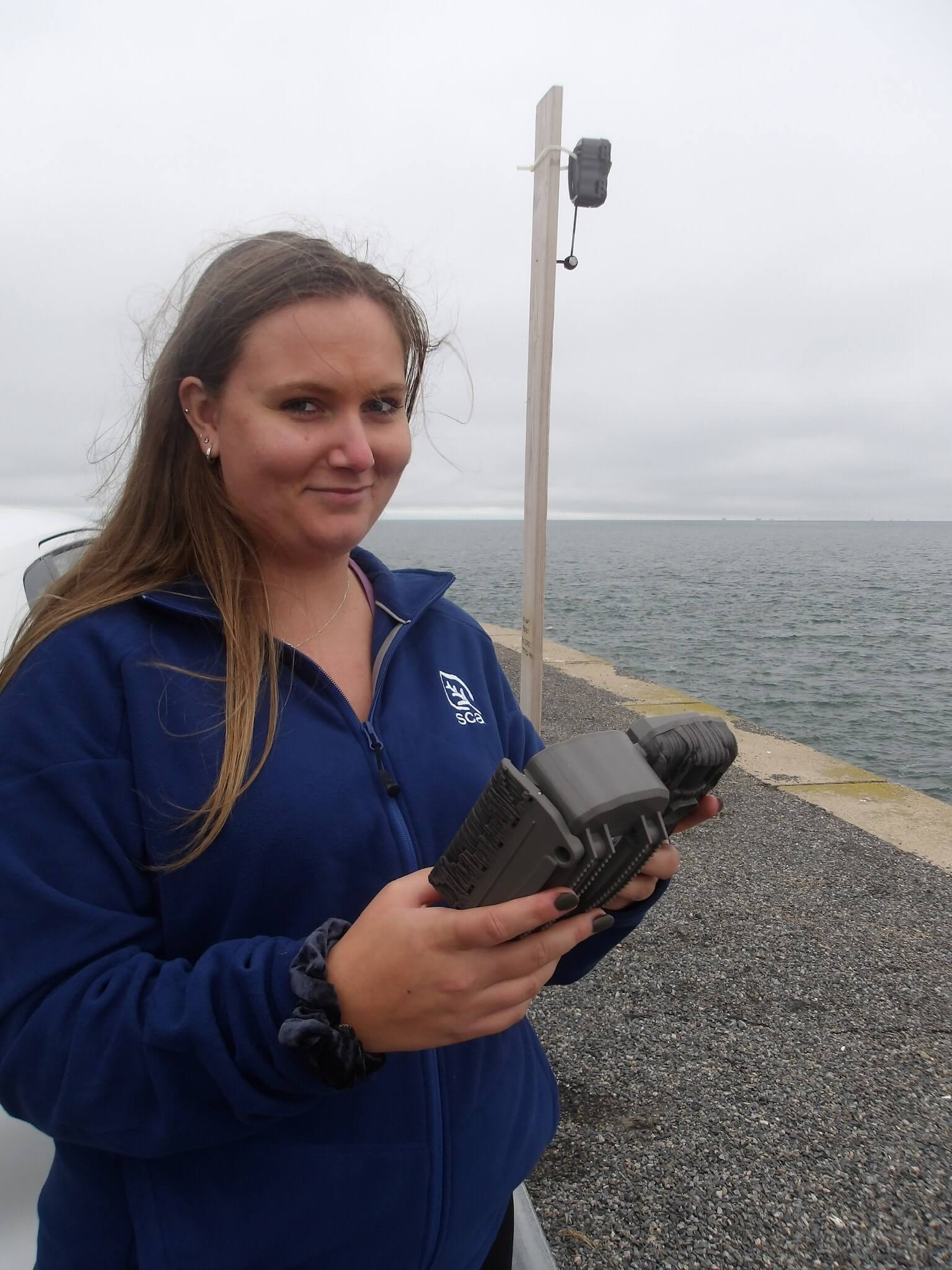
Michelle Guins added a new Article - "Pinniped Time-lapse Camera Surveys in the Southern Chesapeake Bay and Eastern Shore 2019-2022" to Camera Traps
Michelle Guins added a new Discussion - "Cuddelink Camera Issue?" to Camera Traps
Michelle Guins added a new Discussion - "Camera Trap Data Normalization Help" to Camera Traps
Groups
Group
- Group Stats
-




- 926
- 304
- Latest Discussion
- Camera Trap Suggestions for Time-lapse Seabird Monitoring?
Looking for a place to discuss camera trap troubleshooting, compare models, collaborate with members working with other technologies like machine learning and bioacoustics, or share and exchange data from your camera trap research? Get involved in our Camera Traps group! All are welcome whether you are new to camera trapping, have expertise from the field to share, or are curious about how your skill sets can help those working with camera traps.
- Latest Resource
- /
- Practical Considerations for Camera Trap Photography
Trail Cameras & Custom Camera Traps: Technology, Ethics & Strategies for Success
Group
- Group Stats
-






- 434
- 169
- Latest Discussion
- Engineer Searching for Biologists
Bringing together many of our community's tech types like bioacoustics, biologging, drones, remote sensing, machine learning, and more, the Marine Conservation group is a meeting point to begin innovative collaborations and answer difficult questions.
🌍 Conservation technology is transforming how we protect wildlife, but are we thinking carefully enough about the risks? Drones, camera traps, GPS trackers, acoustic sensors, AI, and remote sensing have become essential tools for conservation practitioners around the world. They help us monitor species, detect threats, and respond faster than ever before. But these same technologies can also introduce unintended risks, and in some cases, can be exploited by those seeking to harm the very wildlife we're trying to protect. 🦏 Input now and/or join the discussions/research.
Group
- Group Stats
-





- 574
- 256
- Latest Discussion
- Camera Trap Suggestions for Time-lapse Seabird Monitoring?
Just starting your conservation tech career path? Our Early Career group is the best place to network, chat about your master's projects, and seek advice from your peers and those who have been down this path before! Join now to get to know community members and students from around the world!
- Latest Resource
- /
- Introducing the 2026 Cohort: Women in Conservation Technology Programme, Tanzania 2026
We're delighted to announce the launch of our fourth Women in Conservation Technology Programme, in partnership with the Grumeti Fund and with support from the JRS Biodiversity Foundation. Join us in welcoming the 2026 cohort as they kick off the training with an in-person workshop in Tanzania this July!
Group
- Group Stats
-




- 503
- 199
Used to pick up signals from tracking gear on the ground, collect images of wildlife and habitats from the air, gather acoustic data with specialized hydrophones, or even collect snot samples from whales' blowholes, drones are capable of collecting high-resolution data quickly, noninvasively, and at relatively low cost.
🌍 Conservation technology is transforming how we protect wildlife, but are we thinking carefully enough about the risks? Drones, camera traps, GPS trackers, acoustic sensors, AI, and remote sensing have become essential tools for conservation practitioners around the world. They help us monitor species, detect threats, and respond faster than ever before. But these same technologies can also introduce unintended risks, and in some cases, can be exploited by those seeking to harm the very wildlife we're trying to protect. 🦏 Input now and/or join the discussions/research.
Group
- Group Stats
-







- 297
- 208
- Latest Discussion
- The Climate Change AI Virtual Summer School 2026!
The conservation tech community has the power to help us understand and overcome the enormous challenges posed by climate change. Join our Climate Change group to meet others who are passionate about using their expertise to innovate new solutions and find reasons to be optimistic about tech's potential in the fight against climate disasters.
- Latest Resource
- /
- Synthesis of Insights / Learning session 14: Rights of Nature by Tribal and First Nations
Synthesis of insights of our 14th online learning session, using dialogue to explore the workings, developments, (im)possibilities, and emerging insights of diverse approaches and praxes for Co-creation with the More-than-Human world
Group
- Group Stats
-






- 538
- 346
Conservation tech work doesn't stop after data is collected in the field. Equally as important to success is navigating data management and processing tools. For the many community members who deal with enormous datasets, this group will be an invaluable resource to trade advice, discuss workflows and tools, and share what works for you.
- Latest Resource
- /
- BAM (Biodiversity Around Me) widget
I am happy to introduce and share our new project BAM, to make open biodiversity data easily accessible to everyone, everywhere!
Group
- Group Stats
-




- 723
- 388
Geospatial data and analysis are critical for conservation, from planning to implementation and measuring success. The Geospatial group focuses on all aspects of this field, from field surveys to remote sensing and data development/analysis to GIS systems. The ability to visualize and analyze spatial data underpins many areas of conservation, this group may serve as a landing point and gateway for those new to conservation technology.
🌍 Conservation technology is transforming how we protect wildlife, but are we thinking carefully enough about the risks? Drones, camera traps, GPS trackers, acoustic sensors, AI, and remote sensing have become essential tools for conservation practitioners around the world. They help us monitor species, detect threats, and respond faster than ever before. But these same technologies can also introduce unintended risks, and in some cases, can be exploited by those seeking to harm the very wildlife we're trying to protect. 🦏 Input now and/or join the discussions/research.
Bookmarks
¡Mantén un registro de los recursos que te interesan! Las colecciones te permiten guardar, organizar y compartir contenido de toda la comunidad de WILDLABS. Crea tu primera colección haciendo clic en el icono del marcador.
My Courses
These are your in-progress and completed courses. Explore more courses through our catalogue.
To find courses you have created, see your "My Draft Content" or "My Content" tabs.
Settings
Michelle Guins's Content
Discussion
🌊🐋 Join the Coastal and Marine Wildlife Working Group of The Wildlife Society! 🦈🐢Are you passionate about marine wildlife conservation? Excited to network and...
23 May 2024
Article
Are you passionate about marine wildlife conservation? Excited to network and collaborate with fellow enthusiasts? Join us in launching the Coastal and Marine Wildlife Working Group within The Wildlife Society!
23 May 2024
Discussion
Timelapse Infrared Camera Suggestions
Michelle Guins
I am researching cameras for my thesis project researching harbor seals. I need a trail camera that can take infrared images in Timelapse mode. Does anyone have any...
14 February 2024
Discussion
Good Thermal/ Night Vision Cameras?
Michelle Guins
Hi! I am doing research for starting up my thesis and am trying to figure out the best equipment to do it. My idea is to get night time data of seals hauling out (laying on...
1 September 2023
Article
In 2019, the U.S. Navy initiated a time-lapse camera study to investigate seal presence at select haul-out locations in the lower Chesapeake Bay and coastal waters of Virginia, which are important areas to Navy training...
13 July 2023
Discussion
Cuddelink Camera Issue?
Michelle Guins
I just wanted to see if anyone else was having an issue with Cuddelink cameras sometimes emailing you super old images. Like for example, when we went out in March to change the...
12 June 2023
Discussion
Camera Trap Data Normalization Help
Michelle Guins
Hi all! I am working on a project studying pinniped habitat use in the Eastern US. We set up camera traps across the haul-out areas, set to take 4 images per hour. If a seal...
31 May 2023
Michelle Guins commented on "WILDLABS AWARDS 2024 - No-code custom AI for camera trap species classification"