

Toronto Zoo


Hi All,
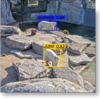
Greetings from the Toronto Zoo! We are pleased to share our article "PantherAI: An autonomous behavioural monitoring tool for assessing activity budget and space use in a zoo-housed tiger" recently published in Ecological Informatics. We demonstrate how this computer vision-enhanced tool can be applied to leverage CCTV livestreams as well as pre-recorded video sequences to streamline monitoring efforts in the Endangered Amur tiger, with application to other species.
Did you know that the Toronto Zoo is working towards developing a fully automated, around-the-clock behavioural monitoring tool? We are pleased to share this work, recently published in the journal of Ecological Informatics, that highlights how AI-enhanced technologies can be used to support animal welfare initiatives at accredited conservation organizations. Our system, "PantherAI" leverages CCTV footage from tigers to transform video data into behavioural insights. To learn more, you can find the full article here: 10.1016/j.ecoinf.2025.103584 | 16 comments on LinkedIn
Monitoring animal well-being is at the heart of animal care at your Toronto Zoo. Many species require continuous, long-term monitoring to accurately assess behaviour, yet traditional, in-person observation is time-consuming and resource-intensive. Advances in artificially intelligent systems now offer powerful alternatives that can complement traditional monitoring methods and build capacity for welfare science initiatives at accredited conservation centres. Recently, Toronto Zoo Postdoctoral Fellow Li-Dunn Chen developed an autonomous behavioural monitoring tool called “PantherAI” which can rapidly assess space use and behaviour of zoo-housed animals. Chen and colleagues at your Toronto Zoo and Juuk, Inc. published a paper describing the development and capabilities of PantherAI in the journal Ecological Informatics. Using camera footage from an Amur tiger, Mazyria, collected over one month, the researchers demonstrated that PantherAI could generate space use maps and activity budgets for behaviours including stereotypical pacing, resting, locomotion, feeding, and object manipulation, providing novel insights to Mazyria’s behaviour. Given that tigers are often active at night, being able to measure their behaviour around-the-clock is a major advancement from traditional monitoring tools. Researchers found that Mazyria’s activity budgets differed between day and night, with stereotypical pacing, object manipulation, and locomotion occurring more frequently during the day, and resting occurring more frequently at night. In addition, behaviours such as object manipulation and locomotion varied across three different habitats. These behavioural patterns can be used to inform animal management strategies to promote positive well-being. At your Toronto Zoo, autonomous behavioural monitoring has also been developed and applied to polar bears, and this tool will be expanded to additional species in the future. Importantly, the researchers have made PantherAI code publicly available, enabling other institutions to adopt and benefit from this innovative tool. Read the study ⬇️ #GuardiansofWild https://lnkd.in/dE9wjRtw
We are working hard to continue developing this tool to make this framework as user-friendly as possible, while remaining grounded in ecological, behaviour science, and predictive modeling principles. Next, we hope to implement this tool in broader study contexts and species. Thank you for taking the time to check this work out. What do you like about the tool and what do you think could be done to improve its functionality and ease of use?
Kind regards,
Li-Dunn
10 April 2026 12:37am
10 July 2026 9:17am
Great paper, really inspiring stuff!
Ruth Allard