

WILDLABS
Wildlife Conservation Society (WCS)





Talia Speaker
- @TaliaSpeaker
- | She/her
WILDLABS
World Wide Fund for Nature/ World Wildlife Fund (WWF)



From October 21 to 24, the WILDLABS team joined a vibrant and diverse global community at Living Data 2025 in Bogotá, Colombia. The event brought together 1,005 participants from 60 countries, with 718 attending in person and 287 joining virtually. Organized by TDWG, GBIF, OBIS and GEO BON, Living Data 2025 focused on a shared goal: mobilizing biodiversity data to support conservation action and monitor progress toward protecting and restoring nature.
Conversations throughout the week highlighted the importance of data standards, connecting diverse data sources, and collaboration across regions and disciplines to improve our ability to track progress for biodiversity. WILDLABS was proud to contribute our perspective on how conservation technology and community support can help drive these efforts forward.
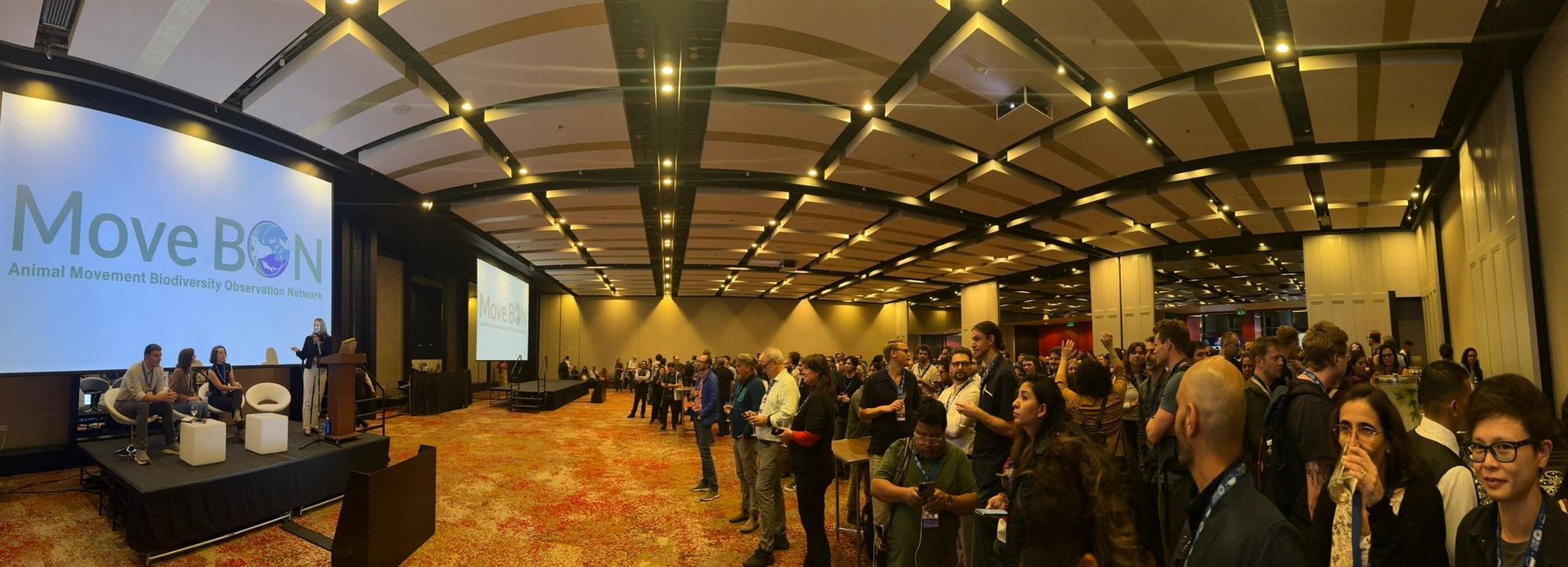
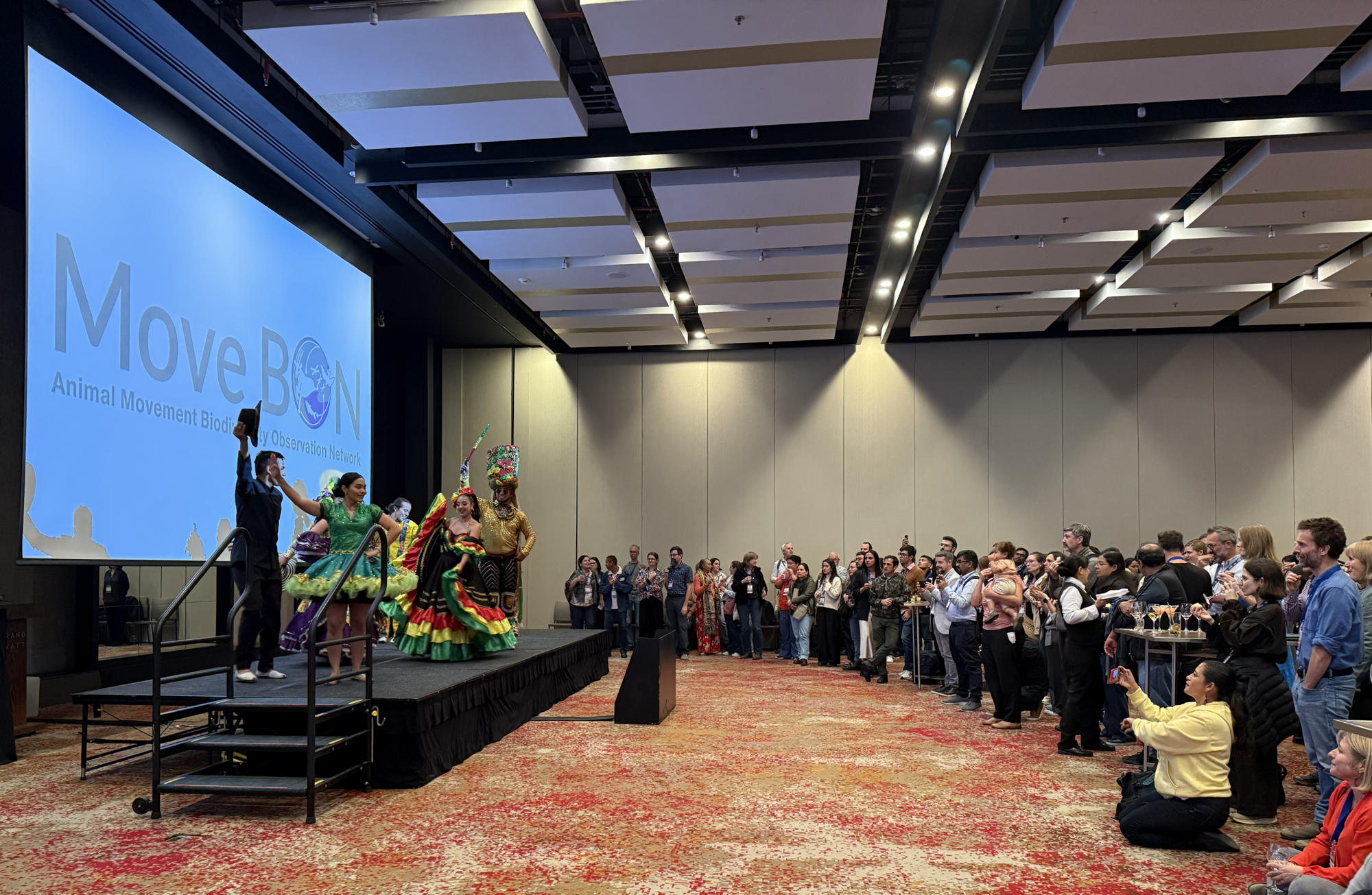
Celebrating the Launch of Move BON
A major milestone was announced at the conference: GEO BON officially endorsed Move BON, a new thematic Biodiversity Observation Network dedicated to integrating animal movement data into biodiversity monitoring and conservation policy at national and global scales.
Move BON is being developed through a joint effort between the Smithsonian Institution and WILDLABS, along with the Max Planck Institute for Animal Behavior, NASA Jet Propulsion Laboratory, and the Senckenberg Biodiversity and Climate Research Center. Together, we aim to make movement data more useful and applicable by connecting existing initiatives across ecosystems, standardizing metrics and workflows, supporting policy, and promoting ethical, open, and inclusive data practices.
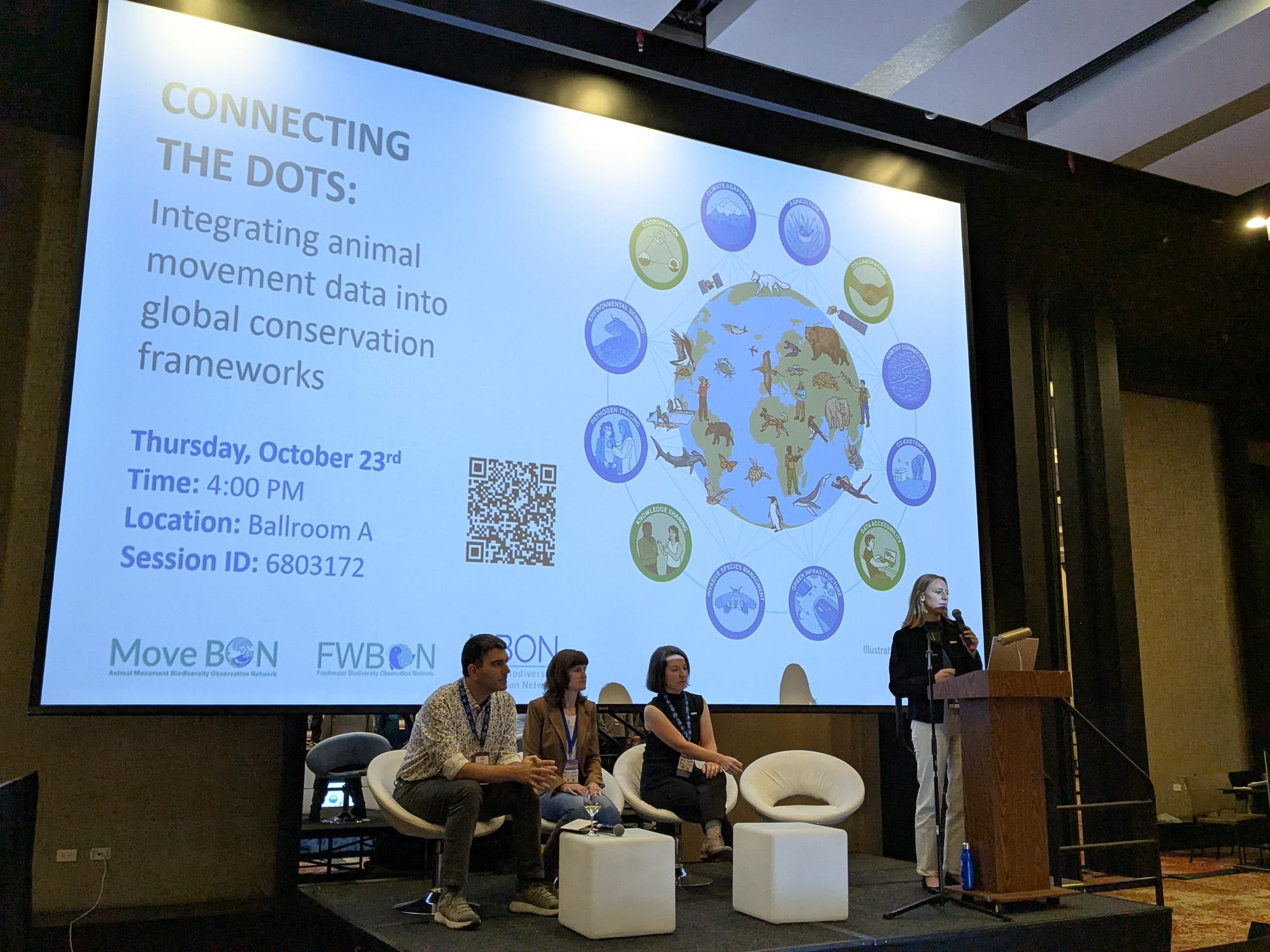
The launch event in Bogotá drew more than 500 attendees, and evolved into a wonderful celebration with dance and music. We also co-hosted a session with Marine BON and Freshwater BON focused on how animal movement data can meaningfully inform conservation decisions across environments.
Exploring the Future of Bioacoustics
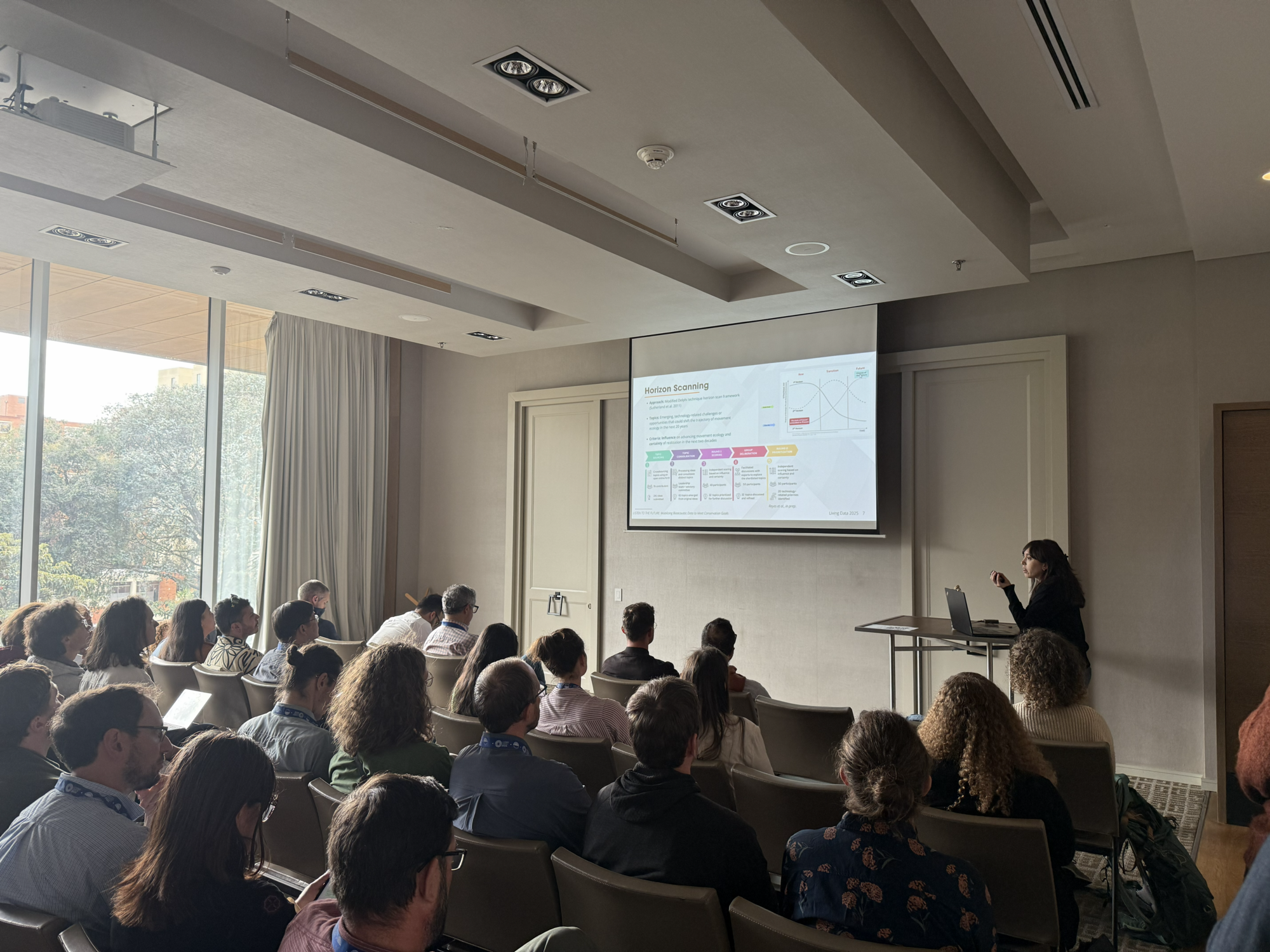
WILDLABS co-led the session: Listen to the Future: Mobilizing Bioacoustic Data to Meet Conservation Goals. The session showcased insights from a recent global horizon scan that brought together 50 experts across disciplines to identify twenty priority innovations that could advance the field over the next two decades.
We were thrilled to host an inspiring group of presenters who are pushing the boundaries of what is possible in acoustic monitoring:
Gabriel Kiarie (Centre for Data Science and Artificial Intelligence, Dedan Kimathi University of Technology, Kenya) presented PiWild: Optimising the Raspberry Pi for acoustic monitoring of ecosystems
Mélisande Teng (Université de Montréal, Canada) presented Individual identification and call type classification with unsupervised learning
Mao-Ning Tuanmu (Biodiversity Research Center, Academia Sinica, Taiwan) presented Enabling large-scale acoustic biodiversity data mobilization through open and automated data flows
Nicolas Betancourt (Instituto de Recursos Biológicos Alexander von Humboldt, Colombia) presented pamflow: Analysis and standardization for passive acoustic monitoring data
Sanne Govaert (Research Institute for Nature and Forest, Belgium) presented Can we use the Camera Trap Data Package standard for bioacoustics data?
Elly Knight (Biodiversity Pathways, University of Alberta, Canada) presented Mobilizing bioacoustic data with WildTrax
John Quinn (Furman University, United States) presented Fine-scale acoustic monitoring: Grassland bird responses to agricultural disturbances
Together, the speakers highlighted the need to improve data accessibility, support sustainable platforms at national and regional scales, and strengthen workflows that allow acoustic insights to inform conservation decisions. Their talks demonstrated real progress in analyzing, standardizing, and mobilizing acoustic data so that it can be useful to the communities working to protect biodiversity.
We were especially excited to celebrate Mélisande Teng, who received a Best Student Talk Award for her outstanding contribution during this session.
Building Regional Capacity Through Collaboration
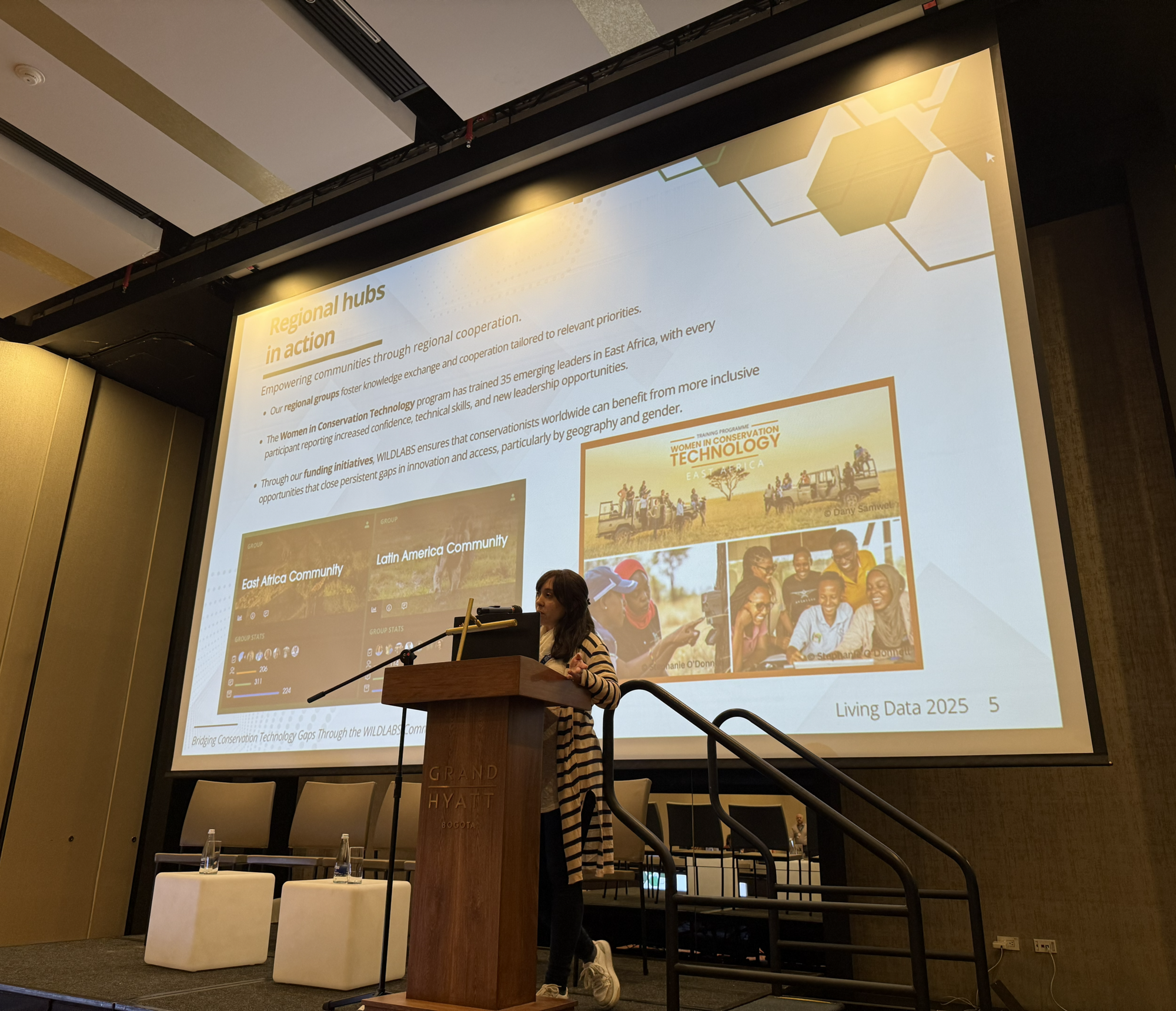
WILDLABS contributed a talk titled Bridging Conservation Technology Gaps Through the WILDLABS Community to the session: Developing Capacity Through Regional Cooperation: How Regional Hubs Enhance Local Scientific Voices. The discussion focused on how regional hubs can better support locally led research, expand opportunities for skills development, enable context-specific solutions, and build networks that foster sustained collaboration.
These themes closely align with WILDLABS work to support communities in Latin America, East Africa and other underrepresented regions through local engagement and shared learning. Programs like Women in Conservation Technology also demonstrate our commitment to promoting equity in access to tools and opportunities.
Bringing the Community Together in Bogotá
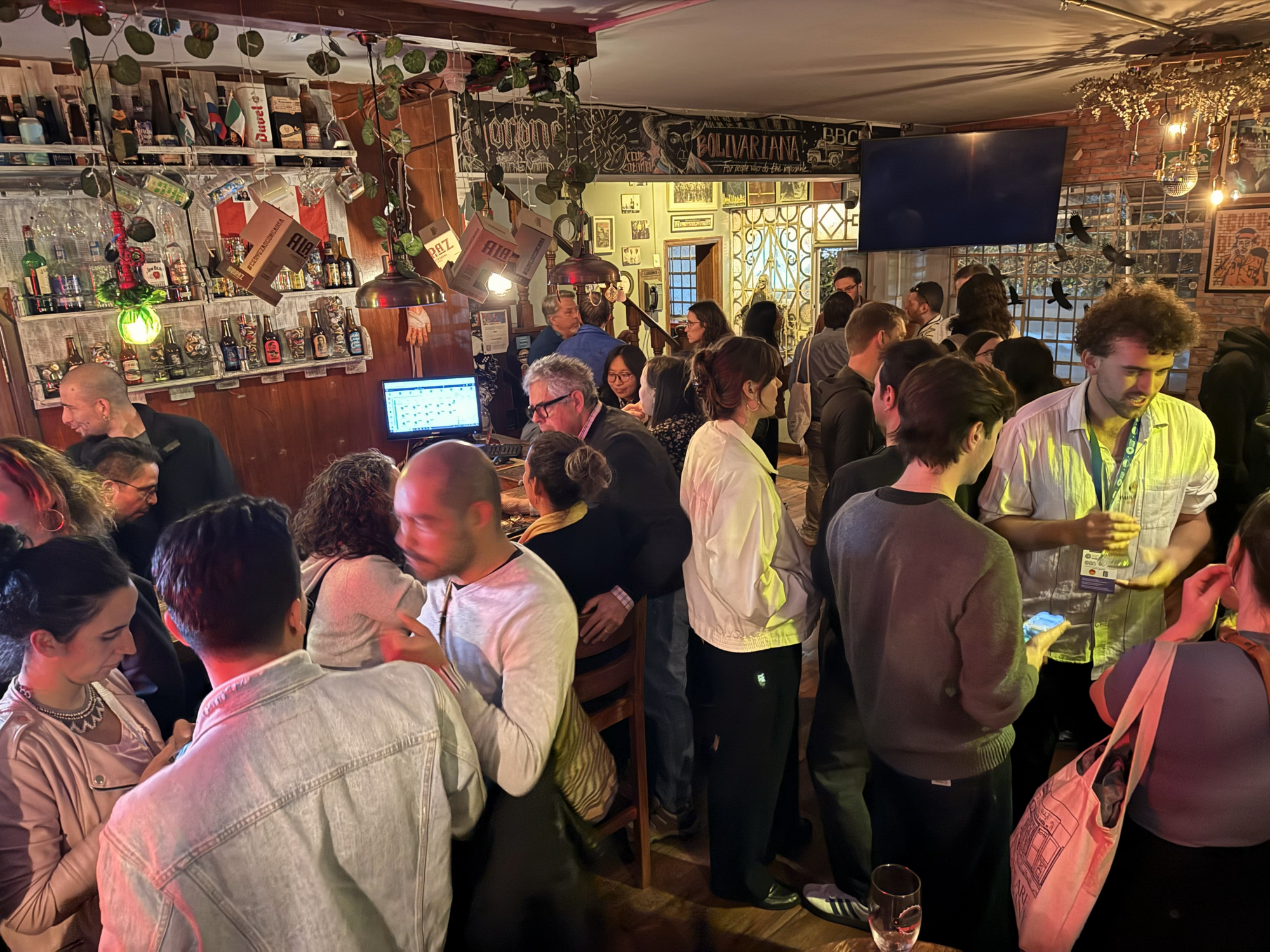
Alongside the conference schedule, we hosted an informal WILDLABS meetup with support from Juan Sebastián Ulloa, co-lead of the WILDLABS Latin America group. Held at Lubianka, a local pub in Bogotá, the gathering brought together about fifty people, including conference participants, WILDLABS members from the region, and new friends discovering our vibrant community for the first time.
It was a meaningful opportunity to connect in person in a relaxed environment, exchange ideas, and strengthen relationships that continue long after the conference ends.
Looking Ahead
Living Data 2025 highlighted the power of collaboration to unlock the full potential of biodiversity data. We return inspired by the people we met, the knowledge shared, and the shared commitment to advancing conservation through technology, cooperation, and openness. We are grateful to everyone who joined our sessions and events in Bogotá and helped shape these conversations.
We are also excited to carry this momentum forward as we prepare for the International Conservation Technology Conference in Lima in 2026. ICTC will convene conservation technology stakeholders from local communities and governments to global NGOs and technology providers. Bringing these groups together will strengthen cooperation across sectors, support the scaling of an effective innovation ecosystem, and ensure that conservation technology solutions are accessible, impactful, and able to help practitioners thrive. If you’re interested in attending, proposing a session, submitting a workshop, or partnering with us, learn more at ictc2026.com.
Related content
Article
The call for sessions and workshops for the International Conservation Technology Conference (ICTC) is now open!
13 October 2025
Article
The International Conservation Technology Conference (ICTC) is now accepting exhibitor applications for exhibitors at the Westin Lima Hotel on the core conference days, February 18-20, 2026. Booth availability is...
28 October 2025
Article
Learn About Hosting a Pre-Conference Workshop at UTEC

WILDLABS Team
Our conference partner Universidad de Ingeniería y Tecnología (UTEC), a leading technology university in Lima, Peru, is providing spaces for pre-conference workshops for International Conservation Technology Conference...
30 October 2025
Article
The International Conservation Technology Conference (ICTC) is an unprecedented event that is created by the sector, for the sector. We are bringing together conservation technology adopters, innovators, scalers, and...
6 November 2025
Add the first post in this thread.