




Introduction: Closing the Biodiversity Data Gap
Imagine you are a researcher in the Andes or the coastal forests of British Columbia. You are collecting tens of thousands of camera trap images monthly, but in these remote locations, your internet is unstable, and uploading terabytes of raw data to the cloud is impossible. Furthermore, sensitive data, including images of threatened species or human recordings, requires the security of local management.
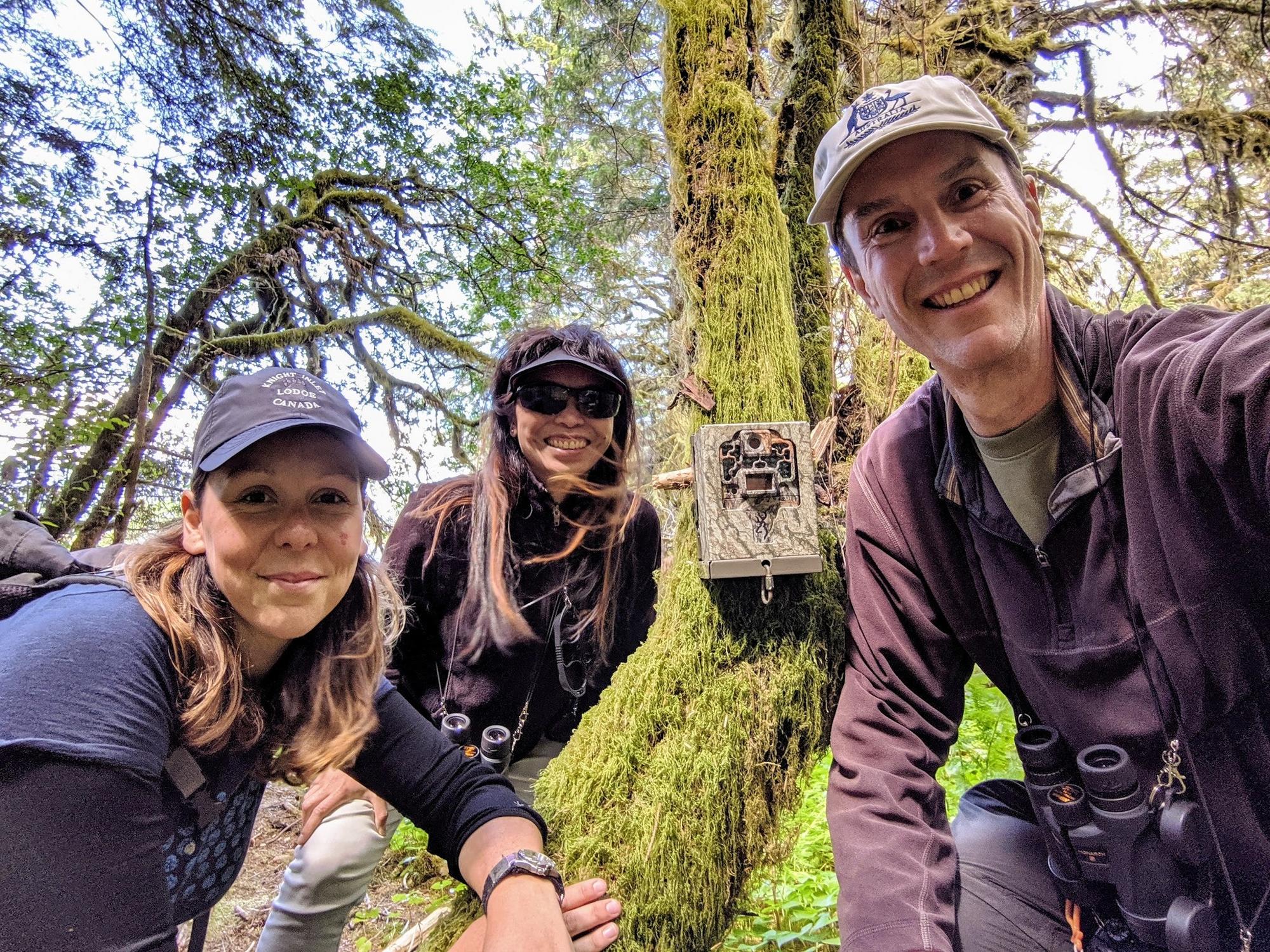
Caption: The BearID Project Team, Dr. Melanie Clapham, Mary Nguyen, and Ed Miller, with a camera trap in British Columbia, Canada
The Trapper Keeper project was born to address this “data bottleneck”. Supported by the WILDLABS Awards and Arm, our mission is to provide the "connective tissue" for biodiversity monitoring: an open-source, AI-powered infrastructure that manages the entire lifecycle of camera trap data—from the remote edge to institutional servers.
Our Journey: Building for the Real World
With a career spent in the high-tech sector, I often took technology for granted—until I began applying it to wildlife. A decade ago, while experimenting with machine learning to identify individual brown bears at Brooks Falls, I discovered a major hurdle: most conservationists were still drowning in manual data classification. As a co-founder of the BearID Project, it became clear that we didn't just need better models; we needed a scalable, end-to-end open-source infrastructure to bridge the gap between raw field images and meaningful conservation action.
The conservation technology landscape is often fragmented, with many disconnected, stagnant software projects. We chose not to reinvent the wheel, but to build upon TRAPPER, an open-source platform under development for a decade.
During the grant period, our team, a global consortium including the Open Science Conservation Fund (OSCF, Poland - (@kbubnicki, @Kamalama997 , @icorei), BearID Project (US, Canada - @bluevalhalla , @marynguyen , @mclapham), San Diego Zoo Wildlife Alliance (SDZWA, US - @tkswanson , @russvanhorn), and Universidad San Francisco de Quito (USFQ, Ecuador - @rebeccazug , @driofrio )—worked to transition TRAPPER 2.0 from a beta version into a robust, professional-grade ecosystem. Our goal was to ensure this technology could survive and thrive in the most challenging field conditions while remaining energy-efficient on Arm-based hardware.
Key Technical Milestones & Achievements
We have successfully turned TRAPPER 2.0 into a scalable, easily deployable ecosystem. Key achievements include:
- The Refactored AI Worker: We delivered a sophisticated AI Worker that automatically detects available hardware, whether a standard CPU, NVIDIA GPU, or Raspberry Pi with AI HAT+, and launches the appropriate runtime for efficient processing.
- Edge-Based AI Power: We optimized our stack for portable mini-servers using the Raspberry Pi 5 and NVIDIA Jetson. By converting world-class species classifiers from SDZWA (covering the Amazon, Andes, Southwest USA, and African Savanna) into Hailo-compatible formats, we brought automated species identification directly to the field.
- Data Standardization: We integrated the Camtrap DP standard, enabling a 1-click export to the GBIF IPT network. This ensures that data collected in remote regions is FAIR (Findable, Accessible, Interoperable, and Reusable) and can be rapidly transformed into global conservation knowledge.
- Advanced Video Support: We moved beyond simple image processing, refactoring our data models to handle complex video workflows, including frame-level annotations and animal tracking using tools like ByteTrack.
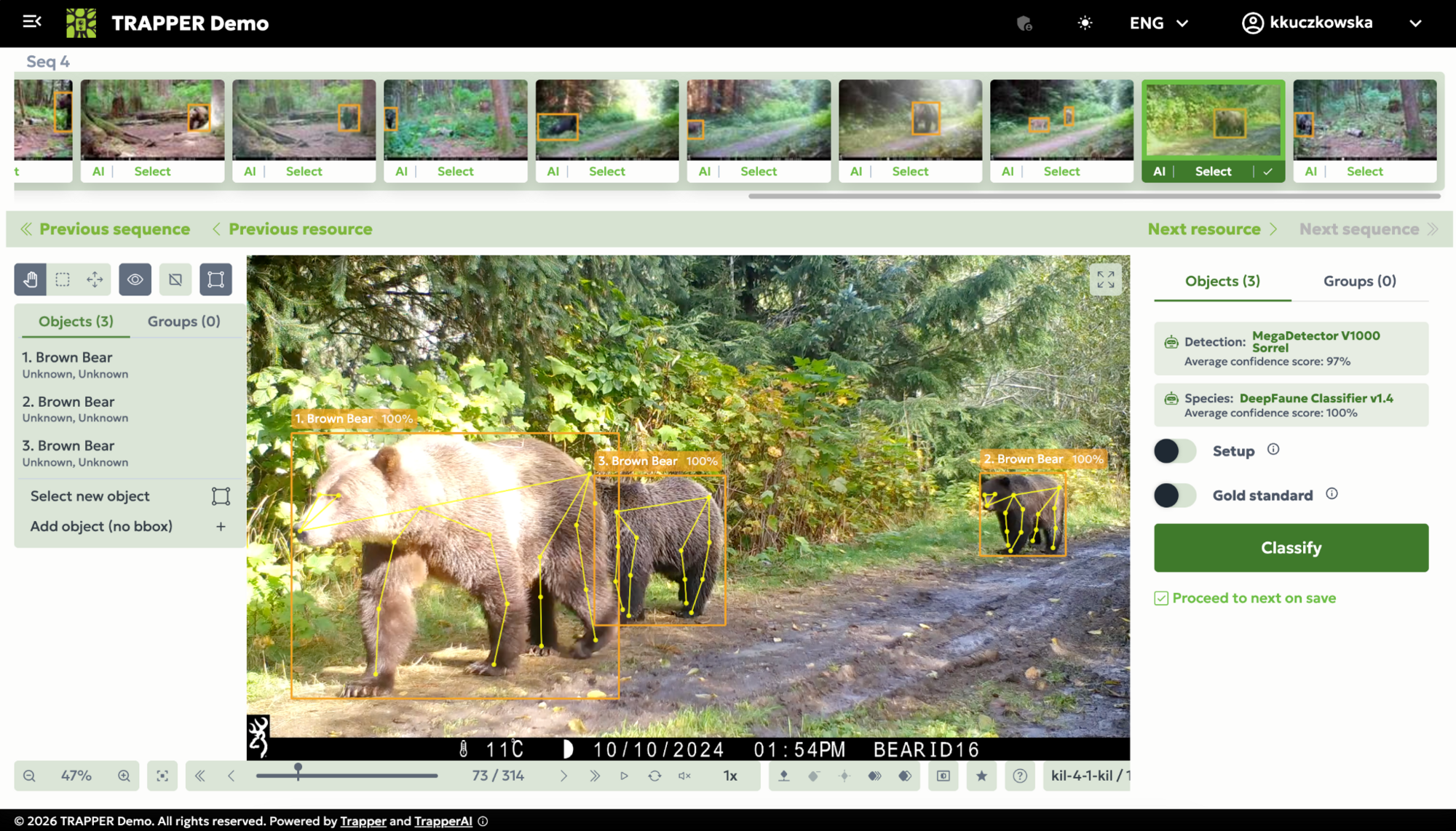
Caption: TRAPPER 2.0 simplifies the journey from raw field data to standardized biodiversity information
Outcomes: From Lima to Barcelona
This year, we took Trapper Keeper to the global stage to ensure our tools are interoperable and relevant across sectors:
- International Conservation Technology Conference (ICTC) 2026 (Lima, Peru): We hosted a hands-on workshop for over 30 practitioners, demonstrating the full TRAPPER stack on everything from laptops to Ampere-powered "Fly-away Kits". Read our ICTC reflections here.
- Mobile World Congress (MWC) Barcelona (Spain): In the Canonical booth, we showcased Trapper running on a portable AI 5G hotspot to thousands of visitors, demonstrating how telecom-grade infrastructure can be applied to wildlife conservation. See our update from MWC Barcelona here.
- WILDLABS Variety Hour (Online): We presented a speed talk on TRAPPER as a scalable, open-source camera trap infrastructure to the global WILDLABS community. Watch the WILDLABS Variety Hour episode here.
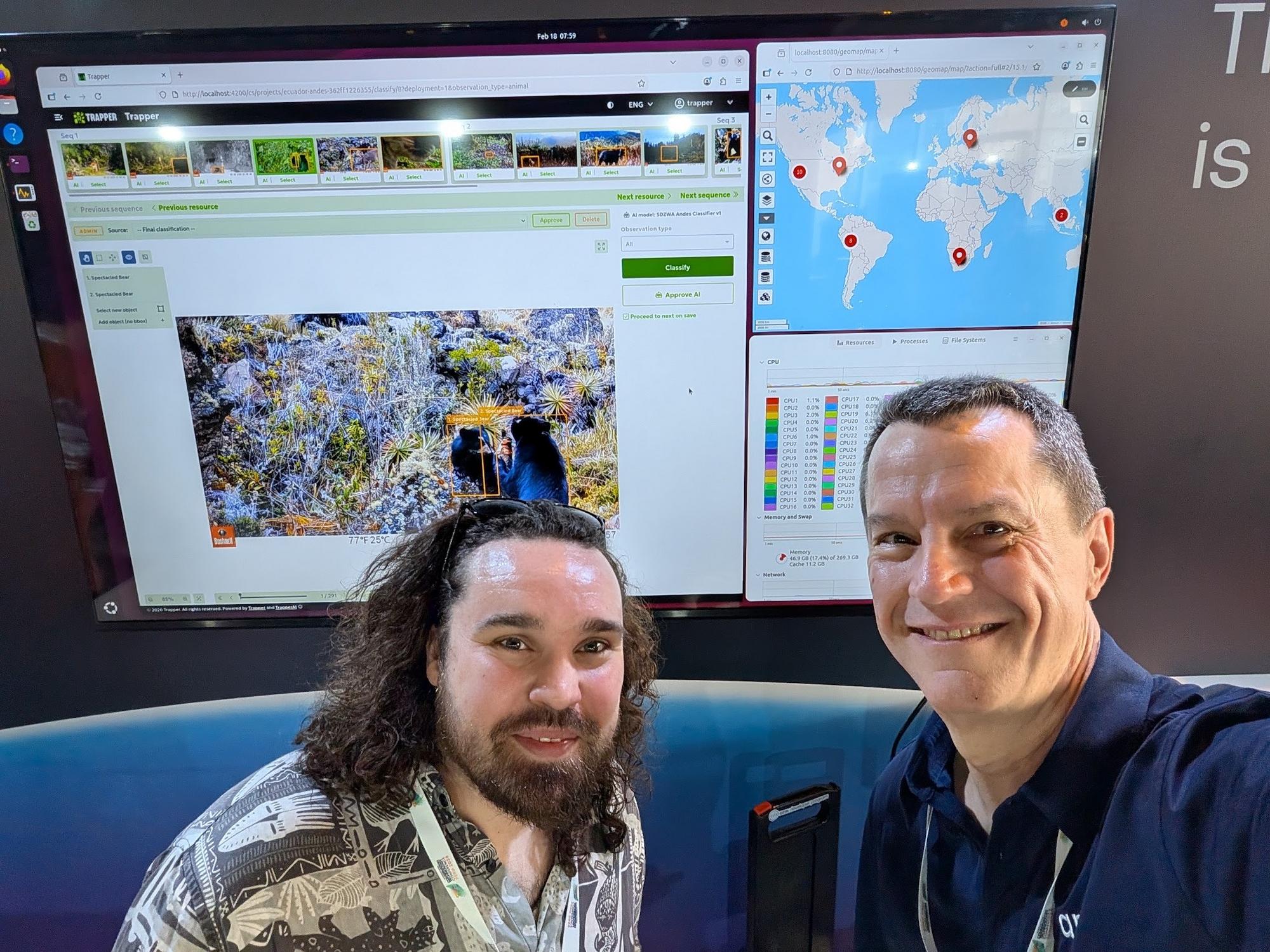
Caption: Kamil Morawski and Ed Miller show off Trapper Keeper in the Arm booth at ICTC 2026
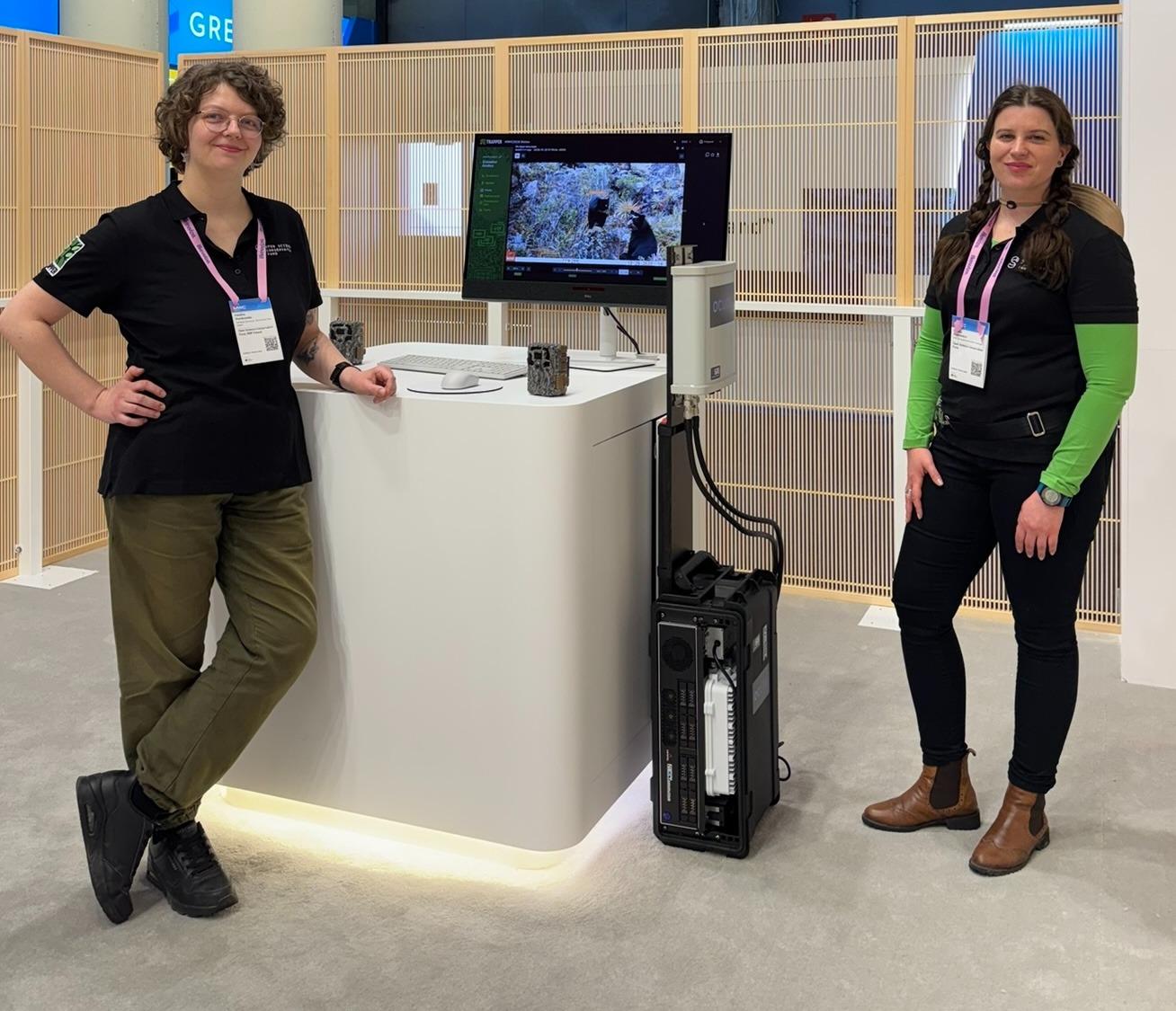
Caption: Karolina Kuczkowska and Izabela Stachowicz share the Trapper Keeper vision in the Canonical booth at MWC Barcelona
Global Collaborations & Impact
A tool is only as good as its community. We are validating TRAPPER 2.0 through usability testing with a diverse network of partners:
- Indigenous-led conservation: Partnering with the Nanwakolas Council to track bears in Canada.
- Biodiversity hotspots: Monitoring pumas and Andean bears with USFQ in Ecuador.
- Scientific Networks: Aligning with the Mammal Research Institute Polish Academy of Sciences to monitor wildlife in the Białowieża Forest.
Integrated AI models impact over 200 species, including red-listed animals like the Andean bear, jaguar, and lowland tapir.
Looking Ahead: Join the Network
The Trapper Keeper project has moved conservation technology toward a reusable, open infrastructure that organizations can own and run themselves.
Our next steps include extending the AI pipeline toward individual identification (led by BearID) and continuing development through the BIG_PICTURE project. We invite the WILDLABS community to explore our resources and join us in democratizing wildlife monitoring.
- Explore the Code: https://gitlab.com/trapper-project/trapper
- Read the Docs: https://trapper-project.readthedocs.io/en/latest/
- Get in Touch: Find us on the WILDLABS.net forums!
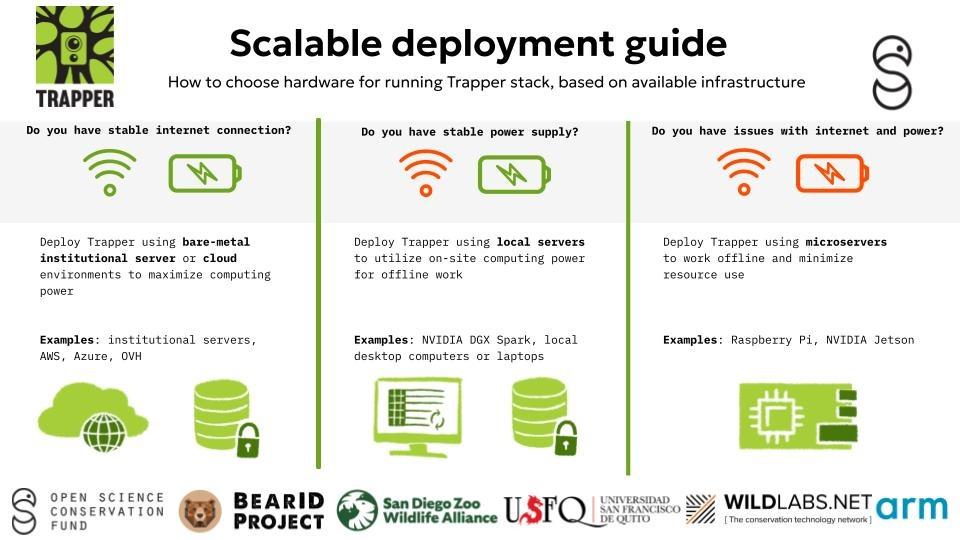
Caption: Whether you're working in a national research center or a remote field station deep in the forest, TRAPPER 2.0 scales to your needs. Designed to operate with or without reliable internet and across different power constraints, it brings advanced AI-powered camera trap workflows wherever is needed.
Acknowledgments
This transformative work was made possible through the WILDLABS Awards. We extend our deepest gratitude to Arm for their generous funding and technical expertise, and to Ampere Computing, Canonical and NextComputing for their support in global demonstrations.
Related content
Article
Big Data and Conservation: Deluge or Drought?

WILDLABS Admin
Dr. Lucas Joppa, Scientist at Microsoft Research, considers the evolving impact of data in conservation and society. He examines the difference between ‘big data’ and ‘small data’, and explores how models such as the...
22 December 2015
Article
Camera traps reveal mysteries of nature
Roland Kays
Sharing personal 'best of' animal pictures is a favorite pastime of many camera trappers. A prolific camera trapper himself, Roland Kays has pulled together more than 600 images collected by 152 researchers from 54...
18 July 2016
Add the first post in this thread.