

Arribada Initiative



The barrier to acquiring high frequency positional data using open hardware has been broken.
This is a wonderful article to be able to write and publish on WILDLABS, as it's the result of years of hard work, sweat and commitment from across the sea turtle conservation community to bring a low cost, open source sea turtle satellite tag to the market.
It's a journey that started in São Tomé and Príncipe with Fundação Príncipe, expanded to North Cyprus with SPOT, to Guinea-Bissau with The Institute of Biodiversity and Protected Areas (IBAP), then to Cape Verde with Fundação Maio Biodiversidade, the Maldives with The Olive Ridley Project and finally, French Guiana with WWF French Guiana.
The TLDR is that right now (May 2026), Arribada's new open source Argos/Kineis satellite tags have successfully been deployed on nesting olive ridley sea turtles as part of WWF's YanaRiba project. The barrier to acquiring high frequency positional data (see the CLS dashboard screenshot below) using open hardware has been broken.
The new Arribada low cost sea turtle satellite tags are capable of fast, calibrated surface detection (<1 second) and fast Argos transmissions, resulting in accurate and frequent positional data. The tags are the result of research and development first started in 2017 to develop an underlying open source design, thanks to @ThomasGray who published a competition at CLS for an open transmitter design to be made available.
Arribada took up the challenge, striving to unlock access to affordable sea turtle tags for sea turtle rehabilitation centres, bycatch mitigation projects and marine protected areas, starting first with GNSS/GPS only designs for inter-nestal studies, and now, a 100% open source satellite sea turtle tag design.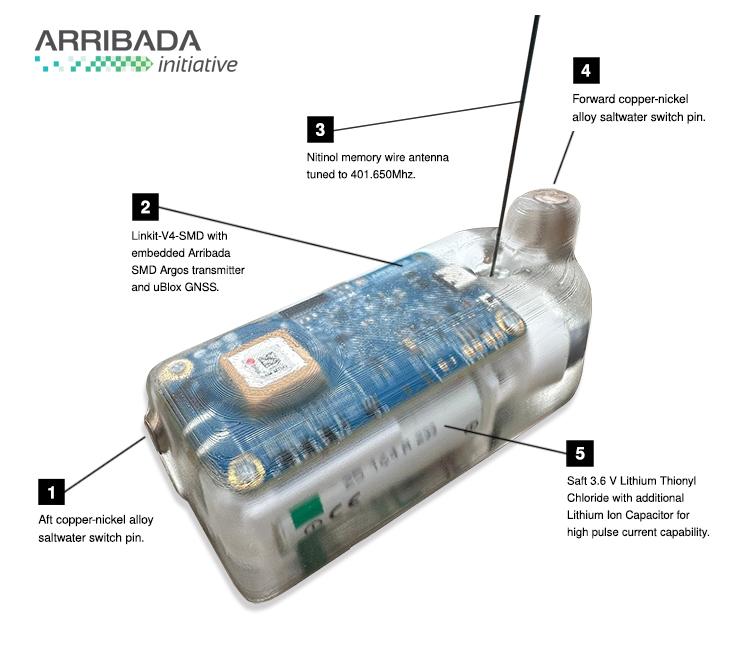
(Above) The new low cost Argos satellite sea turtle tags are capable of fast, calibrated surface detection and fast Argos transmissions due to the use of the €50 Arribada SMD module.
Arribada is now planning to make these tags available for partners to purchase, pre-built and ready to deploy, and that's a big milestone for both us and the community.
We are regularly asked if we can provide pre-built sea turtle satellite tags, but to date we have focused on supplying the electronics and components necessary to develop your own from scratch vs a ready-to-deploy solution.
Moving forwards, to address this demand, if you're interested in acquiring the pre-built tags for your projects and studies, please contact us directly to discuss how Arribada can assist you.
(Above) Watching the sunrise in Cayenne, French Guiana, after tagging the first wave of olive ridley turtles in an arribada with the new open source satellite tags. 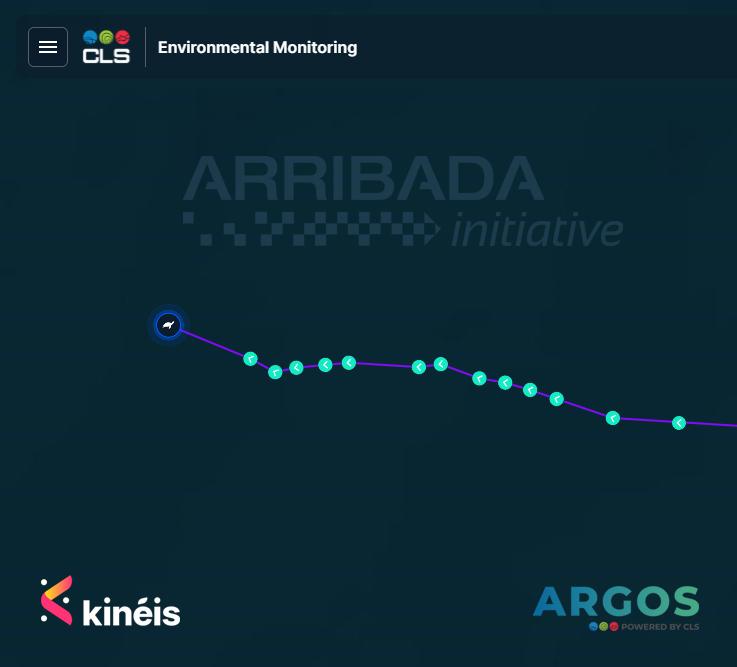
(Above) High frequency doppler positions from a tagged turtle due to 15 minute satellite re-visits, possible due to the new Kinéis satellite constellation and fast surface detection / transmission events from the new Arribada satellite sea turtle tags.
The journey to bringing an open source sea turtle satellite tag to market.
A quick search online will reveal that nearly 10 years ago to the day, the article "How Open Source Technologies Could Dramatically Reduce the Cost of Tagging Green Sea Turtles" was published on WILDLABS. This was the starting point, and a decade later, the vision has been realised with the release of the 100% open source Arribada sea turtle satellite tag.
It's fascinating to look back at the early tag enclosure designs, the technology available to form tags in 2016 (there was no open design for an Argos transmitter), and where we have come since then together with partners around the globe who wanted to push forward open solutions.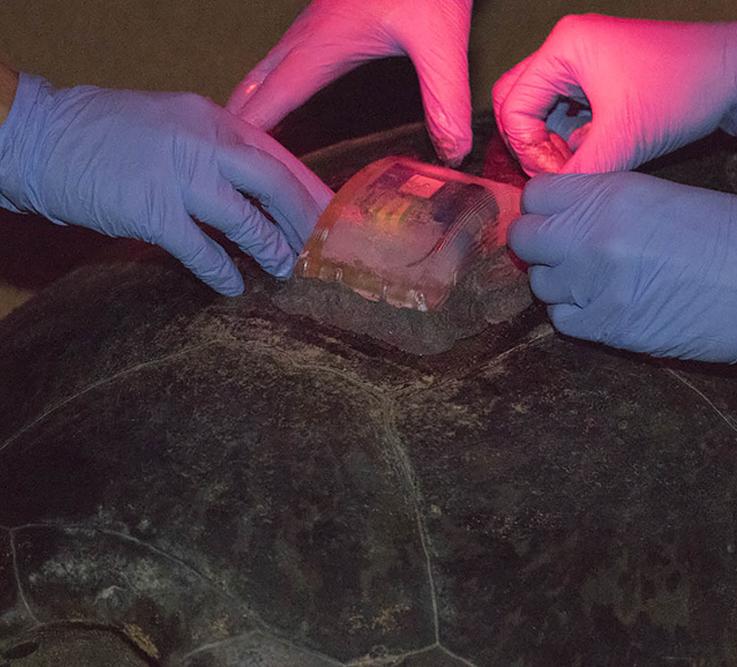
(Above) An early GNSS (GPS) sea turtle tag enclosure design, deployed in Príncipe with Fundação Príncipe.
2017 - 2018
In early 2017 the first open GNSS (GPS) tags were developed. At this stage there was no satellite connectivity, instead our focus at the time was on a solution for nesting females, with the tags recovered between clutches and data downloaded. In Príncipe, a video tag was also developed utilising a Raspberry Pi Zero to understand how often the nesting green turtles encountered plastic as part of the Protetuga project.
2018 - 2020
To understand if nesting green sea turtles on Poilão Island in Guinea-Bissau were staying within the designated marine protected area during their clutch cycles, GNSS tags were deployed and data utilised to map their movement to support The Institute of Biodiversity and Protected Areas (IBAP). Research work in Guinea-Bissau led to the publication of the Need for Speed in Sea Turtle Telemetry as we explored surfacing event timings and fast GPS aquistion methodologies.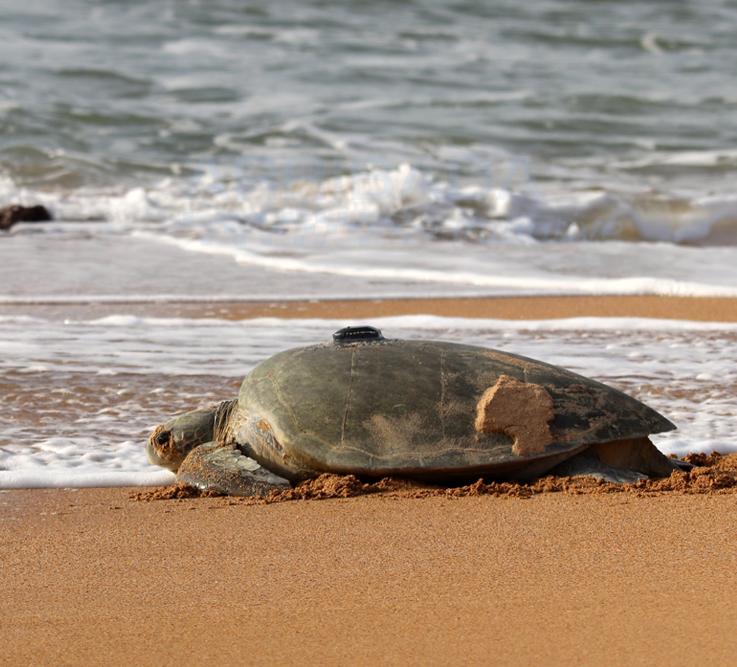
(Above) Poilão Island is one of the most important nesting sites for green sea turtles in West Africa. The Arribada Horizon GNSS tag can be seen here attached to the carapace of a nesting turtle returning to the ocean.
2020 - 2025
Funding from the PEW Charitable Trusts in partnership with Fundação Maio Biodiversidade helped to accelerate development by advancing both the GNSS, video, and satellite tag open designs to support FMB's loggerhead turtle research programme on Maio island, Cape Verde. Over three years (seasons), each version of the tag was improved, leading to the design of the final satellite tag deployed today in French Guiana, May 2026. Cape Verde's deployment of the same tag is planned for July 2026.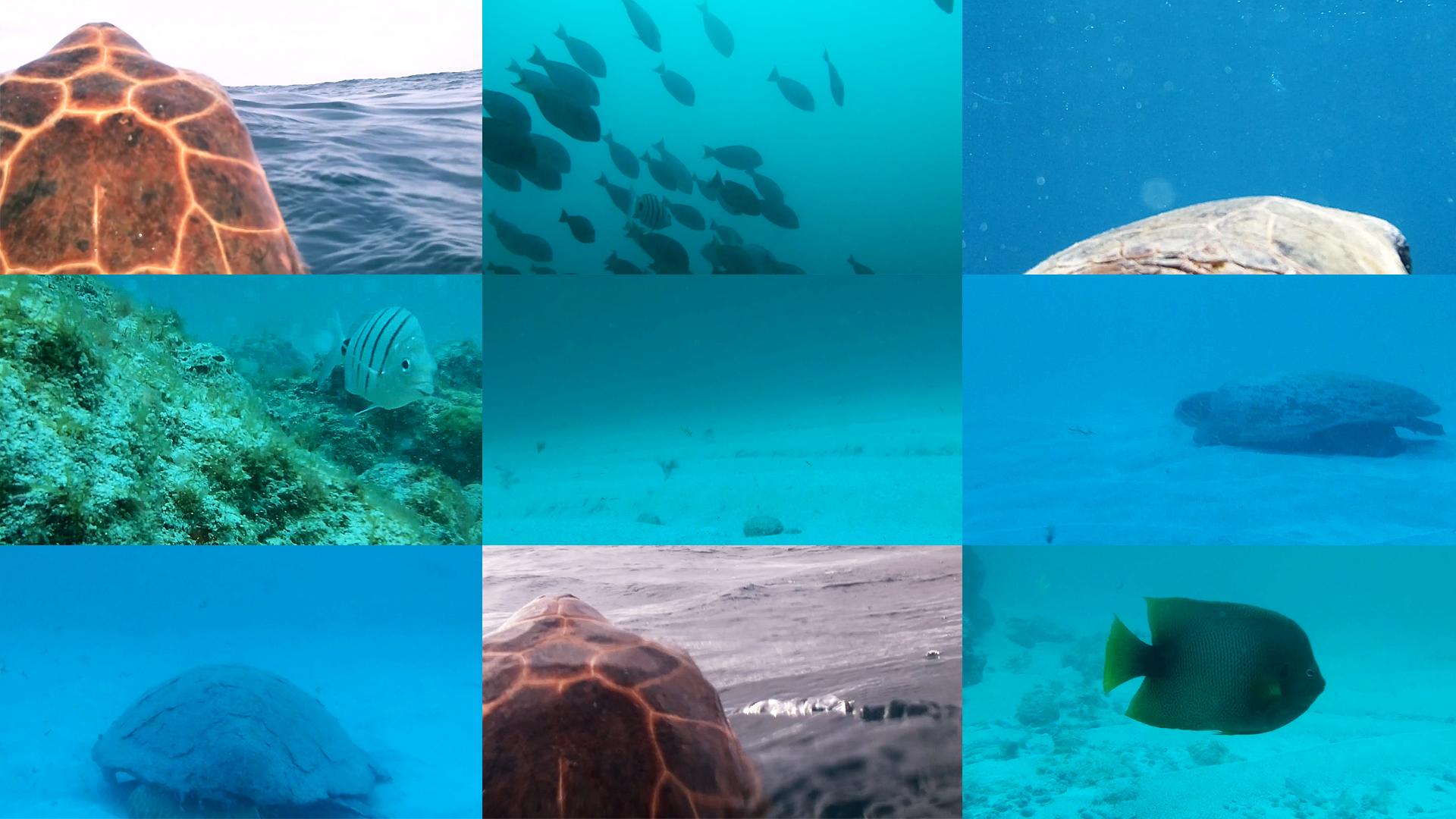
(Above) Stills taken from the open source sea turtle video tag, developed to understand feeding behaviour and spatial habitat use by nesting loggerhead sea turtles.
2026 and beyond
With the release of the Arribada Standalone SMD module (3cm x 3cm), a smaller version of the adult satellite tag can now also be formed to unlock access to working with juvenile turtles. As the core design only needs to be shrunk down in size to accommodate the smaller printed circuit board, we expect development to be swift and are open to working with partners seeking to tag juvenile turtles as part of your turtle conservation programmes.
For now, we are excited to see what the next decade of sea turtle conservation and telemetry brings now that low cost satellite tagging has been unlocked.
For more information about Arribada's open source sea turtle tags, contact us directly or visit https://arribada.org
Related content
Article
Current efforts to track endangered Green Sea Turtles rely on tags that cost upward of $2000 per unit. Alasdair Davies of the Zoological Society of London has been working with Luka Mustafa, a Shuttleworth Foundation...
27 May 2016
Article
The need for speed in Sea Turtle Telemetry

Arribada Initiative
In this article, you will get a glimpse of how Arribada Initiative recognizes the advantages of incorporating SnapperGPS receivers into existing tag designs to acquire fast GPS fixes within the marine environment....
15 October 2021
Related Inventory Content
Organisation
The Arribada Initiative co-develops open, customisable and impact-driven conservation technologies for conservation organisations across the globe.




8 June 2026 3:14pm
Huge congratulations to the whole team of Arribada for years of dedication to making this happen and delivering incredible open hardware for the community 😃
12 June 2026 4:08pm
Amazing 🤩 🤩
Super congratulations for the perseverance and so many years of work.
Thank you also for keep everything open source.
Looking forward to deploy a few tags.
Pretty exciting.
Luciano Foglia